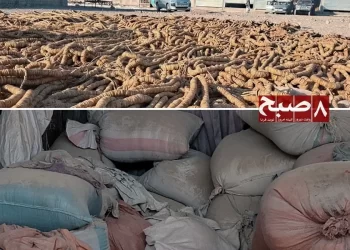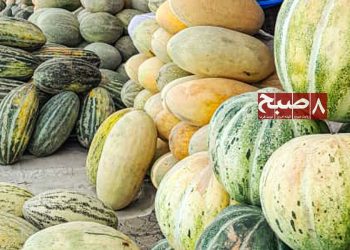

A number of merchants in Afghanistan are raising concerns about the absence of standard cold storage facilities in the country. They say that the shortage of proper facilities for preserving produce causes a portion of agricultural products, particularly fresh fruits, to spoil and go to waste every year, inflicting significant financial losses on merchants and farmers. These merchants add that although a number of private cold storage facilities have been established in recent years, their capacity is insufficient to meet the needs of merchants and farmers. According to them, the lack of adequate storage capacity forces merchants to rush their products to market within a short period and at low prices to prevent spoilage. They stress that the establishment of standard cold storage facilities in agricultural production provinces would allow products to be stored until the right time for sale, allowing merchants and farmers to bring their goods to market at the right time and at better prices.
Gada Mohammad Kohdamani, a merchant, says that the shortage of standard cold storage facilities causes losses for merchants and farmers every year. According to him, the lack of adequate capacity for preserving produce forces merchants to sell fruits at low prices before they spoil.
Kohdamani stresses that to prevent produce from going to waste, especially during the harvest season, large and standard cold storage facilities must be built in the production provinces.
The merchant says: “What merchants want is for cold storage facilities with a capacity of five to ten thousand tons to be built in Kabul, Farah, Balkh, Ghazni, Maidan Wardak, and other agricultural areas so that orchardists, farmers, and merchants can store their produce there.”
According to Kohdamani, the closure of the Pakistani border and difficulties in transporting goods through alternative routes, combined with the shortage of standard cold storage facilities, have compounded the losses for merchants. He adds that if sufficient storage capacity existed, merchants could keep their goods in cold storage until the right time and then supply them through export routes or in domestic markets.
The merchant says: “If we had cold storage facilities, we could preserve a portion of our produce and supply it whenever the market conditions were favorable. People would have access to fresh fruits and produce, and merchants would not suffer losses.”
Ghulam Yahya Meshkwani, another merchant, says that beyond the shortage of standard cold storage facilities, the closure of trade routes has also compounded the difficulties facing merchants. According to him, with the closure of the Karachi route and restrictions on the Bandar Abbas and Chabahar routes, a portion of produce has remained stranded inside the country and has deteriorated in quality. He adds that a number of merchants’ goods still remain inside the country due to the absence of suitable export routes.
The merchant says: “The absence of cold storage is a major problem for us. The Karachi and Wagah routes were closed, and the Bandar Abbas and Chabahar routes were also shut. Our goods remained inside the country and lost their quality. We still have products that have no way out of the country.”
Ramin Haidari, another merchant, says that the capacity of the existing cold storage facilities in the country is insufficient for preserving agricultural produce. He adds that many of these facilities do not meet technical and international standards. According to Haidari, the establishment of large cold storage facilities with a capacity of 10 to 30 thousand tons in the production provinces would increase the overall storage capacity for agricultural products.
Haidari says: “Technical standards have not been observed in some cold storage facilities, and a number of them face problems with electricity, temperature control, and humidity regulation. We call on senior officials to listen to the voices of merchants and farmers, as they are suffering from the absence of standard cold storage facilities.”
Meanwhile, a number of other merchants say that the increase in private cold storage facilities has made it possible to preserve some products for longer periods, though the quality of preservation also depends on the conditions of the storage facility and adherence to technical principles.
Haji Yamin, a merchant, says that private cold storage facilities have enabled merchants to preserve seasonal produce for longer periods and to manage the timing of their supply to the market. According to him, the storage duration depends on the type of product and the conditions of the facility. Grapes can be stored for approximately one to one and a half months, while apples can be stored for up to seven months.
Yamin adds that the quality of produce preservation does not depend solely on cold storage, and that the methods of harvesting and transportation, as well as the involvement of skilled professionals, also play an important role in maintaining the quality of fruits and vegetables.
The merchant says: “If the cold storage facility is up to standard, if care is taken during the harvesting and transportation of fruits, and if skilled workers are employed, it is extremely beneficial for preserving fresh fruits and vegetables.”
Romal, another merchant, says that the availability of cold storage facilities allows merchants to delay the sale of their produce until more favorable conditions arise. According to him, some products can be stored for one to two months, while apples can be stored for up to one year.
Romal says: “When exports are active, the shortage of cold storage is not felt. But when exports decline, cold storage becomes scarce.”
A number of economic experts also regard the absence of standard cold storage facilities as one of the factors contributing to increased agricultural waste and reduced income for farmers and merchants.
Mir Shekab Mir, an economic expert, says that the lack of adequate facilities for preserving produce leads to the spoilage of fruits and vegetables and increases losses for producers and sellers. According to him, the immediate supply of products during harvest season, due to the absence of storage capacity, can drive down prices and reduce farmers’ income. He adds that reduced supply of products during other times of the year can also affect market prices and cause price fluctuations for consumers.
The economic expert says: “The absence of cold storage facilities causes a portion of agricultural produce to spoil before reaching domestic and foreign markets. This situation both reduces the income of farmers and merchants and can affect product prices for consumers. Investment in the construction of cold storage facilities can create the conditions for preserving products and supplying them at the right time.
The merchants’ complaints about the absence of standard cold storage facilities come as the Taliban had previously announced the establishment, renovation, and operation of nearly 110 small and large cold storage facilities in Kabul. However, no precise data has been published on the number of active cold storage facilities and their total capacity across the country. Most recently, the Taliban’s Ministry of Agriculture, Irrigation and Livestock (MAIL) announced the commissioning of a fresh fruit cold storage facility with a capacity of three thousand tons at the industrial park in Deh Sabz district of Kabul.
Merchants say that the existing cold storage facilities are not adequate to handle the volume of agricultural produce, and that to prevent spoilage, large and standard cold storage facilities must be established in production areas.
Afghanistan is among the agricultural countries where a significant portion of its output is devoted to fruits and agricultural products. However, the lack of adequate facilities for preserving and storing these products is cited as one of the key challenges facing merchants and farmers.
You can read the Persian version of this report here:
کمبود سردخانه در افغانستان؛ بازرگانان: میوهها پیش از رسیدن به بازار ضایع میشوند