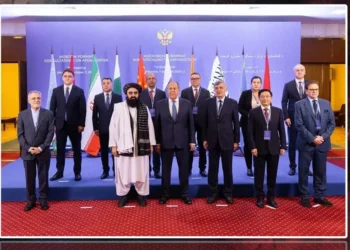
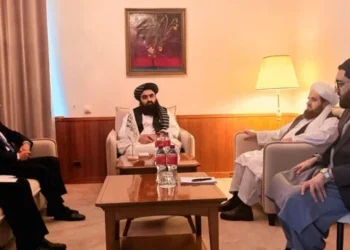
Since the Taliban’s return to power in Afghanistan, numerous regional and international conferences have been convened to assess the country’s situation and determine how to engage with the Taliban. Western states, working through the United Nations, have pressed ahead with the Doha Process, while regional powers such as Russia and China, emphasizing the Moscow Format and Shanghai Cooperation Organization (SCO) meetings, have pursued separate initiatives. Meanwhile, Afghans themselves remain trapped in political, legal, and humanitarian limbo. Analysts warn that rivalry among global and regional powers for influence over the Taliban has not only strengthened the group’s position but has also sidelined ordinary Afghans from decisions about their future. They stress that the Taliban, who enjoy no popular mandate, must not become the focal point of high-level regional and international diplomacy. UNAMA has outlined a roadmap for Afghanistan’s future. Yet, Russia’s foreign minister has rejected the Doha framework and insisted that Afghan issues be handled through the Moscow Format and the SCO.
Competition among major powers—from Qatar to Russia—to shape the Taliban has turned the group into the hub of political bargaining for regional and global actors. While people of Afghanistan grapple with humanitarian crises, repression, and mass displacement, international talks proceed without their participation and to the benefit of a group that lacks both domestic and international legitimacy.
From Doha to Moscow: two paths, one objective
Commentators note that the Doha Format was initially intended to create a platform for dialogue between the Taliban and the international community, but it has largely become a podium for negotiating directly with the Taliban rather than about Afghanistan. They add that the Moscow Format has sought to give Russia a more active role in managing the Afghan crisis, yet such rivalry has effectively legitimized the Taliban without yielding results for the Afghan people.
Dr Zakir Husain Ershad, a professor at the University of Bucharest and leader of the Afghanistan Citizens Party (ACP), tells the Hasht-e Subh Daily that the various formats serve international actors’ agendas more than they help resolve Afghanistan’s crisis. Although Afghanistan is invoked as the core issue, he argues, every side is using the spotlight on the Afghan conflict to advance regional interests defined within broader global power structures.
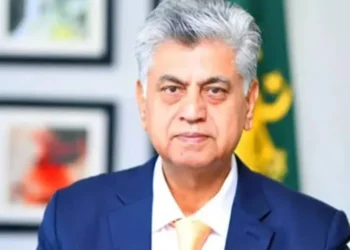
Historical experience, Ershad says, clearly shows many instances of exploiting Afghanistan’s turmoil. Citing recent remarks by Pakistan’s defence minister, Khawaja Muhammad Asif, he contends that countries are not acting in good faith. Regional and global powers, by magnifying and complicating Afghanistan’s problems, pursue their aims. As long as those actors derive strategic benefit from perpetuating Afghanistan’s instability, he warns, none of these formats will help end the crisis; instead, they will deepen and prolong it.
The party leader adds that while the formats ostensibly focus on “crisis management,” their real purpose is to safeguard their sponsors’ interests so long as they can maintain control. The only durable solution, he argues, is to restore Afghans’ role and enable them to take effective steps toward determining their future—ideally by mobilizing political currents that retain at least a degree of public trust based on their record.
Azimullah Warsaji, former chargé d’affaires of Afghanistan’s embassy in Doha, likewise tells the Hasht-e Subh Daily that any negotiation on Afghanistan that excludes its people will naturally serve the Taliban. Just as Qatar is accused of collaborating with the Taliban, he says, Russia and its allies also engage the group to protect their interests, exchanging intelligence and working with the Taliban on security. In both tracks, Afghans are absent, and states interact with the Taliban solely based on self-interest.
The former diplomat notes that Russia and its partners view any UN-backed plan as a Western scheme that conflicts with their interests. He recalls that the UN roadmap drafted by the Secretary-General’s former special coordinator faced joint opposition from Russia, China, and the Taliban.
Warsaji adds that Moscow lacks the financial resources to match Qatar’s spending on the Moscow Format. By investing heavily, Doha has been more successful than Russia in winning Western support. He explains that Russia seeks an overland corridor through Afghanistan to South Asia and Iran to revive energy trade curtailed by European sanctions. Moscow co-operates with the Taliban on security, particularly against the Islamic State—but has offered the group no major concessions. Russia has only suspended the Taliban’s designation as a terrorist organization “temporarily,” while pledging to honour UN Security Council sanctions.
UNAMA Roadmap Sidelines Afghanistan Citizens, Prompting Activist Outcry
Numerous coalition of Afghan human-rights advocates, women’s and protest movements, and civil-society groups has issued a statement expressing concern over UNAMA’s roadmap. They demand the plan’s full suspension and a comprehensive overhaul centred on human rights, the rule of law, and genuine public participation. The statement rejects any recognition of the Taliban as a political or diplomatic actor, arguing that the group’s documented and ongoing rights abuses, systematic exclusion of women, repression, and creation of a gender-apartheid regime strip it of political and international legitimacy.
Their demands include: guaranteed, equal, transparent and independent participation of Afghan women and civil society in all political, legal, oversight and decision-making processes concerning the country’s future; creation of an independent multilateral mechanism to monitor the Taliban’s actions and UNAMA’s engagement; and an end to the instrumentalization of humanitarian aid for political ends, coupled with a return by UNAMA to humanitarian neutrality and effective support for genuine victims.
The activists further insist on sustained, explicit backing from the UN, governments, and international institutions for Afghan civil-society organizations, free media, and the independent voices of the Afghan people, which they describe as the only legitimate foundation for rebuilding the country.
UNAMA roadmap and Russian opposition
The Hasht-e Subh Daily has recently obtained a copy of UNAMA’s proposed roadmap, due to be presented at an upcoming meeting in Doha. The document shows that UNAMA aims to achieve peace and reintegrate Afghanistan into the international community. According to the mission, the plan is designed to address issues identified in the independent assessment of the Secretary-General’s coordinator and offers a coherent framework and consultative mechanism for engagement.
At the same time, Russian Foreign Minister Sergey Lavrov has criticised the Doha Process, insisting that Afghanistan matters be resolved through the Moscow Format and the SCO. Speaking at a press conference in Uzbekistan, he dismissed the Doha track as ineffective.
Lavrov stated: “The SCO has an appropriate mechanism that we are actively using. Aligning these frameworks helps Afghan [Taliban] authorities better understand the advice offered by neighbouring countries—advice aimed at forging national consensus within Afghan society.”
You can read the Persian version of this report here:
از دوحه تا مسکو؛ رقابتهای نافرجام قدرتها و زیانهای بیپایان برای افغانستان | روزنامه ۸صبح