For nearly five years, Afghanistan has served as a laboratory for a comprehensive system designed to erase women from public life. This system no longer requires lengthy legal definitions. We all know what gender apartheid looks like. Anyone who wants to see it in practice needs to look no further than Afghanistan under Taliban rule.
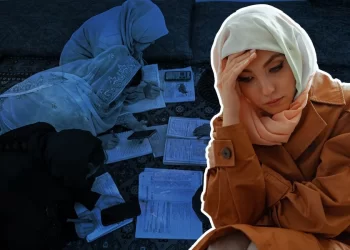
Gender apartheid is a system that excludes women from schools, universities, work, travel, politics, media, the judiciary, arts, sports, and even ordinary presence in public spaces, for no reason other than being women. It is a system that views women not as human beings with rights, but as a threat to be controlled and managed by the regime. In Afghanistan today, this is not merely a collection of scattered restrictions. It is an organized, deliberate, and political system designed to eliminate half of society.
To properly understand this situation, two fundamental points must be clarified. First, this system is not the culture of Afghanistan, it is not the Pashtun culture, and it is not religion. Second, the campaign against gender apartheid has a serious shortcoming: this struggle must be taken more directly into Afghanistan itself, and the men of Afghanistan must join alongside women in this fight, not in their place.
The Taliban attempt to sell their system of suppressing women through the language of culture, tradition, and religion. They have always justified it by claiming it represents “the culture of Afghanistan,” “the values of the people,” and “religion.” More dangerous than the claim itself is that some individuals outside Afghanistan, even at the decision-making level, have occasionally accepted this narrative. Accepting the Taliban’s framing is easier. If this is labeled the culture of the people of Afghanistan, then no moral or political responsibility needs to be assumed. There is no longer any need to ask why the women of Afghanistan have been stripped of their most basic human rights. But when this claim of “culture” is held up against the history of Afghanistan, the argument collapses entirely.
The gender apartheid that the Taliban have imposed has never been universally accepted, even within the religious and political circles of Afghanistan. During the Taliban’s first period of rule in the 1990s, President Burhanuddin Rabbani described Taliban policies as a form of gender apartheid. This is critically important because Rabbani was not a Western activist, not a United Nations spokesperson, not a foreign government official, and not someone speaking from outside his own society. He was a political leader from Afghanistan who, by any measure, was recognized as a deeply religious figure, and who spoke from within the political, religious, and moral vocabulary of his country.
If a religious president of Afghanistan in the 1990s could recognize Taliban policy as gender apartheid, the Taliban of today cannot credibly claim that this concept is merely “Western propaganda.” This demonstrates that opposition to the exclusion of women from society is neither an imported phenomenon nor one foreign to Afghanistan.
Some may argue that Rabbani was Tajik, and that among Tajiks and Hazaras, there have historically been fewer restrictions on women, while the Taliban have largely emerged from Pashtun communities, and what they practice is Pashtun culture. There is some truth in this observation. Afghanistan is ethnically, linguistically, and socially diverse. In every ethnic group and every region, various forms of patriarchy have existed. In some areas, restrictions on women have been more severe; in others, less so. But this explanation becomes dangerous when it is used as a justification for the Taliban’s gender apartheid.
The Taliban do not represent all of Pashtun culture, just as no extremist group can fully represent an entire ethnicity, language, or religion. The fact that the Taliban have largely emerged from a particular ethnic and social background does not mean their political project should be attributed to that entire people.
Looking at the contemporary history of Afghanistan, some of the most significant advances in women’s freedoms came during the reign of King Amanullah Khan and later under King Zahir Shah, both of whom were Pashtun. Some may argue they were urban, elite, influenced by modern ideas, and more removed from traditional society. These arguments may hold some historical weight. But the central point remains: they were from Afghanistan, they were Pashtun, and they worked within their own society to forge a new relationship among religion, tradition, state-building, and women’s rights.
During the reign of Amanullah Khan, for instance, the education of girls became a national priority. Masturat School was among the first formal girls’ schools in Kabul, and the women’s magazine Ershad al-Niswan, meaning “Guidance for Women,” was also published during that same period. These were not imported projects from outside Afghanistan. They were part of the government of Afghanistan’s effort to build a new society.
Similarly, during the Zahir Shah era, the Constitution of Afghanistan of 1964, while affirming Islam as the sacred religion of the country, opened the door to women’s right to vote and stand as candidates. In the 1965 elections, women entered parliament, and Kubra Noorzai served as the first female cabinet minister in the history of Afghanistan. This historical record carries great significance: over the past century, within the framework of a state of Afghanistan, in a Muslim country, under the leadership of a Pashtun king, women achieved meaningful political participation.
The Taliban,n therefore, cannot claim that the complete elimination of women is the natural outcome of the culture of Afghanistan, Pashtun culture, or religion. If it were, one would have to ask whether, by their own logic, everyone who, before their rule opened doors to women’s education, employment, and participation in Afghanistan, was an unbeliever. Such a claim is incompatible with the history of Afghanistan and with the reality of the country’s religious, social, and political diversity.
For this reason, whenever the Taliban, their supporters, or their external partners attempt to use such pretexts to normalize gender apartheid, civil society, academics, journalists, and all those working for freedom and justice in Afghanistan must hold on to one truth: the culture of Afghanistan is not a frozen and unchanging law that has always and only produced restrictions against women.
The culture of Afghanistan has always been a terrain of contest. It has moved backward at times and forward at others. It has produced oppression, but also resistance and reform. When the Taliban say “this is the culture of Afghanistan,” they are not describing culture. They are attempting to capture it. They want to register their ideological, anti-woman, and anti-freedom worldview in the name of an entire nation. But making this argument outside Afghanistan is not enough.
The campaign against gender apartheid has a serious gap: this language, this awareness, and this struggle must be carried more directly into Afghanistan.
Today, a person living in a remote village or an underserved region inside Afghanistan may witness every day how Taliban misogyny affects his sister, wife, and daughter. He may see that his daughter no longer attends school, that his wife is not permitted to work, or that the women of his family have been pushed out of public life entirely. But if asked what gender apartheid means, he may have no idea. He sees the suffering, but may lack the political and legal language to name what he is witnessing.
Closing that gap requires sustained work inside Afghanistan. This concept must be translated from a legal and international term into plain, clear, and accessible language that ordinary people can understand. People must grasp that the closure of girls’ schools, the ban on universities, the prohibition on women working, restrictions on travel, and the exclusion of women from media, politics, and society are not a series of unrelated decisions. They are components of a single system built to control and eliminate women. Along this path, the men of Afghanistan must also join alongside women in this campaign.
The women of Afghanistan have been the most courageous force in the struggle against gender apartheid and have paid an enormous price. They have stood firm against school and university closures, work bans, travel restrictions, daily humiliation, suppression, and direct physical danger. When it is said that men must enter this struggle, the intention is not to displace women’s leadership. Never. Women are the primary bearers of this oppression and the primary pioneers of resistance.
But men must enter as partners of women in this struggle. The Taliban do not govern through decree and force alone. They seek to reconstruct the consciousness of society. They control the educational system. They decide what children learn about religion, history, women, men, obedience, power, and morality. In a country where independent media has been silenced and public debate is dangerous, the school and the madrassa have become the dominant voices in society.
If the Taliban succeed in convincing the next generation that the exclusion of women is “natural,” “moral,” and inherent to the identity of Afghanistan, then gender apartheid will cease to be a government policy and become a social norm. This is the danger that must not be underestimated. The Taliban want to turn domination into habit, discrimination into morality, and the erasure of women into national identity.
This is where the role of men becomes critical. Gender apartheid survives when men remain passive, and it becomes permanent when men come to accept this situation as normal. The Taliban do not need every man in Afghanistan to become a Taliban. It is enough for a large number of men to stay silent, to shrug, to say “this is just how it is,” and to treat the erasure of women as ordinary background noise.
Many men inside Afghanistan also live under the weight of poverty, fear, unemployment, repression, and Taliban violence. But on the question of gender, many of them do not experience the daily suffering of women with the same intensity. That gap is itself dangerous. A man worn down by poverty and insecurity, without a clear language for understanding gender apartheid, may gradually come to terms with the situation. Not necessarily because he is a bad person, but because the Taliban have built an environment in which resistance feels dangerous and compliance feels safer.
This is why the language must be brought into Afghanistan. People, and especially men, must be made to understand that what is happening is not a “family matter,” not a “local custom,” not “private morality.” It is a political system, one that excludes half of society from public life simply for being women.
When people understand this, the question shifts. It is no longer “should we respect the culture the Taliban claim to represent?” It becomes “how do we dismantle a system of apartheid?”
That shift in language matters enormously. The Taliban operate through language. They call suppression “chastity,” exclusion “protection,” silence “morality, and discrimination “culture.” Against such a project, clear language is essential, language capable of stripping away the false names and exposing the truth beneath them. “Gender apartheid” is precisely that kind of language.
You can read the Persian version of this analysis here:
آپارتاید جنسیتی فرهنگ افغانستان نیست، پروژه سیاسی طالبان برای حذف زنان است