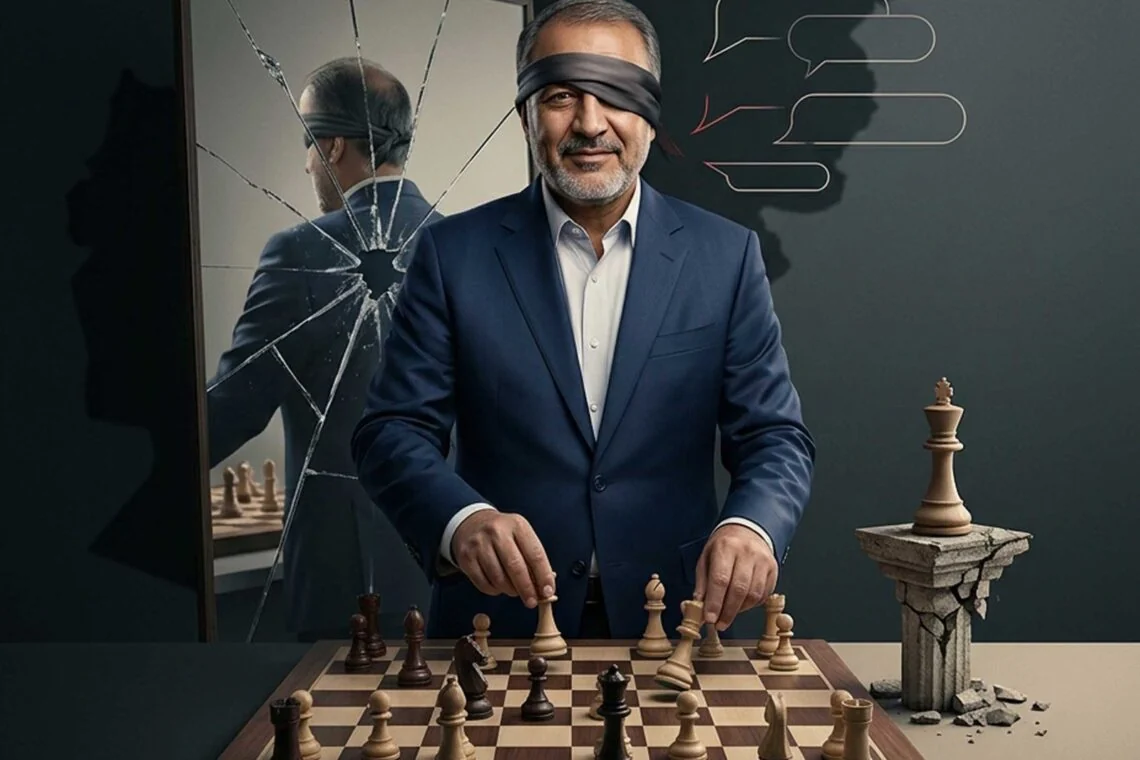
To understand the critical condition of a society, one must first understand the mindset and behavioral patterns of its politicians, because politics is a constructed phenomenon, and examining the thought patterns of political actors is a fundamental step in understanding the structure of power. In Afghanistan, politics does not follow conventional global patterns. Its central axis is “traditionalism” and dependence on external centers and addresses. Afghanistan’s political history, from the monarchic and communist periods to the Mujahideen, the Republic, the Taliban, and beyond, testifies that governments have, in one way or another, been puppets of foreign powers or have largely operated under their influence. In this structure, individual merit and strategic planning are irrelevant. Securing foreign backing is the main goal of political actors.
This structural dependence has tied the political intelligence of rulers to an extreme and one-sided political reliance on foreign powers. Although foreign relations are of considerable importance, when this dependence comes at the cost of stripping the people of their will, the country becomes trapped in a permanent cycle of instability. Historically, it has been proven that the masses have always been removed from the equation, and foreign players have exerted influence over the course of domestic politics according to their own interests.
Meanwhile, in pursuit of legitimacy, politicians take a purely ceremonial approach to the people and stir the emotions of the masses by resorting to ethnic and religious cards. If their commitment to the public interest were genuine, why have the people’s conditions not improved after centuries of slogans about service? The reality is that political intelligence in Afghanistan is tactical, short-term, and superficial, and politicians merely pursue fleeting interests instead of a sustainable vision.
The real test of this claim can be seen in the crisis that followed Mohammad Ashraf Ghani’s flight from the country, the day when the commitment of those who claimed to represent the nation was revealed. Of all the parliamentarians, senators, and senior officials who presented themselves as the essence of the nation’s will, who stayed beside the people? This behavior showed that politicians never regarded the people as the main subject of their campaigns, and that their political intelligence is oriented toward immediate, cash-based interests rather than strategic and public welfare.
To better understand this strategic poverty, it is enough to compare the intelligence of Afghanistan’s politicians with that of politicians in countries such as Japan. Japanese politicians, with strategic and forward-looking intelligence, have built a prosperous society whose fruits reach every single citizen. Through principled and strategic conduct, they lend credibility to their country, and from the established credibility of their society, they themselves in turn gain credibility and identity-based value. Afghanistan’s politicians, however, with short-term and self-centered intelligence, have sacrificed the well-being of society for their own interests. They have overlooked the fact that the instability of a society is like a severe and devastating earthquake that leaves no one’s home and shelter safe. The hasty flight of the politicians and the loss of their belongings proved that destroying the public foundation of society, by refusing to make strategic efforts for the stability and development of society as a whole, will eventually catch up with them as well.
Indicators for Understanding the Political Intelligence of Afghanistan’s Politicians
The political intelligence of Afghanistan’s politicians can be better understood through several indicators:
1) Slogan-Driven Politics and Alienation from Strategy-Driven Politics
A political intelligence that leads to the spread of performative politics consumes society’s energy on emotional and short-term paths. By relying on emotions and mobilizing people around ideological or clan-based themes, this kind of politics creates the illusion of “movement,” while in practice society remains stuck in place.
By contrast, strategy-driven politics relies on instrumental rationality and systems thinking. Instead of fueling pointless confrontations, such politics seeks to build institutions, strengthen economic infrastructure, and cultivate civic culture. Progress is not the product of chance. It is the result of deliberate planning and design in the social sphere.
2) Tribalist Intelligence
In tribalist intelligence, which is identifiable as a major indicator of the political intelligence of Afghanistan’s political actors, “loyalty” takes precedence over “expertise.” When political intelligence serves the protection of clan interests, meritocracy is sacrificed. The consequence of this approach is a boundary between “insiders” and “outsiders.” Instead of attracting elites and drawing on national capacity, society is divided into isolated islands, each competing with the others for a meager share of power.
3) Obstinacy and the Repetition of the Vicious Cycle
Many of the country’s political actors have still not grasped the destructive consequences of political obstinacy, and they do not see that insisting on ineffective approaches repeats the cycle of an undesirable situation. Afghanistan has been trapped in this cycle for decades. Every time slogans replace commitment, action, and development, the result is nothing but poverty, displacement, and despair for future generations.
4) The Clash of Illusion and Reality
One of the serious problems of Afghanistan’s politics is the gap between political slogans and the lived reality of the people. Empty notions and slogans do not match what is happening at the core of society. This gap between the people and those in power will not disappear through the repetition of slogans or by taking refuge in unrealistic notions. The widespread poverty, illiteracy, psychological problems arising from migration, and the consequences of internal conflicts stand in contradiction to the claims of success made by some factions. When politicians’ understanding of society rests on justifying the status quo, they cannot find real solutions to the problems, because at the very first step they deny that the problem exists.
5) Case-Based Pathology of Politicians’ Intelligence
The political intelligence of politicians is not detached from the culture of society and collective intelligence. Rather, it takes shape and acquires quality in close connection with the cultural context and collective wisdom of society. As a specific example, during the era of the Republic, most officials tried to appoint their relatives, acquaintances, and political allies to various government posts without observing legal and regulatory frameworks. From the standpoint of instrumental, short-term, profit-driven rationality, this action benefited both the dependents (who gained positions and government salaries) and the politician himself (who expanded his patronage network and secured loyalty).
Nevertheless, if we take the considerations of “forward-looking intelligence” as the criterion, this approach is extremely vulnerable. Members of society, especially the closest dependents and family members of officials, achieve lasting happiness and prosperity only when they enjoy a safe, stable, and developed society and public environment. Achieving this desirable situation requires observing the principles of the rule of law, justice, meritocracy, and commitment in all matters, particularly in public recruitment. Unfortunately, such considerations usually have no place in the political intelligence calculations of rulers, who mostly fix their eyes on immediate and fleeting interests. Even during the Republic, key posts were bought and sold among senior officials. It was a political transaction that can be justified only based on short-sighted, momentary calculation, not on the basis of broad and lasting national interests.
The experiences of collapse in the country have shown most clearly that access to immediate gains and government rents does not last long. The occurrence of political earthquakes, including the change of the system with Ghani’s flight, leveled all these gains. Since the main foundation of social life was transformed, small individual interests were destroyed as well, and their roots dried up.
Today, too, the situation has not only failed to improve but has taken on newer dimensions. For example, the widespread distribution of academic degrees (even at the master’s level) to individuals lacking academic background and qualifications is a clear example of the crisis in the country’s educational and administrative system. Such academic handouts are like prescribing narcotics to temporarily relieve the pain of an addict. The pain subsides for a moment, but the main problem remains. When an academic degree, a military rank, or a professorial chair is granted as a political or religious spoil, the country’s structure of knowledge is destroyed, and this approach has only destructive consequences for the future of society, with no positive or transformative effect.
Governing a country is a specialized and complex skill (economy, infrastructure, foreign policy, health). Someone who takes a management seat without going through scientific and experiential stages is exactly like a driver unfamiliar with driving techniques sitting behind the wheel of a bus full of passengers on a mountain road. The inevitable result of such management is a collective fall and crash.
Rulers who today hand out made-to-order degrees or unfounded privileges to their supporters not only betray the country but, in truth, also wrong those very individuals, because they keep them hollow, incapable, and dependent from within, and deprive them of the possibility of real growth.
An illiterate or poorly educated person must acquire knowledge, skills, and capability in a principled way through formal educational processes. Skill is acquired and cannot be bought and sold like a material commodity. Granting a driver’s license to someone who has never learned to drive not only fails to solve their problem but will be catastrophic for them and for society.
This is where the necessity of a fundamental pathology of political intelligence in Afghanistan’s power structure becomes evident. Politicians believe that through such actions they have served their relatives, friends, and, on a larger scale, their ethnic group and tribe, but this approach is not service. Real service is providing the foundations and conditions through which members of society can learn knowledge and skills through official channels and, based on their individual capabilities, be useful and effective for both themselves and society. Achieving this also requires moving from “tribal loyalty” to “competence.”
You can read the Persian version of this article here: