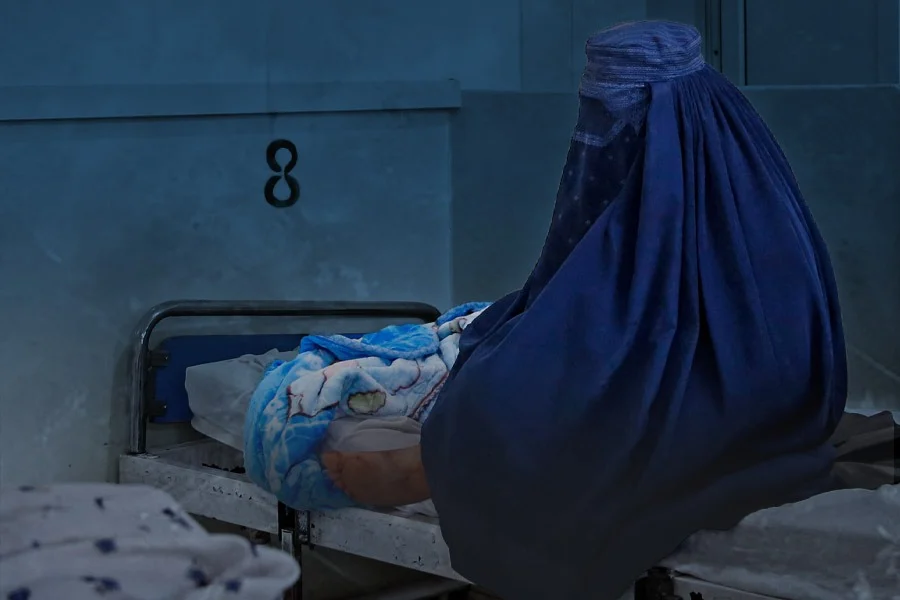
A number of residents of Ghazni complain about the shortage of specialist female doctors and the lack of sufficient medical facilities in the province’s health centers. They say the shortage of female doctors has limited women’s access to medical services, particularly for pregnant women. According to them, due to the absence of female doctors and family restrictions, several women refrain from visiting male doctors, which delays their treatment. They add that in remote areas, the lack of doctors and the high cost of treatment have forced people to turn to unqualified individuals for injections and treatment. They emphasize that the shortage of medicine and diagnostic equipment in some health centers has made it difficult to diagnose and treat patients.
These residents told the Hasht-e Subh Daily that in a number of health centers, in the absence of specialist doctors, midwives and nurses provide services beyond their primary duties. According to them, patients in Ghazni who cannot access specialized treatment travel to Kabul for care, but the cost of travel and treatment in the capital is a heavy burden for low-income families. Ghazni residents are calling on officials to increase the number of specialist doctors, particularly female doctors, and to strengthen the facilities, medicine, and equipment of the province’s health centers.
Susan, one of the residents of Ghazni, says the shortage of female doctors in the province’s health centers has made it difficult for women to access medical services. According to her, most staff at health centers in their area are men, and the number of female doctors is very small. She adds that some women are unable to comfortably describe their health problems to male doctors and, as a result, go without proper medical care.
Susan emphasizes that in a number of families, women are not permitted to visit male doctors, and she calls on officials to take action to increase the number of specialist female doctors at health centers so that women are not forced to travel long distances for treatment of simple illnesses.
This Ghazni resident says: “There is a clinic in our area, but most of the staff at these centers are men, and there are very few female doctors. We cannot comfortably and confidently describe our health problems to a male doctor, and in many families women are not allowed to go to a male doctor for an examination. The number of female doctors must be increased so that women are not forced to travel long distances to treat a simple illness, because delays in treatment can worsen a patient’s condition.”
Pashtina, another resident of Ghazni, says that in several villages and towns in the province, due to poverty and the lack of doctors and treatment facilities, people turn to women who have not received specialized medical training to administer injections. According to her, these women mostly know only the method of injection and do not assess the illness, allergies, or health condition of the patient before administering it. She adds that in some cases, the type and dosage of medicine are also determined without a doctor’s diagnosis. Pashtina warns that administering medicine by injection without diagnosing the illness and checking the patient’s allergies can cause serious complications and harm to patients’ health.
This Ghazni resident says: “In many villages and towns, people turn to unqualified individuals for injections because they lack the financial means or sufficient facilities. This is dangerous, because the person administering the injection may not know what illness the medicine is for, whether the patient is allergic to it, or how much should be used. People need to be made aware of medicines and how to use them so that they do not turn to just anyone for injections and treatment.”
Habibullah, another resident of Ghazni, says the shortage of specialist doctors in a number of health centers has caused midwives and nurses to carry out some medical services themselves. According to him, patients who come to these centers seeking specialized services are in some cases forced to go to Kabul for treatment. He adds that the cost of travel, treatment, and accommodation in Kabul is a heavy burden for many families, and that a number of patients discontinue treatment for this reason.
This man says: “In many centers, only midwives and a few nurses are present, doing the work of doctors. When we go to the health center, sometimes they are unable to treat our illness, and we are forced to go to Kabul for treatment. But going to Kabul is not easy for everyone either, because not everyone has the money and means for travel.”
The shortage of female doctors and health workers is one of the challenges facing Afghanistan’s health sector and has made it more difficult for women and girls, particularly in rural areas, to access medical services. The United Nations (UN) had previously warned that the shortage of female health workers limits women’s access to maternal and newborn care and treatment services related to malnutrition. The United Nations Children’s Fund (UNICEF) has also said that Afghanistan will face a shortage of 25,000 female teachers and health workers by 2030. At the same time, restrictions on education and the closure of some medical institutes have increased concerns about the supply of specialist female workers in the health sector. This problem persists as Afghanistan faces a high maternal mortality rate, and the lack of adequate health services, particularly in remote areas, limits women’s access to the care they need.
You can read the Persian version of this report here:
کمبود پزشکان متخصص در غزنی؛ زنان برای درمان با محدودیت بیشتری روبهرو هستند