May 19 is commemorated by Hazaras around the world as Hazara Culture Day, a date that not only honors the heritage and identity of an ethnic group but also marks the continuation of a civil struggle for equality, freedom, and justice, particularly within the modern history of Afghanistan.
A Glimpse into the History of Hazara Culture
To understand the culture of today’s Hazaras, one must revisit their history, a past marked by suffering, resistance, and civic struggle. Beginning in the late 19th century, especially under the rule of Amir Abdur Rahman Khan, the Hazaras were subjected to widespread military campaigns and brutal suppression. According to historical accounts—including the works of Mullah Faiz Mohammad Katib Hazara, widely regarded as the father of modern Afghan historiography—over half the Hazara population was either killed or displaced during these campaigns. Thousands were taken captive and sold in slave markets across Afghanistan and neighboring countries. Historical records show that the scale of oppression was so vast that many Hazaras were forced to deny their ethnic and cultural identity, because being a Hazara, in practice, was treated as a crime.
“…And His Excellency, on Friday the 3rd of Jumada al-Thani 1310 AH (December 2, 1892), commanded the governor and the mentioned Mirza to console the peasants, win their trust, and resettle them. Regarding the rumor that the Hazaras were scavenging food from horse manure, he said: This is just punishment for their misconduct and improper behavior.”
(Mullah Faiz Mohammad Katib, The Chronicles of Afghanistan, pp. 287–288; Basir Ahmad Dowlatabadi, The Hazaras: From Massacre to Identity Revival, p. 120)
The policies of exclusion and marginalization continued under successive regimes from the monarchies to the Mujahideen era, leaving little room for Hazaras to express their ethnic and cultural identity. They were largely treated as second-class citizens and, with few exceptions, were confined to menial labor.
This marginalization was so entrenched that even Hazara soldiers conscripted into the army were often assigned to serve as domestic helpers in the homes of military officials, based on a belief that they were exceptionally trustworthy. This stereotype has roots in Hazara cultural values: respect for hospitality, the sanctity of shared food (bread and salt), and deference to others’ homes are deeply held ethical principles. However, it is also important to acknowledge the role of internal fragmentation within Hazara society and their general indifference toward regional political shifts, particularly prior to and during Abdur Rahman Khan’s invasion of Hazarajat, which significantly contributed to their vulnerability to cultural and ethnic suppression. More than a century has passed since that dark chapter in history, yet Hazaras have continued to tread a difficult path in pursuit of their basic human rights. Forced migration to neighboring countries, the broader region, and across the globe, deprivation of fundamental civil rights, and deeply embedded structural discrimination have been persistent challenges. But with the fall of the Taliban in 2001 and the emergence of a relatively democratic political system in Afghanistan, Hazaras gained a new opportunity: to engage in civil society, assert their presence, and begin the long-overdue process of reconstructing their suppressed ethnic and cultural identity.
What Is Hazara Culture?
In brief, Hazara culture can be described as one rooted in civil resistance, justice-seeking, awareness, equality, and a reverence for knowledge. While Hazara cultural identity comprises numerous rich and diverse elements far too many to fully explore in a single piece, several key characteristics stand out:
The Role of Women
Unlike the traditionally patriarchal culture of Afghanistan, where women have often been regarded as property with little or no agency, the Hazara cultural paradigm tells a markedly different story. In Hazara society, women are deeply respected and valued, particularly in their roles as mothers. Far from being possessions, wives are viewed as life partners who actively participate in household decision-making. Most Hazara men are monogamous and openly share domestic responsibilities, including housework and cooking tasks typically stigmatized as dishonorable for men in Afghanistan’s patriarchal context. In Hazara culture, fathers take pride in supporting their daughters, encouraging them to pursue meaningful goals, and helping them realize their full potential. Daughters are held in special regard and are granted the freedom to study, work, and shape their futures—a rarity in much of Afghan society. One particularly striking feature of Hazara culture, especially when viewed against the backdrop of women’s rights in Afghanistan, is that Hazara women have a voice. A powerful example of this is the legacy of Abe Mirza, a young woman from the towering highlands of Malistan. Several decades ago, when women’s public presence in Afghan society was virtually invisible, Delaram Aghay a Hazara woman, boldly became a singer:
O love, I’m the hundred-petaled rose of summer,
I’ve fled the land of Malistan, my dear.
Her cassette recordings circulated widely within the Hazara community, becoming cultural milestones in a time when female artistic expression was nearly unheard of.
Education
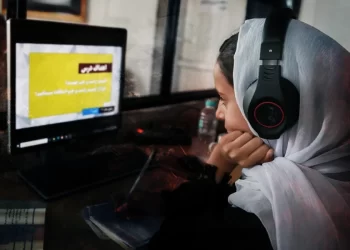
Education holds a central and sacred place in Hazara society. Schools and learning are prioritized above all else. It doesn’t matter if students must walk for hours under the scorching summer sun to reach school—in Hazara culture, books and pens are instruments of power. Boys and girls alike are expected to walk the arduous path of knowledge side by side. Despite widespread poverty and limited infrastructure, Hazara students routinely trek long distances to attend school. Without sufficient state support, communities took matters into their own hands: using modest personal resources, they built and managed their schools. Notably, support for girls’ education is a cornerstone of Hazara cultural values, one of the most distinguishing features of the community.
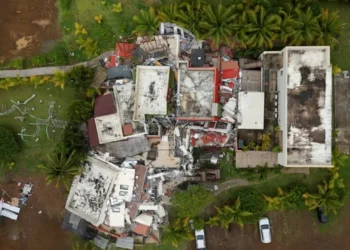
However, this pursuit of education has not been without risk. Hazara educational centers have repeatedly been targeted by terrorist attacks. At least four major incidents—the attacks on Mawoud, Kaj, Kawsar-e-Danish, and Sayyed al-Shuhada schools in western Kabul—resulted in the deaths of at least 210 Hazara students, according to media reports. The scale of these attacks is staggering. Yet, rather than deterring the community, such violence has only strengthened the Hazara resolve to pursue education.
Literature and the Arts
Despite enduring extreme ethnic and cultural repression, the Hazara people, who speak Dari Persian with a distinct Hazara dialect, have managed to preserve the authenticity and uniqueness of their language. A significant portion of Hazara literature revolves around themes of historical pain, migration, love, and heroism—elements vividly reflected in poetry, folktales, and oral narratives passed down through generations. A poignant example is this ghazal by Ali Madad Rezvani, a prominent Hazara poet, which captures the emotional burden of displacement:
Layla is a refugee who speaks no words,
Wounded in spirit, she says nothing.
Layla is the symbol of our exile—
A modern agony, yet she says nothing.
As though her whole life were meant for sorrow,
She seems to accept it—and says nothing.
Lost in the city’s glitter, false and loud,
She seems a stranger—still, she says nothing.
Layla is weary of these bitter streets—
Tomorrow she departs, and says nothing.
I wrote this poem just for her—
This final verse, too, says nothing.
Music, as the language of emotion, holds a revered place in Hazara culture. The dambura—a traditional two-stringed instrument—has become one of the most potent cultural symbols of the Hazara people. Its melodies often intertwine with romantic ballads and political laments, offering both solace and defiance. Legendary Hazara musicians such as Sarwar Sarakhosh, Safdar Tawakkoli, Dawood Sarkhosh, Sayed Anwar Azad, and Mir Chaman Soltani have kept this musical heritage alive and thriving. Handicrafts also serve as an expressive medium of Hazara identity and aesthetics. Young Hazara women often engage in traditional embroidery (khamak-dozi) during their free time, creating intricate patterns on fabric, scarves, and shawls—works of art rich in cultural meaning. Elderly women craft embroidered hats, woolen vests, carpets, and garments made of traditional “shalbark” fabric, contributing a vital dimension to the Hazara artisan legacy.
Civil Life and Nonviolent Resistance
Despite living in one of Afghanistan’s harshest geographic regions, particularly in the country’s rugged central highlands, the Hazara people are renowned for their gentleness, tolerance, and lawfulness. In Hazara culture, individuals refrain from violence, respect the rights of others, and avoid deception or lawbreaking. This stems from a shared belief in human dignity, honorable living, and adherence to the rule of law. Though they have faced intense persecution in modern Afghan history, Hazara demands for justice have been overwhelmingly peaceful and civil. One of the most pivotal moments in this history is the three-year defensive resistance of the 1990s in western Kabul—a defining chapter in their struggle for justice.
This spirit is embodied in figures like Shukria Tabassum, a 9-year-old girl beheaded by ISIS, whose name became a rallying cry for justice that shook the halls of Afghanistan’s presidential palace. Or the Enlightenment Movement, a mass grassroots protest born in response to systemic exclusion and the rerouting of electricity projects away from the Hazara regions. Despite brutal repression, the movement amplified the voice of a marginalized people to the international stage.
In Conclusion
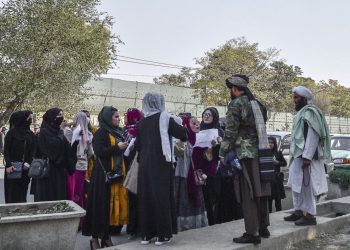
May 19 was first proposed and formally established as Hazara Culture Day in 2017 by Fatima Atef, a cultural activist from the Hazara community in Pakistan. Today, it is commemorated in countries across the globe—including Australia, Canada, the United States, and several European nations. Hazara Culture Day is more than a celebration of ethnic identity; it is an invitation to reflect on Afghanistan’s contemporary history and to honor a culture that has remained resilient despite sustained attempts at erasure. It is a culture born of suffering, yet filled with hope, human dignity, justice, and a yearning for peace. At a time when the Taliban regime continues its campaign of cultural, ethnic, and religious suppression against the Hazaras—narrowing their very space to exist within Afghanistan—the observance of this day in exile becomes a powerful act of resistance and cultural preservation. It affirms that while lands may be taken and rights denied, identity and heritage endure, defiant, vibrant, and unbroken.
You can read the Persian version of this article here: