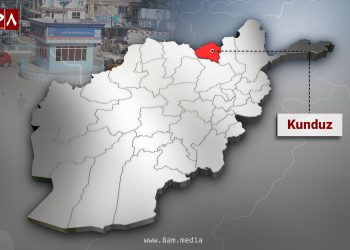
Some residents of Dasht-e Archi district in Kunduz Province report that women lack access to healthcare services and female doctors, particularly obstetricians and gynecologists. They note that this district, previously under Taliban control, remains deprived of essential medical services.
Several residents explain that while a clinic and a few sub-health centers exist in the district, none employ female doctors. They point out that only one midwife works at the district center. Moreover, they emphasize the absence of specialized doctors and medicines in these facilities, which fail even to treat minor illnesses.
The residents highlight that obstetric and gynecological patients receive no care at these centers, forcing families to transport patients to the city center. Tragically, some patients lose their lives en route.
Mohammad Aslam, a resident of Dasht-e Archi, shares that the district was previously engulfed in conflict, leaving people with no access to basic services. He adds that even now, the health centers lack doctors, specialists, and medicine.
Another resident remarks, “We have three active health centers here, but they provide no real services. There is no medicine, and no obstetricians or gynecologists. When we bring obstetric and gynecological patients, we are told to transfer them to the city center. In the past, we suffered due to war, displacement, and poverty, and now the situation remains unchanged.”
A woman from Dasht-e Archi, who requested anonymity, recalls that under the previous government, the district remained under Taliban control, and girls were barred from attending school. As a result, no educated girls or women are present in the district.
She explains, “My daughters attend a madrasa, but if regular schools up to grade 12 were open, I would send them to become doctors. There are no female doctors here, and women face immense hardships. Our men refuse to take us to male doctors, so we endure great suffering during pregnancy and illness.”
Amanullah, an elder of Dasht-e Archi, points out that many remote areas in the district lack access to healthcare services. He adds that the men in the district are deeply religious and do not permit their women to consult male doctors.
He states, “Health centers here have received insufficient attention. The clinic in our area lacks basic facilities to address childbirth complications or provide primary healthcare services. Even at the district health center, surgeries for conditions like appendicitis are not performed. There are only a few beds, which are far from adequate.”
Taliban health officials in Kunduz acknowledge the district’s healthcare challenges and claim they are working to deploy mobile health centers to remote areas. However, residents say they have yet to see these mobile units and believe they fail to address their needs effectively.
Residents of Dasht-e Archi continue to voice frustrations over the lack of female doctors and obstetricians, compounded by the Taliban’s closure of all educational institutions above grade six and higher education centers, including medical institutes, for girls and women over the past three years.
Previously, the Hasht-e Subh Daily reported that some girls, following the closure of schools, have turned to Taliban-run religious schools. According to the report, the Taliban taught girls in these schools that they were created to serve men and should not involve themselves in political or state affairs.
The report further reveals that girls studying in Taliban-controlled religious schools are often willing to become the second, third, or fourth wives of Taliban fighters—a practice deemed acceptable. Additionally, teachers in these schools actively encourage girls to marry Taliban fighters, sometimes proposing to the girls themselves.
Taliban officials in the Kunduz Education Department claim that 500 schools and 800 religious schools are currently operational in the province, with the majority established within the past two years.
You can read the Persian version of this daily report here:
ناکامی طالبان در عرضه خدمات صحی؛ باشندهگان دشت ارچی کندز به خدمات صحی دسترسی ندارند | روزنامه ۸صبح