
Sometimes I ask myself: Has history repeated itself? Perhaps it has; but this time, not with pits of earth, but with closed school gates, dust-covered books, and dreams that were buried one by one in silence.
Five years ago, millions of Afghan girls woke up with hope. Some put on their school uniforms, some prepared for exams, and some dreamed of their first day at university. None of them knew that day would be the last time they could freely walk toward their future.
When I turn the pages of history, I reach a time when, during the Age of Ignorance, some Arab tribes would bury their daughters alive out of fear of poverty or shame. With the emergence of the Prophet Muhammad (PBUH), the dignity of women and their right to life were upheld. A girl who had once been a victim of ignorance gained dignity and respect. Centuries passed, humanity progressed, the world changed, and everyone believed that darkness had finally come to an end.
But history returned this time with a different face. Sometimes history does not return in the same form, but imposes the same pain on humanity in a new guise. This time, no one buried girls beneath the soil; they buried their dreams. They broke their pens, closed their books, and imprisoned their futures behind the iron gates of schools and universities. Perhaps the form of oppression has changed, but the pain of being deprived of the right to live, the right to learn, and the right to choose remains the same a pain that millions of Afghan girls have been living with every day for the past five years.
Five years have passed since August 15, the day when, for millions of Afghan girls, the school bell rang for the last time and their dreams were left behind closed doors. The day childhood came to an end, hope faded, and the future was halted before it could even begin.
Over the past five years, girls have not only been deprived of education; they have also been stripped of even the most basic human rights. Families unable to afford the cost of living have sometimes been forced to marry off their daughters at a young age. Many girls were forced into marriage before having the opportunity to choose their own path in life. Some chose the difficult path of migration, while others silently lost a part of their hope each day.
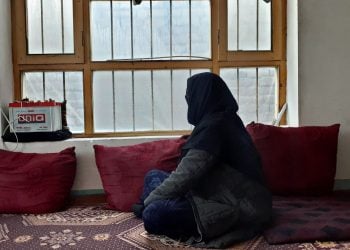
A generation that should today be making contributions in universities, hospitals, media outlets, and government institutions is instead confined to their homes. This is not only the deprivation of girls; it is Afghanistan’s deprivation of half of its human potential. A country that prevents its girls from learning is also depriving its own future of growth and progress.
History may not repeat itself exactly, but pain, discrimination, and injustice can return in new forms. If girls were once buried alive, today their dreams are being buried alive. If, back then, the earth covered the bodies of girls, today the high walls of restrictions have buried their talents, freedom, and futures.