• 8AM.MEDIA
  • ویب‌سایت فارسی
  • پښتو ویب‌پاڼه
  • اۉزبېکچه ویب‌سایت
  • Podcast
Friday, October 9, 2026
Hasht-e Subh
  • Home
  • News
    • Afghanistan News
    • World News
  • Opinion
    • Editorial
    • Analysis
  • Reports
    • Daily Reports
    • Investigative Reports
  • Society
    • The story of people
  • Women’s Word
  • Columns
    • Three Years After Afghanistan’s Fall: The Taliban’s Resurgence
    • Towards Equality
    • The Resurgence of the Taliban: Two Years Since Afghanistan’s Fall
    • Hebatullah Report Special Edition
    • Resistance for Education Special Edition
    • Special Column on Taliban’s Education Curriculum
    • Nawroz
  • Interviews
  • Contact Us
    • About Us
    • 8AM MEDIA Annual Awards
    • Submit an Article to Hasht-e-Subh
  • 8am.mediaBack
Subscribe
No Result
View All Result
  • Home
  • News
    • Afghanistan News
    • World News
  • Opinion
    • Editorial
    • Analysis
  • Reports
    • Daily Reports
    • Investigative Reports
  • Society
    • The story of people
  • Women’s Word
  • Columns
    • Three Years After Afghanistan’s Fall: The Taliban’s Resurgence
    • Towards Equality
    • The Resurgence of the Taliban: Two Years Since Afghanistan’s Fall
    • Hebatullah Report Special Edition
    • Resistance for Education Special Edition
    • Special Column on Taliban’s Education Curriculum
    • Nawroz
  • Interviews
  • Contact Us
    • About Us
    • 8AM MEDIA Annual Awards
    • Submit an Article to Hasht-e-Subh
  • 8am.mediaBack
No Result
View All Result
Hasht-e Subh
No Result
View All Result

Inside Abdul Hamid Khorasani’s Kabul Villa: OSINT Reveals Militia Operations, Alleged ISKP Links, and Internal Taliban Tensions

Qais Alamdar Qais Alamdar
30 August 2024 - Solar Hijri Date: 1403/06/10 [t_time:1725084857]
Inside Abdul Hamid Khorasani’s Kabul Villa: OSINT Reveals Militia Operations, Alleged ISKP Links, and Internal Taliban Tensions

Executive summary

This report provides an in-depth analysis of Abdul Hamid Khorasani, a prominent Tajik commander formerly aligned with the Taliban, known for his leadership of the “Badri Unit” and his shifting allegiances amidst Afghanistan’s volatile political landscape. Utilizing Open-Source Intelligence (OSINT), the report reveals Khorasani’s operations from a fortified villa on Kabul’s northern outskirts, which functions as both his residence and a private detention facility. The analysis geolocates his base, identifies his militia’s armaments and personnel, and highlights his complex relationship with the Taliban leadership, particularly the Haqqani network.

Recent intelligence indicates potential connections between Khorasani and the Islamic State Khorasan Province (ISKP). Video evidence and social media posts suggest his unit includes former ISKP operatives, raising suspicions of a strategic pivot toward this rival group. His vocal criticisms of the Taliban’s ethnic policies and the emerging power struggle within its ranks further complicate his position.

With his recent arrest by the Taliban following controversial statements about Iran, Khorasani’s future remains uncertain. This report examines whether he will continue to exploit internal divisions within the Taliban or formalize an alliance with anti-Taliban factions like ISKP, influencing Afghanistan’s shifting militant dynamics.

Background

Abdul Hamid Khorasani, also known by the alias Nasser Badri, is a Tajik commander from the Panjshir Valley in Afghanistan. Formerly aligned with the Taliban, he served as a key figure in the Badri Unit, although without any official designation. After relocating from Panjshir to Kabul, Khorasani was reportedly provided with a villa on the city’s northern outskirts, near the Kabul-Mazar road. This villa has been used as his personal residence, a base for his militia, and, notably, a private detention facility where prisoners are allegedly held in the basement.

Analysis of Khorasani’s Residence

Open-Source Intelligence (OSINT) analysis has identified Khorasani’s residence as a four-story villa. The villa has two main entrances: the southwestern entrance, which is primarily used by Khorasani’s militia, known as the “Badri Karwan.” This entrance also serves as the point through which prisoners are brought in and detained in the basement. The second entrance, located on the western side, appears to be reserved for general use, including guests, though no evidence of family members, such as women, children, or elderly individuals, has been observed on the premises.
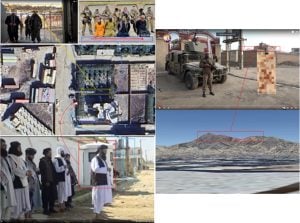
Figure 1: Geolocation of Abdul Hamid Khorasani's residence with a mountain peak analysis to determine the residence area.
Figure 1: Geolocation of Abdul Hamid Khorasani’s residence with a mountain peak analysis to determine the residence area.

Further OSINT analysis, including a video from Khorasani’s fourth wedding, confirmed the villa’s location, as the convoy seen in the footage was geolocated back to this address (see Figure 2).
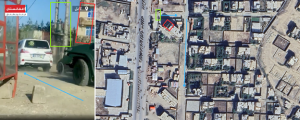
Figure 2: Geolocation showing a convoy of Khorasani heading towards the villa on Khorasani’s fourth wedding day.

In another video interview, at least seven CCTV cameras were observed around the villa, with three positioned outside to cover the northwest, southwest, and east, and three more inside, covering the courtyard and stairways. The position of the seventh camera remains undetermined. (see Figure 3)
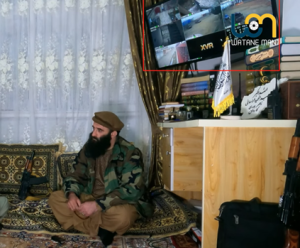
Figure 3: Screen showing CCTV positions further confirming Khorasani’s residence.

On 21 November 2022, a video surfaced claiming the release of Khorasani’s brother from a private prison, allegedly on charges of selling weapons in Panjshir, the private prison is reportedly controlled by Mawlawi Musafir, an ally of the Taliban. The brother was delivered by a vehicle bearing a dark yellow stripe and marked “GDI” — an acronym for the Taliban’s General Directorate of Intelligence. This vehicle, which had no visible license plates, was seen outside Khorasani’s villa (see Figure 4), suggesting his connections with high-level Taliban officials, particularly from the Haqqani network.
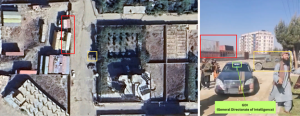
Figure 4: A screenshot from a video shows the moment when Hamid Khorasani greets several men from the black GDI vehicle in front of his residence.

Badri Karwan (Badri Unit) Under Khorasani 

Khorasani’s relationship with the Taliban leadership is notably strained, characterized by a series of disagreements and fluctuating alliances. After being appointed to roles in Paktia and Panjshir, Khorasani returned to Kabul without any official title despite commanding a heavily armed unit and publicly declaring his allegiance to the Haqqani faction, which has afforded him certain privileges. His unit, “Badri Karwan,” comprises approximately 35 active fighters (see Figure 5), with an additional 5 to 8 personnel in non-combat roles.

Figure 5: Screenshots of a video showing Khorasani celebrating Afghanistan’s Independence Day on 19 August. The total number of armed men is 35, with a few unarmed standing in front of Khorasani’s villa.

The soldiers are equipped with various weapons (see Figure 5), including AK-47 rifles, M4 carbines, RPG-7 rocket launchers, PKMs, Zastava M84s, and a US-made M240 machine gun. Additionally, they possess multiple vehicles, such as two armored Humvee tanks, three armed trucks (two Ford and one Toyota), and at least two Toyota Landcruiser SUVs.

Key Personnel and Alleged Connections to ISKP

Among Khorasani’s close associates is Ahmad Ghazizada Rasooli, a Turkic man who appears to be a significant figure within his unit and is observed with Khorasani in many images and videos (see Figure 6). Most of his men are from Panjshir, with a few from other regions, including Herat.
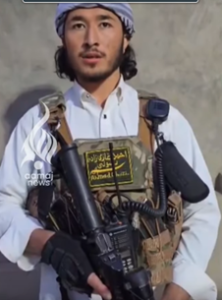
Figure 6: Ahmad Ghazizada Rasooli of Badri Unit.

There have been allegations that Khorasani maintains potential links to the Islamic State Khorasan Province (ISKP). In an interview published in May 2024, Khorasani claimed that both ISKP and the National Resistance Front (NRF) approached him to join their fight against the Taliban after he expressed dissatisfaction with the Taliban’s discriminatory practices.

In July 2024, a video surfaced featuring an individual identified as Abu Omar al-Ansari from Herat, espousing anti-Shia sentiments and justifying the use of violence against Shia Hazaras.
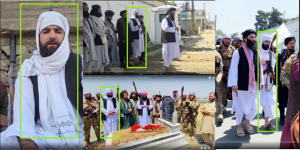
Figure 7: Recently, the individual identified as Abu Omar al-Ansari is observed with Khorasani posing as a special guard.

This video was posted by Azizullah Sanjar, a PhD student in Criminal Law, who claimed that al-Ansari had been a key ISKP operative involved in orchestrating attacks against Hazaras.

OSINT analysis has since identified al-Ansari as a member of Khorasani’s unit, further fuelling suspicions about Khorasani’s ties to ISKP. The video appears to have been filmed in front of Khorasani’s villa in Kabul, with al-Ansari wielding a customized AK-47 rifle, which matches the one seen with Khorasani (see Figures 7 and 8).
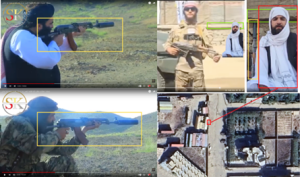
Figure 8: Geolocation of the video calling for the enslavement of Shia Hazaras in front of Khorasani’s villa.

Khorasani’s Future

The ideological and strategic implications of Khorasani’s current stance are significant. His rhetorical alignment with ISKP’s anti-Shia narrative and continued expressions of loyalty to the Haqqani faction suggest a dual strategy. He might be seeking to maintain his influence within the Taliban’s internal factions while also exploring potential alliances with rival groups like ISKP.

Khorasani’s outspoken criticism of the Taliban’s policies towards ethnic minorities, particularly non-Pashtuns, indicates an ongoing internal power struggle. As a Tajik commander, his dissatisfaction with the Taliban’s Pashtun-centric governance has resulted in threats to defect, although he has yet to make a decisive break from the group. 

As of 29 August 2024, Khorasani was reportedly detained, according to Hasht-e-Subh Daily, by the Taliban on orders from Mohammad Hassan Akhund, the Taliban’s Acting Prime Minister, following his controversial statements about Iran. Khorasani had previously referred to the Iranian government as “infidel and oppressive” and called on Afghan migrants to attack Iranians.

Khorasani’s future remains uncertain; whether he will continue to navigate the complex web of Taliban politics or align with a rival group remains to be seen. His actions and affiliations will be critical in understanding the evolving dynamics within Afghanistan’s militant landscape.


Note: Per our privacy policy, sensitive geolocation coordinates have been removed from this OSINT report to respect privacy concerns.
ShareTweetSendSendShare

Related Posts

Taliban fighters sit in a vehicle displaying the Taliban flag. (Photo credit: EPA/AFP)
Afghanistan News

National Resistance Front: Taliban and ISIS Are Two Sides of the Same Coin

6 October 2026 [t_time:1791293851]
Representatives from countries posing for a group picture in the ‘Moscow Format’ meeting (Photo: @PakinRussia)
Afghanistan News

Mohammad Sadiq at Moscow Meeting: Pakistan’s Operations in Afghanistan Are ‘Defensive’ in Nature

5 October 2026 [t_time:1791216341]
A Taliban member in a camouflage vest stands in front of a vehicle carrying armed men. (Photo Credit: AFP)
Analysis

Why Have the Taliban Lasted This Long?

19 September 2026 [t_time:1789843474]

Latest

Loading latest news...

Popular stories

  • An Afghan woman gazes out of her home, reflecting the isolation and challenges faced by women in Afghanistan under Taliban rule. (Photo Credit: 8am.media)

    UN Report Reveals Shifts in Family Attitudes and Rise in Domestic Violence in Afghanistan

    Share
    Share Tweet
  • Taliban Shoot Young Man from Herat After Torturing Him with Hands Tied

    Share
    Share Tweet
  • Taliban Intelligence Deputy in Faizabad Killed with Two Guards

    Share
    Share Tweet
  • Al-Qaeda Releases Hamza bin Laden Message on 9/11 Anniversary

    Share
    Share Tweet
  • Iraq Reports Export of Two Million Barrels of Crude Oil Through Strait of Hormuz

    Share
    Share Tweet

Podcast

Insights
Insights

Join Lynne O’Donnell for 8AM’s podcast series, Insights.
Lynne talks with generals, diplomats, soldiers, journalists, politicians, activists, people who have front row seats for conflicts around the world, and citizens with a story to tell, happy or sad. For this first series, Afghanistan is the focus. Lynne and her guests talk about the collapse of the republic in August, 2021, and the impact since — for the people of Afghanistan, for the security of the region, for the safety of the world. It’s important, interesting and insightful.

Insights/22: Controlling the Narrative with Mina Sharif
byinsights8am

Controlling the Narrative

Lynne O’Donnell talks with Mina Sharif, author, activist, women’s rights campaigner, educator and mentor. They discuss who controls the narrative and who speaks for Afghanistan’s people when the Taliban appear to have seized control not only of the country but of the message, too.

Have a listen

Insights/22: Controlling the Narrative with Mina Sharif
Episode play icon
Insights/22: Controlling the Narrative with Mina Sharif
Episode Description
Episode play icon
Insights/21: Media Meltdown with Zahra Joya
Episode Description
Episode play icon
Insights/20: Terror Inc with Scott Richards
Episode Description
Episode play icon
Insights/19: Busting Stereotypes with Bushra Gohar
Episode Description
Episode play icon
Insights/18: Media Matters with Waliullah Rahmani
Episode Description
Episode play icon
Insights/17: What Goes Around Comes Around with Sima Samar
Episode Description
Search Results placeholder
Hasht-e Subh

8AM Media, also known as Hasht-e-Subh Daily, stands as Afghanistan's premier independent and non-profit newspaper, resonating as a beacon of journalistic integrity since its establishment in June 2007 by esteemed Afghan journalists and human rights advocates. With a steadfast commitment to citizen journalism and civic education, Hasht-e-Subh Daily has earned its place as the most esteemed publication in the nation.

Publisher: Sanjar Sohail
Email: [email protected]
Executive Director: Parwiz Kawa
Email: [email protected]

Read More

Barred from School, Now Teaching: The Story of Behdukht Online Academy on Teacher’s Day

When Colonialism Redesigned Religion

UNICEF Announces Expanded Primary Healthcare Services for Children and Mothers in Afghanistan

Residents Fund Construction of Health Center in Ghazni

Faiq at UN Calls for End to Arbitrary Detentions, Torture and Killings in Afghanistan

Editor’s Choice

Every Saturday morning, 8AM MEDIA English Services Department will guide you through the week’s biggest stories from Afghanistan and the international community.

Subscribe

© 2026 - ©Hasht-e Subh Daily

No Result
View All Result
8am.Media
پښتو ویب‌پاڼه
ویب‌سایت فارسی
اۉزبېکچه ویب‌سایت
  • Home
  • News
    • Afghanistan News
    • World News
  • Opinion
    • Editorial
    • Analysis
  • Reports
    • Daily Reports
    • Investigative Reports
  • Society
    • The story of people
  • Women’s Word
  • Columns
    • Three Years After Afghanistan’s Fall: The Taliban’s Resurgence
    • Towards Equality
    • The Resurgence of the Taliban: Two Years Since Afghanistan’s Fall
    • Hebatullah Report Special Edition
    • Resistance for Education Special Edition
    • Special Column on Taliban’s Education Curriculum
    • Nawroz
  • Interviews
  • Contact Us
    • About Us
    • 8AM MEDIA Annual Awards
    • Submit an Article to Hasht-e-Subh
  • 8am.media

© 2026 - ©Hasht-e Subh Daily