
Iran’s foreign policy, shaped by the constantly shifting conditions of the world and the region, has always been subject to fluctuation. A brief look at that country’s foreign policy approach, particularly toward the region and Afghanistan, leads to the conclusion that Iran has taken various positions at different historical junctures. During the Soviet occupation of Afghanistan, the Islamic Republic’s approach was to support the mujahideen factions against the government of the time. Although Iran later established good relations with the Islamic State under mujahideen administration in Kabul, when the Taliban regime came to power for the first time (1996-2001), relations between Iran and the Taliban deteriorated to the point of military confrontation.
Relations between the two sides worsened further when the Taliban entered Mazar-e-Sharif on August 8, 1998. At the same time, the Iranian consulate in Mazar-e-Sharif was attacked, resulting in the killing of eleven Iranian citizens and consulate staff. Although the Taliban did not accept responsibility for this event, the Iranian government held them responsible for the incident. Nevertheless, Iran consistently supported opponents of the Taliban. With the fall of the Taliban in 2001 and the establishment of the republican system in Afghanistan, Iran’s foreign policy entered a new phase, one that could be described as “engagement with the new government while containing United States influence.” Under this approach, Iran supported the government formed after the Bonn Conference and simultaneously played an active role in Afghanistan’s reconstruction, education, trade, and investment. At the same time, Iran opposed the continued presence of the United States and NATO in Afghanistan, viewing NATO’s presence on its border as a threat to its national and regional security. Even so, after the establishment of the republican system and the extensive presence of the United States and NATO, Iran concluded that it should pursue a “dual diplomacy” as part of its foreign policy.
Alongside its relations with the Afghan government, Iran simultaneously maintained limited ties with the Taliban. The purpose of these ties was to pressure American forces and preserve Iran’s standing in Afghanistan’s affairs. Over time, Iran’s relations with the Taliban grew closer, to the point that Tehran directly supported the Taliban against the presence of American and NATO forces. Iran also maintained close relations with the Islamic Republic of Afghanistan’s government, particularly with Hamid Karzai. According to the accounts of several politicians from Afghanistan, Iran regularly paid sums of money to the office of Hamid Karzai, the president of Afghanistan at the time.
With the withdrawal of part of NATO’s military forces in 2014, Iran intensified its relations with and support for the Taliban, believing that the Americans were withdrawing and that the Taliban, as the de facto alternative force, would come to power. At that time, Iran hosted several Taliban leaders and provided unwavering support for the Taliban’s struggle against the Afghan government. It is worth noting that Iran, through individuals under its influence, played a key role in the fall of several western Afghan provinces to the Taliban.
The question is why, following the withdrawal of part of NATO’s military forces in 2014 and the announcement of a complete American withdrawal plan, Iran continued to support the Taliban and still maintains close relations with them today.
During the period of American presence in Afghanistan, Iran was concerned about the expansion of United States influence and the resulting risk to its national security. Based on Iran’s security doctrine, the presence of NATO and the United States in Afghanistan rested on a combination of “threat identification strategy” and “pragmatic risk management.” Iran viewed the military presence of Western forces on its eastern borders as a destabilizing factor, a peripheral threat, and an attempt to establish a unipolar order led by the United States, while at the tactical level it also maintained limited cooperation to preserve relative stability and combat narcotics. Given the roughly five decades of tense relations between Tehran and Washington, this concern was understandable, and from Iran’s perspective, the American presence could pose a direct threat to the country.
Iran’s support for the Taliban after the withdrawal of American forces and the Taliban’s return to power depends, above all, on the country’s broader interests, interests that also encompass the roughly 945-kilometer shared border between the two countries.
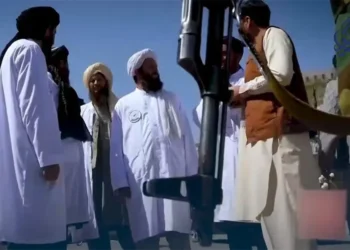
Tehran has now come to believe that cooperation with the Taliban to prevent drug trafficking, illegal migration, and the spread of insecurity into Iranian territory is more beneficial than supporting anti-Taliban groups, which are currently in a weakened position. In addition, the activities of terrorist groups in the region, particularly the Islamic State Khorasan Province (ISKP), which Tehran regards as a more serious threat, are seen as containable through cooperation with the Taliban. According to Iran’s security doctrine, the Taliban regime can play a stabilizing role in the region.
Iran and Afghanistan also maintain extensive trade relations. Afghanistan represents a suitable market for Iranian goods, especially since Iran has for years been under severe sanctions imposed by the West and the United States. For this reason, the export of goods and the expansion of trade are also among the reasons Tehran prefers to maintain its relations with the Taliban.
It is worth noting that over the course of several decades, Iran, as a regional actor, has consistently maintained relations with both the ruling governments of Afghanistan and their opponents. Just as Tehran supports the Taliban regime in Kabul, it has also maintained contacts with opponents of the Taliban. Iran still maintains close relations with several Taliban opponents and hosts several officials from Afghanistan’s former government.
Iran’s political realism is based on the premise that, to secure the country’s interests, maintaining simultaneous relations with both the Taliban and their opponents is necessary for Tehran to preserve its influence over developments in Afghanistan. In effect, Iran seeks to strike a kind of balance between the Taliban and their opponents, using both sides as leverage in pursuit of its own interests.
Recent remarks by Seyed Hassan Mortazavi, deputy ambassador of Iran in Kabul, reflect this same realist approach toward Afghanistan. He explicitly stated that the Islamic Republic of Iran does not recognize the struggles of anti-Taliban groups as “resistance.” This is notable given that the reception of representatives of both the Taliban and their opponents under the same protocol at the funeral ceremony of Iran’s leader has become a questionable matter for the Taliban.
You can read the Persian version of this report here:
از دشمنی تا تعامل؛ چرا ایران از مخالفان طالبان حمایت نمیکند؟