

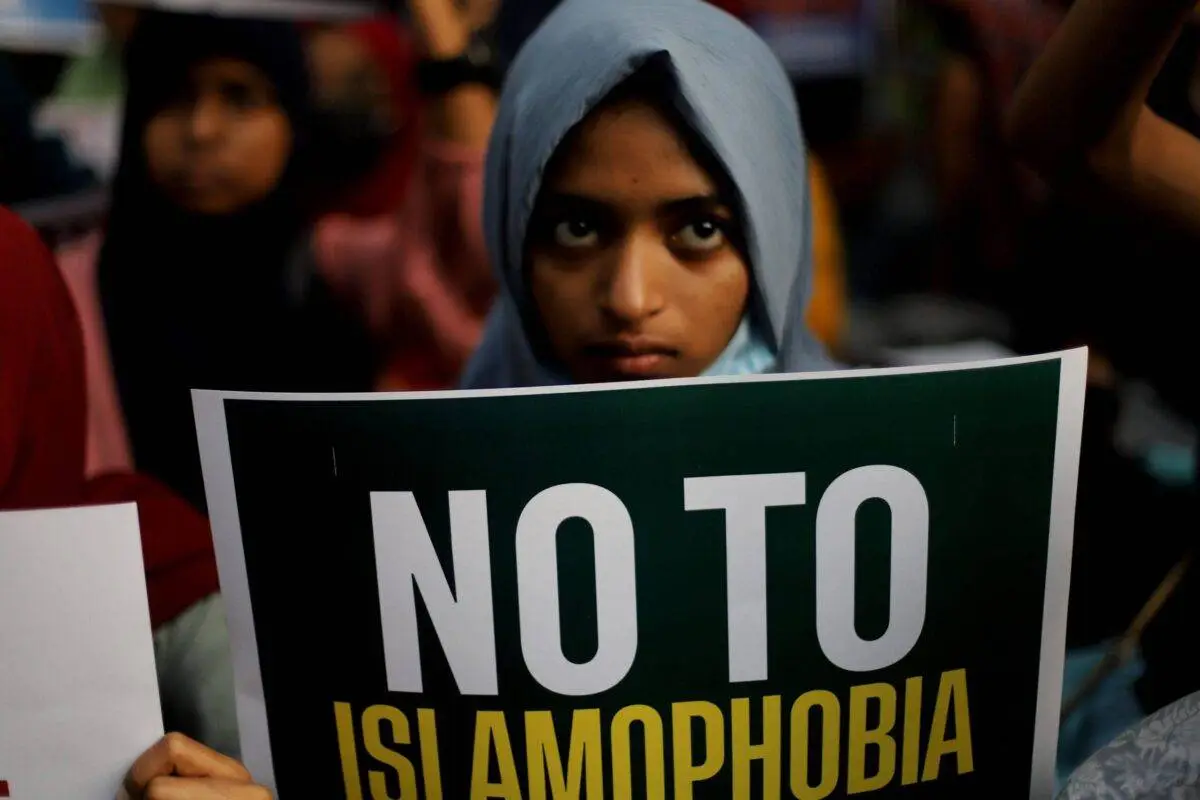
The European Parliament elections held in June this year across 27 EU member states highlighted the clear success of radical right-wing or extremist parties. Voters sent a serious warning to the governments of member states. The reputable French magazine, Le Monde Diplomatique, titled the results of these elections in its June 2024 issue “Europe’s Shift Towards Borderless Far-Right.” Former Scottish Prime Minister, Hamza Yusuf, the first Muslim to lead a Western democracy, wrote in The Guardian on June 17, 2024, stating, “Islamophobia has poisoned our political space.” He added that while many are concerned about the rise of populism and Islamophobia globally, few are actively combating the increase in hostility towards Muslims, which has fueled Islamophobia in Europe and the West.
Many anti-immigrant (Islamophobic) parties in major European countries achieved significant success in these elections, sending numerous representatives to the European Parliament from France, Poland, Italy, and several other countries. Over 180 radical right-wing representatives became members of the European Parliament. Far-right parties emerged as the largest in France and Austria, showing significant advances compared to the 2019 elections in most other European countries.
Marine Le Pen’s National Rally in France secured 31.5% of the vote, surpassing President Macron’s ruling party (14.1%), and increased its MEPs to 35 from 23 in the previous elections. Apart from Le Pen’s party, other smaller neo-fascist parties garnered votes in the European Parliament elections. For instance, a French radical party secured 5.1% of the vote. The victory of radical right-wing parties and the serious setback to the ruling party led President Macron to dissolve the parliament and call for early elections, a move viewed by some observers as a significant political gamble that adds uncertainty to the country’s political future. France, one of the most prominent EU countries, is the only EU member with nuclear weapons and a permanent member of the UN Security Council.
In Austria, another country where a neo-fascist party has gained significant votes, the Freedom Party (FPÖ) secured 25% of the vote in the recent European Parliament elections, marking an 8% increase compared to the previous parliamentary elections and sending 6 representatives to the parliament.
In Germany, the largest economy and most populous country in Europe, the Alternative for Germany (AfD), a neo-Nazi party, achieved 16% of the vote and 15 seats, a substantial increase from the previous 5% in the European Parliament elections. This marks the party’s best result since its inception, placing it as the second-largest party in Germany, ahead of the Social Democratic Party of Germany.
In Italy, another major European country, the neo-fascist Brothers of Italy party secured 29% of the vote, more than four times its previous performance in the elections. Giorgia Meloni leads this party and is currently the Prime Minister of Italy.
In Poland, nearly half of the votes went to two extremist parties, although a centrist coalition led the country’s elections with 37% of the vote. Except for Finland, right-wing parties in other European countries gained more votes compared to the 2019 elections.
It should be noted that these far-right parties are formed based on ideas of racial superiority and propagate racial, cultural, and religious discrimination. Given that a significant majority of immigrants in Europe are Muslims, anti-foreigner and anti-immigrant parties exploit anti-Islamic rhetoric as a political tool. Some extremist parties claim their mission is to combat what they perceive as the Islamization of Europe.
Far-right extremist parties employ populist policies to garner votes by deceiving the public with vague promises and provocative rhetoric. Today, their leaders attempt to link all societal issues to racial and religious matters and blame them on foreign presence. Support for these populist parties is expanding among the populace. Consequently, parties once marginalized are gradually taking center stage in European countries. Currently, right-wing populist groups dominate the political landscape in countries such as Italy, Hungary, and Slovakia, and there is a possibility they may rise to power in France and the United States in the future.
Major Causes Of The Rise Of Populism
Apart from the increasing number of migrants from the Middle East and North Africa, widespread dissatisfaction among the populace with security and economic conditions has contributed significantly to the growth of populism in Western countries. Today, populism and far-right parties enjoy such levels of support and backing from the public in European countries and the United States that were previously unimaginable.
The increase in the density of migrants has disrupted security, and terrorist attacks by extremist Muslim groups such as ISIS and al-Qaeda, which have resulted in the slaughter of innocent people, have become the cornerstone of right-wing extremist propaganda in the West.
Terrorist incidents in Europe have notably increased since 2014. Several bombings have been carried out by individuals who had immigrated to Europe years earlier and were expected to integrate into those societies. The deadliest of these attacks occurred in November 2015 in Paris, resulting in 130 deaths. In 2016, a Tunisian man drove a truck into a large crowd during Bastille Day celebrations in Nice, killing 86 and injuring 458 others. ISIS claimed this event. On March 22, 2016, suicide bombers detonated three bombs at the Brussels Airport and metro station, resulting in 32 deaths and 340 injuries. On December 19, 2016, a truck attack at a Christmas market in Berlin killed 12 and injured 56. Further deadly attacks occurred in Manchester in 2017 and in Russia and Spain.
According to the Global Terrorism Index report released in March 2024, terrorism poses a serious threat to the world and claimed 8,352 lives in 2023, the highest in recent years. However, the casualty figures were even higher in 2015.
Terrorist groups, especially ISIS and al-Qaeda, exploit the presence of Muslim migrants and refugees to carry out their horrific activities.
In Western countries, far-right parties pretend that all Muslims are extremists. According to them, Muslims consider non-Muslims as infidels and are obligated by their religious scriptures to combat them. They portray Muslims as being unwilling to refrain from any violence against “infidels.” With these assumptions and propaganda, they perceive the presence of Muslims as a significant threat to their national security and identity without making distinctions.
However, this perception is incorrect. Religious extremism, especially attacks by groups like ISIS and al-Qaeda, has affected Islamic communities more than non-Islamic countries. Statistics from the Global Terrorism Database indicate that between 83% to 97% of terrorism victims are Muslims. From 2004 to 2014, over 60% of terrorist attacks occurred in Afghanistan, Iraq, and Pakistan. According to the Global Terrorism Index in 2015, four terrorist groups (ISIS, Boko Haram, Taliban, al-Qaeda) were responsible for 74% of known terrorism-related deaths worldwide.
Thus, the primary victims of terrorism are Muslims themselves, and the devastation caused by Islamic extremist violence has turned some Muslim-majority countries into ruins. While some of these violent incidents have occurred in European countries, they have contributed to increasing Islamophobia, especially in immigrant-receiving countries like France, Germany, Austria, the Netherlands, and the UK. This has created difficulties for Muslims living in these countries.
The growth of far-right extremism in the West will have negative consequences for Europe and other parts of the world. Extremists leading governments and having a strong presence in European parliaments will inject tension and divisiveness into those societies, and beyond, into regions like the Middle East, South Asia, and North Africa. Their xenophobia and Islamophobia will exacerbate extremism among migrants in Europe and create a cycle of confrontation and tension.
Therefore, non-extremist parties and groups in the West are expected to gain the people’s trust and prevent extremists from dominating the political scene in their countries. Meanwhile, immigrant communities and Islamic institutions active in the West must work to prevent the spread of extremism among Muslim youth and new generations of immigrants, ensuring they do not fall victim to the propaganda of groups like ISIS and al-Qaeda, which contribute to pessimism and Islamophobia in Europe.
You can read the Persian version of this analysis here:
اسلامهراسی عامل عمده موفقیت احزاب فاشیستی در غرب | روزنامه ۸صبح