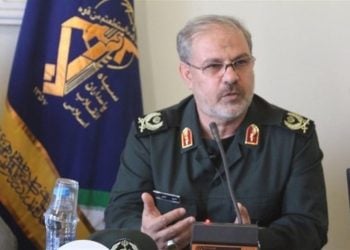
Recently, Iranian Foreign Minister Hossein Amir-Abdollahian expressed concern about Islamic State-Khorasan (ISIS-K) activities in Afghanistan, stating that senior leaders and skilled fighters from the Islamic State in Iraq, Syria, and parts of Libya have been transferred to Afghanistan in recent months. As expected, the Taliban rejected the Iranian minister’s remarks. In a statement, the Taliban foreign ministry strongly urged concerned nations to fulfill their international border security obligations rather than burdening others. Amir-Abdollahian’s comments are the latest regarding ISIS-K’s presence and operations in Taliban-controlled Afghanistan. Last month’s UN Security Council report referred to ISIS-K’s escalating activity in the country, labeling the group the most serious terrorist threat there.
However, whenever reports emerge about ISIS-K, the Taliban claim to be engaged in serious efforts against the group, dismissing accounts of ISIS-K’s expanding activities as propaganda. The former Afghan government also initially downplayed ISIS-K’s nascent growth and territorial gains, insisting the group had no foothold in the country. By the time the government recognized the true threat and launched successive military offensives, even claiming to have “eradicated” ISIS-K in exaggerated pronouncements, the group had already reinforced its ranks and reestablished itself.
The Taliban now seem headed down the same path as the previous government – denying ISIS-K poses a serious threat. The consequences of this prideful denial will soon undermine the Taliban’s de facto regime, potentially dismantling their system entirely. ISIS-K remains a harsh reality where downplaying the threat only increases the eventual price to be paid. A standard wartime principle is that underestimating and scorning an enemy, however weak, ensures failure. The more ISIS-K is discounted and ignored, the higher the toll the Taliban will ultimately bear.
ISIS-K is not a simple, ordinary foe, but rather a threat that should have been properly recognized and contained years ago as it first emerged in Iraq rapidly seizing cities. However, from the outset of ISIS’s rise, intelligence games commenced with some countries attempting to exploit the group as a proxy against rivals. This enabled ISIS to expand its reach from Iraq, Syria and Libya into Afghanistan and Pakistan. The concerns of major Asian powers like Russia, China, India and Iran regarding growing ISIS-K activity hints at frightening agendas lurking behind the declared united front against ISIS. The great powers’ real plans must be properly scrutinized and addressed realistically, not just their stated policies opposing ISIS.
Official positions do not always reflect practical policies. Throughout political history, many governments publicly supported a mission while secretly working against it. For instance, Pakistan is an ally of the United States in the war on terror, yet evidence suggests the Pakistani military covertly backed the Taliban during the U.S. campaign in Afghanistan – support so substantial that the U.S. ultimately withdrew, leaving the country to the Taliban. Russia and Iran have repeatedly accused the American government of supporting ISIS in Syria and Afghanistan. Most recently, Russian Foreign Minister Sergei Lavrov directly alleged U.S. support for ISIS-K and Al-Qaeda in Afghanistan. Meanwhile, the U.S. deems itself the initiator and leader in the war on terror, professing to combat those very groups. This underscores the need to scrutinize the real agendas behind stated policies.
A core complexity of diplomacy is the wide gap between reality and truth. What is seen does not reveal the full truth of politics. The truth remains invisible, sowing confusion and ceding ground to opponents. With ISIS, the margins matter more than just its overt activities. Some analysts believe ISIS-K’s operations align with rather than undermine broad U.S. strategic aims. They argue ISIS serves as an American tool to manage wars and cement Washington’s pivotal role amid intensifying global competition. China, India, Russia and Iran are future challengers to U.S. dominance in Asia – giants that America understands it will grapple with. In this view, ISIS-K advances American interests vis-à-vis these rivals despite outward opposition. The full truth remains obscured beneath the surface.
China is currently the world’s second largest economy. Russia has emerged from the Soviet Union’s collapse to become an organized power focused on its internal affairs. India is a major rising Asian power. Iran remains influential in regional dynamics, especially across the Middle East and Afghanistan. As such, the United States cannot sustain its Asian presence without engaging these countries as a leading world power. Could ISIS represent an American pretext for continued regional involvement encompassing Afghanistan? The US may leverage the threat of ISIS to justify America’s ongoing role given the ascent of its rivals.
Comparing the Iranian foreign minister’s latest remarks with the Russian foreign minister’s prior statements helps elucidate matters. ISIS currently sits at the nexus of intelligence games – both in terms of agencies leveraging the group for political ends and the fight against ISIS serving as a top priority. With time, it will become evident where the maneuvering around ISIS leads and how it reshapes the terrorism landscape. What can be said definitively is that, as before, Afghanistan remains the foremost victim of this dirty intelligence game that has violently played out for forty years. The Afghan people continue paying for the mistakes and incompetence of disingenuous leaders who opened the door to foreign meddling and proxy warfare on Afghan soil. The country has long been the epicenter of regional power plays and machinations beyond the control of its people.