• 8AM.MEDIA
  • ویب‌سایت فارسی
  • پښتو ویب‌پاڼه
  • اۉزبېکچه ویب‌سایت
  • Podcast
Thursday, October 1, 2026
Hasht-e Subh
  • Home
  • News
    • Afghanistan News
    • World News
  • Opinion
    • Editorial
    • Analysis
  • Reports
    • Daily Reports
    • Investigative Reports
  • Society
    • The story of people
  • Women’s Word
  • Columns
    • Three Years After Afghanistan’s Fall: The Taliban’s Resurgence
    • Towards Equality
    • The Resurgence of the Taliban: Two Years Since Afghanistan’s Fall
    • Hebatullah Report Special Edition
    • Resistance for Education Special Edition
    • Special Column on Taliban’s Education Curriculum
    • Nawroz
  • Interviews
  • Contact Us
    • About Us
    • 8AM MEDIA Annual Awards
    • Submit an Article to Hasht-e-Subh
  • 8am.mediaBack
Subscribe
No Result
View All Result
  • Home
  • News
    • Afghanistan News
    • World News
  • Opinion
    • Editorial
    • Analysis
  • Reports
    • Daily Reports
    • Investigative Reports
  • Society
    • The story of people
  • Women’s Word
  • Columns
    • Three Years After Afghanistan’s Fall: The Taliban’s Resurgence
    • Towards Equality
    • The Resurgence of the Taliban: Two Years Since Afghanistan’s Fall
    • Hebatullah Report Special Edition
    • Resistance for Education Special Edition
    • Special Column on Taliban’s Education Curriculum
    • Nawroz
  • Interviews
  • Contact Us
    • About Us
    • 8AM MEDIA Annual Awards
    • Submit an Article to Hasht-e-Subh
  • 8am.mediaBack
No Result
View All Result
Hasht-e Subh
No Result
View All Result

Kabul Markets Strained by Worn Banknotes as the Taliban Keep New Cash for Themselves

Illya Illya
15 January 2026 - Solar Hijri Date: 1404/10/25 [t_time:1768456127]
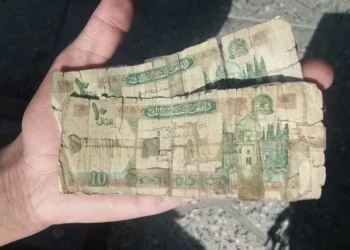
A Kabul resident holds a bundle of heavily worn banknotes, reflecting the growing cash crisis and the circulation of deteriorated currency in local markets. (Photo Credit: CA Times)

CA Times

Many residents of Kabul speak with frustration about the growing circulation of old and worn banknotes by both private and state banks. Over the past few years, they say, the problem has worsened sharply, yet the Taliban have shown little interest in addressing it. According to these residents, the Taliban reserve new banknotes for people under their control, while the rest of the population receives money that is already damaged and worn.

In conversations with the Hasht-e Subh Daily, residents explain that the Taliban first collect worn banknotes under the excuse of burning them. Later, they say, these same notes return to the market after commissions are taken. This cycle, they believe, has turned everyday transactions into a constant struggle. Many shopkeepers and even some banks refuse to accept such money, adding another burden to lives already filled with hardship.

Mohsen, who lives in Kabul, describes the shortage of new banknotes as one of the city’s most serious daily problems. He explains that he receives his monthly salary through ATMs, but the machines often dispense old notes and only occasionally give out cleaner ones. When customers raise questions, he says, bank officials tell them that neither the central bank nor other banks have access to new banknotes.

“Old and worn banknotes are everywhere in the markets,” Mohsen says. “Private banks do not distribute new money and claim the central bank has none either. These notes cause problems not only in large payments but also in small, everyday purchases. Not long ago, banks had new money and gave it out. The Taliban need to take this issue seriously.”

Samir, another resident of Kabul, shares similar concerns. He says the heavy circulation of severely damaged banknotes has weakened people’s trust in the Afghan afghani. As a result, many now rely on the US dollar for their transactions. In his view, Da Afghanistan Bank, now under Taliban control, lacks permission to print and distribute new banknotes, while ordinary people also fail to protect paper money properly.

“There is no effective banking system to collect worn notes and replace them with new ones,” Samir explains. “Afghanistan’s foreign currency reserves remain frozen abroad, and this has stopped new money from reaching the people. The central bank cannot print new notes, and the small amount available mostly goes to those linked to the Taliban as salaries. When you try to pay 500 or 1,000 afghanis, you almost always find a 10 or 50 afghani note that is so worn it should no longer circulate. I face this every day.”

Ehsanullah, another Kabul resident, says the pattern is clear to everyone. The Taliban, he claims, keep new banknotes for their own members and pass worn notes on to others. Even private banks, he adds, no longer have access to clean money.

“The banknotes are extremely old,” Ehsanullah says. “Any new money that enters the market goes straight to the Taliban. The notes collected under the name of burning are later given back to the people. You rarely see new banknotes in Sarai Shahzada or in banks. Some notes are so damaged that banks themselves refuse to accept them.”

Alongside these complaints, some residents of Kabul argue that Afghanistan needs to move toward digital payments. They believe every citizen should have a bank account and use tools such as POS devices, so people can slowly adjust to cashless transactions.

These residents also criticize how cash is handled across the country. They say people store and use banknotes carelessly, which only speeds up their destruction. In their view, expanding digital payments would change daily habits and reduce the problems caused by worn-out money in circulation.

Mujib Saabir, a Kabul resident who runs a training center, says he often has to exchange the money his students bring because it is in such poor condition. He believes the Taliban avoid printing new banknotes to maintain the stability of the Afghan afghani, which allows old money to remain in constant use.

“When the Taliban pay salaries to government employees, they add a small amount of new banknotes to replace worn ones, but it is not enough,” Mujib Saabir says. “Sadly, people do not know how to take care of money. In the markets, everyone handles banknotes with dirty hands, whether they are cart pushers, flower sellers, or water vendors. This quickly destroys the notes.”

Halal and Mohammad Shafiq, two more residents of Kabul, say worn banknotes have disrupted daily life across the country’s markets. Some notes are in such poor condition that shopkeepers and drivers refuse to take them at all.

“Once I withdrew money from a bank and used a few notes to shop,” Halal recalls. “Later, I noticed the corners of a fifty-afghani note were completely gone. The shopkeeper said it was useless. If banks give out money like this, what can we expect from the market? In the end, I only managed to use it after arguing.”

Mohammad Shafiq agrees and says the money now circulating in Afghanistan has reached an alarming state. He explains that many notes are so worn that it is hard to tell old from new. People, he adds, do not pay attention to proper handling, and this neglect makes the damage even worse.

At the same time, an employee of a private bank, speaking anonymously, says corruption inside the Taliban controlled central bank allows worn money to return to the market. According to him, the central bank has the authority to do this and uses personal connections to push damaged notes back into circulation.

“Customers bring worn banknotes to us, and we credit their accounts with the same amount,” the employee explains. “We then send the collected notes to the central bank. Private banks cannot put this money back into the market, but the central bank does so based on its own rules and relationships. After another round of circulation, the same notes return to banks, while commission brokers make their profit.”

While residents continue to complain, the Taliban controlled central bank claims it has removed 15 billion afghanis in worn paper money from circulation over the past four years. The bank also says digitizing transactions remains one of its top priorities.

Earlier, the Taliban announced that the central bank had introduced a national card called FP, which works with all ATMs. They say cardholders can make payments without cash at supermarkets equipped with active POS devices.

You can read the Persian version of this report here:

بازار کابل زیر بار پول فرسوده؛ طالبان نو را برای خود نگه داشتند
ShareTweetSendSendShare

Related Posts

A resident of Kabul holds a stack of worn and torn Afghani banknotes still in circulation. (Photo credit: Social Media)
Daily Reports

Worn-Out Banknotes in Circulation: Citizens Call for Electronic Payments

26 September 2026 [t_time:1790427844]
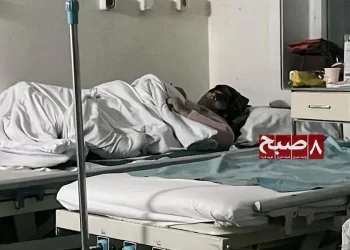
A patient rests on a bed at a government hospital in Kabul, as citizens complain that treatment costs now differ little from private clinics. (Photo credit: 8am.media)
Daily Reports

Patients Say Treatment Costs at Government Hospitals Barely Differ from Private Clinics

14 September 2026 [t_time:1789405060]
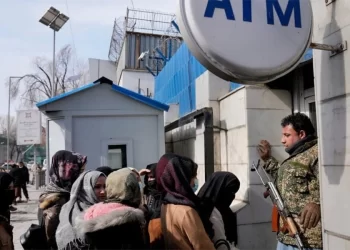
People wait in line at an ATM outside a bank in Kabul as concerns over deposit security shake public trust. (Photo credit: AP)
Daily Reports

Deposit Security Fears: Public Trust in Afghanistan’s Banks Remains Fragile

3 September 2026 [t_time:1788440100]

Latest

Loading latest news...

Popular stories

  • Surveillance footage shows Taliban fighters surrounding and shooting a bound man in Herat. (Photo credit: Social Media)

    Taliban Shoot Young Man from Herat After Torturing Him with Hands Tied

    Share
    Share Tweet
  • UN Report Reveals Shifts in Family Attitudes and Rise in Domestic Violence in Afghanistan

    Share
    Share Tweet
  • Al-Qaeda Releases Hamza bin Laden Message on 9/11 Anniversary

    Share
    Share Tweet
  • Sources: Kandahar Bombing Leaves Seven Dead and Eight Injured at Mirwais Hospital

    Share
    Share Tweet
  • Afghanistan’s Empty Seat at the Annual UN General Assembly

    Share
    Share Tweet

Podcast

Insights
Insights

Join Lynne O’Donnell for 8AM’s podcast series, Insights.
Lynne talks with generals, diplomats, soldiers, journalists, politicians, activists, people who have front row seats for conflicts around the world, and citizens with a story to tell, happy or sad. For this first series, Afghanistan is the focus. Lynne and her guests talk about the collapse of the republic in August, 2021, and the impact since — for the people of Afghanistan, for the security of the region, for the safety of the world. It’s important, interesting and insightful.

Insights/22: Controlling the Narrative with Mina Sharif
byinsights8am

Controlling the Narrative

Lynne O’Donnell talks with Mina Sharif, author, activist, women’s rights campaigner, educator and mentor. They discuss who controls the narrative and who speaks for Afghanistan’s people when the Taliban appear to have seized control not only of the country but of the message, too.

Have a listen

Insights/22: Controlling the Narrative with Mina Sharif
Episode play icon
Insights/22: Controlling the Narrative with Mina Sharif
Episode Description
Episode play icon
Insights/21: Media Meltdown with Zahra Joya
Episode Description
Episode play icon
Insights/20: Terror Inc with Scott Richards
Episode Description
Episode play icon
Insights/19: Busting Stereotypes with Bushra Gohar
Episode Description
Episode play icon
Insights/18: Media Matters with Waliullah Rahmani
Episode Description
Episode play icon
Insights/17: What Goes Around Comes Around with Sima Samar
Episode Description
Search Results placeholder
Hasht-e Subh

8AM Media, also known as Hasht-e-Subh Daily, stands as Afghanistan's premier independent and non-profit newspaper, resonating as a beacon of journalistic integrity since its establishment in June 2007 by esteemed Afghan journalists and human rights advocates. With a steadfast commitment to citizen journalism and civic education, Hasht-e-Subh Daily has earned its place as the most esteemed publication in the nation.

Publisher: Sanjar Sohail
Email: [email protected]
Executive Director: Parwiz Kawa
Email: [email protected]

Read More

Iran’s UN Mission Calls Report of Iranian Delegation’s Expulsion ‘Baseless’

15 Fuel Tankers Destroyed in Islam Qala Customs Fire

OCHA: Poverty and Unemployment Among Main Concerns of Helmand Residents

The Silencing of Afghanistan

Global Oil Prices Steady Amid Iran-US Talks

Editor’s Choice

Every Saturday morning, 8AM MEDIA English Services Department will guide you through the week’s biggest stories from Afghanistan and the international community.

Subscribe

© 2026 - ©Hasht-e Subh Daily

No Result
View All Result
8am.Media
پښتو ویب‌پاڼه
ویب‌سایت فارسی
اۉزبېکچه ویب‌سایت
  • Home
  • News
    • Afghanistan News
    • World News
  • Opinion
    • Editorial
    • Analysis
  • Reports
    • Daily Reports
    • Investigative Reports
  • Society
    • The story of people
  • Women’s Word
  • Columns
    • Three Years After Afghanistan’s Fall: The Taliban’s Resurgence
    • Towards Equality
    • The Resurgence of the Taliban: Two Years Since Afghanistan’s Fall
    • Hebatullah Report Special Edition
    • Resistance for Education Special Edition
    • Special Column on Taliban’s Education Curriculum
    • Nawroz
  • Interviews
  • Contact Us
    • About Us
    • 8AM MEDIA Annual Awards
    • Submit an Article to Hasht-e-Subh
  • 8am.media

© 2026 - ©Hasht-e Subh Daily