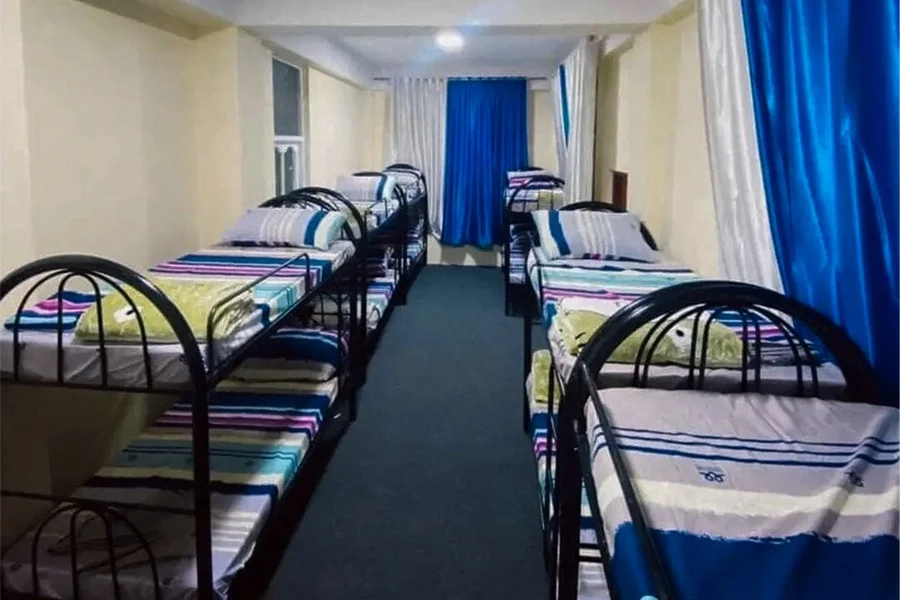
A number of young people who have come to Kabul from various provinces to continue their education are complaining about the high cost of private dormitories and the poor quality of services at these facilities. They say that in some dormitories, the services and amenities provided do not match the fees charged to students. According to these students, poor hygiene, the lack of regular water and electricity, low-quality food, overcrowded rooms, and a shortage of bathrooms and toilets are the main problems in some private dormitories. They add that the lack of hot water and frequent power cuts have also disrupted their daily lives and their studies.
Speaking to the Hasht-e Subh Daily, the students cite the lack of a suitable study environment as another problem in private dormitories. They say that overcrowded rooms and the absence of a quiet setting have reduced their concentration and negatively affected their education. They are calling for stricter oversight of private dormitories and for clear standards on cost, hygiene, security, and quality of services.
Sayed Ali, a student who came to Kabul from Panjshir to continue his education, says he pays about 7,000 Afghanis a month for a private dormitory, but the amenities and services provided do not match what he pays. He adds that overcrowded rooms, shortages of water and electricity, and low-quality food are the main problems at this dormitory. According to Sayed Ali, the shortage of bathrooms and toilets and the lack of a suitable place to study have made life and studying difficult for students. He also cites the lack of respect for privacy as another problem at the dormitory.
The student says: “We pay about 7,000 Afghanis in dormitory rent for one month, while the rooms are small and many students live in a single room. Paying these costs is very difficult for us. Because of the overcrowding, we cannot study properly in the room. The quality of the food is also very low, and when we first came to the dormitory, we often fell ill because of the poor condition of the food and the environment. The shortage of water and electricity, the lack of peace, and the lack of respect for privacy are also among our main problems.”
Soroush, another student who came to Kabul from Ghor to continue his education, says the rising cost of private dormitories, on top of other living expenses, has increased the economic pressure on students. He adds that the lack of job opportunities for students has meant that these costs fall largely on their families, and that continuing their education has become a serious challenge for some students.
Soroush says: “At a time when jobs cannot be found, paying these costs is very difficult for us. When we add up dormitory rent, transportation costs, internet, and food, our monthly expenses become very high, and the continuation of this situation has reduced the motivation and hope of many students to continue their education.”
Nasim, another student who came to Kabul from Kunduz to continue his education, says the quality of food and drinking water at the private dormitory where he lives is poor. He adds that the water used by students is not purified and that the state of cleanliness is also unsatisfactory. According to Nasim, the absence of a designated cleaner and the shared use of bathrooms and toilets have made students’ hygiene problems worse.
Nasim says: “We pay 5,000 Afghanis a month for boarding, but the quality of the food is very low, the drinking water is also of poor quality, and no filter is used. The cleanliness and tidiness of the dormitory are also very poor, and there is no designated person for cleaning. The bathrooms and toilets are shared as well, and due to a lack of adequate cleaning, they are in a very poor condition.”
Meanwhile, officials at a number of private dormitories in Kabul reject claims of rising dormitory costs and poor quality of services at these facilities. They say that dormitory fees have not increased in recent years and that rising costs for buildings, food, and water have placed greater financial pressure on them.
Ahmad (pseudonym), an official at one of the private dormitories in Kabul, says the monthly fee at the dormitory they manage has not increased over the past four years and has in fact decreased from 3,500 Afghanis to 3,350 Afghanis. He adds that over the same period, building rent has increased by about 120 percent and food prices have also risen.
Ahmad says: “Our dormitory fee has not only not increased over the past four years, but has decreased from 3,500 Afghanis to 3,350 Afghanis. Over the same period, building rent has increased by about 120 percent and food prices have multiplied several times over. For example, a 24.5-kilogram sack of rice that used to cost 1,700 Afghanis now costs about 4,000 Afghanis. Despite this increase in costs, we try to maintain the quality of food and services at the dormitory, and we do not consider the claim of paying 15,000 Afghanis a month per student to be reasonable.”
He also says that in the dormitories they manage, rooms, bathrooms, and toilets are used communally, and that this arrangement is common in many dormitories. According to him, water supply problems have also led some dormitories to rely on tankers to meet their water needs.
With a large number of students from different provinces present in Kabul, private dormitories are operating in various parts of the city. A number of these dormitories advertise services such as Wi-Fi, food, and suitable facilities for students on social media, including Facebook.
However, a number of students say the services provided at some dormitories differ from what is stated in the advertisements. According to them, the cost of staying in private dormitories in Kabul varies depending on location and amenities, and in some cases reaches about 5,000 to 7,000 Afghanis a month.
You can read the Persian version of this report here:
کیفیت پایین و هزینههای بلند؛ دانشجویان از خوابگاههای خصوصی در کابل شکایت دارند