• 8AM.MEDIA
  • ویب‌سایت فارسی
  • پښتو ویب‌پاڼه
  • اۉزبېکچه ویب‌سایت
  • Podcast
Monday, September 21, 2026
Hasht-e Subh
  • Home
  • News
    • Afghanistan News
    • World News
  • Opinion
    • Editorial
    • Analysis
  • Reports
    • Daily Reports
    • Investigative Reports
  • Society
    • The story of people
  • Women’s Word
  • Columns
    • Three Years After Afghanistan’s Fall: The Taliban’s Resurgence
    • Towards Equality
    • The Resurgence of the Taliban: Two Years Since Afghanistan’s Fall
    • Hebatullah Report Special Edition
    • Resistance for Education Special Edition
    • Special Column on Taliban’s Education Curriculum
    • Nawroz
  • Interviews
  • Contact Us
    • About Us
    • 8AM MEDIA Annual Awards
    • Submit an Article to Hasht-e-Subh
  • 8am.mediaBack
Subscribe
No Result
View All Result
  • Home
  • News
    • Afghanistan News
    • World News
  • Opinion
    • Editorial
    • Analysis
  • Reports
    • Daily Reports
    • Investigative Reports
  • Society
    • The story of people
  • Women’s Word
  • Columns
    • Three Years After Afghanistan’s Fall: The Taliban’s Resurgence
    • Towards Equality
    • The Resurgence of the Taliban: Two Years Since Afghanistan’s Fall
    • Hebatullah Report Special Edition
    • Resistance for Education Special Edition
    • Special Column on Taliban’s Education Curriculum
    • Nawroz
  • Interviews
  • Contact Us
    • About Us
    • 8AM MEDIA Annual Awards
    • Submit an Article to Hasht-e-Subh
  • 8am.mediaBack
No Result
View All Result
Hasht-e Subh
No Result
View All Result

Lia Wasn’t Killed by the Kunar Earthquake — She Was Killed by Gender Discrimination

Parniyan Zhobal Parniyan Zhobal
14 September 2025 - Solar Hijri Date: 1404/06/23 [t_time:1757874413]
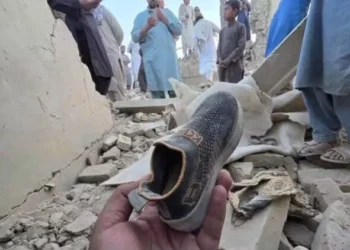
Grieving families mourn victims of the deadly Kunar earthquake as rescue operations continue in the affected areas of Afghanistan, September 4, 2025. (Photo Credit: Wakil Kohsar / AFP)

Wakil Kohsar / AFP

Lia (Pseudonym) died when her throat had been torn raw by a surge of mud and silt. The earthquake in eastern Afghanistan did not kill her — she survived the quake itself; God willed that she live long enough for her life to be taken another way. Their house, in the Kunar province of eastern Afghanistan, collapsed under beams, rafters, and planks, but it still breathed. People had nicknamed her “a cat with nine lives” when she was a child… perhaps that is why she was still breathing and not yet dead.

Lia’s voice was audible, though it trembled. She called for her mother and father; unlike always, neither mother nor father answered. She heard no sound from them. She opened her eyes and brushed dust from them. A familiar face hovered above her — maybe the stones that had fallen on her had wiped most memories away, but slowly recognition returned in bits. She blinked at Salma’s eyes and stammered her name: “S… s… Salma!”

Lia thought she might be dead. Her eyelids grew heavy and she slipped into sleep; later, feverish, she woke in a sickbed. She could hear everyone, but she was so disoriented that she could not tell who was saying what. Maybe she had lost the sharpness she used to have. Her legs would not move; she felt weighed down.

Her headscarf was gone, and that terrified her most of all — without it, she might be stripped, stoned, thrown into a ravine, slandered. A doctor with a long beard leaned over her and asked in Pashto, “Are you okay?” Lia’s lips quivered. How could she say, “Yes, I’m okay”?

She did not feel well — how could she? The earthquake had taken her parents, her eldest brother, who had been training to be an engineer, and her little sister, who had been in fourth grade. Apart from her — half-alive — no one from her family remained.

A doctor stood above her, and beside him a man with a gun. He wore a long tunic and shalwar, a henna-reddish long beard, and a black-and-white turban; his eyes were kohl-rimmed. He stared at Lia, then turned to the doctor and, speaking loudly — loud enough to wake other frightened patients — and in his particular accent, he said, “Tell this savage where her chador is. God sent the earthquake because of women’s sins — wretchedness and misery…”

Tears slipped from the corner of Lia’s eyes; she felt the warmth of them on her face. The only thing she felt then was the heat of those intrusive tears, and she could not see Salma clearly. Pain crept through her body, and her belly twisted with it; she clutched her abdomen and writhed. Her ribcage had been broken, and she could not turn her neck to either side.

The doctor came closer and reached toward Lia’s stomach, but Lia pulled back and insisted, “It must be a woman doctor.” The doctor looked at her and said, “The doctor is a mahram* — don’t be afraid. I’ll examine and treat you. I am like your brother. You have no choice.”

Lia would not listen. She kept repeating that a woman doctor had to treat her, otherwise she would rather die than be treated. The doctor replied, “Where are we going to find a woman doctor in this situation? Be grateful I am here. Otherwise, a mullah would come and, with his puffed-up words, make your condition worse. And besides, the man with the gun over us doesn’t understand Persian; if he did, he would kill both of us. I can’t do anything about that. Either I treat you, or you die. The hospital is full of men and women; men are treating everyone. Aside from midwives, we have no female doctors. Do you want a midwife to see you? She can look, but she can’t cure this pain.”

Lia’s face grew even sadder, as if she were reciting all the thoughts that had lived in her head for years. She said, “I prayed for so many days to become a doctor, but it never happened. I escaped their customs and their society, I broke the tribe’s taboo and finished school in the village, but the change of government broke me. Now I have no one — may God not leave anyone without support… Let God take my life and let me die; this is my last prayer. Go and treat the other patients; they have no problem being seen by a male doctor. I want to die, and that’s that.”

It seemed that in Kunar, God expected everyone to die; life had become so harsh there, especially for Lia, and had taken everyone she loved, until Lia herself begged for death from the depths of her heart. For the first time, God answered her prayer. Her chest pain worsened; her breathing grew raspy. The doctor hurried to work, but it was too late. He had to revive her heart; as he began, the heart monitor plummeted — seventy-three to twenty-two, to eleven, and in the blink of an eye, it dropped to zero. The heartbeat flattened into a straight white line.

Lia died wishing for a woman doctor — and she never became the doctor she had dreamed of. She had been born in a place where you could watch dreams wither with your eyes open. The doctor turned to Salma, Lia’s sole survivor, who only heard Lia’s words and wept, and asked, “Salma, you are your neighbor’s daughter — tell us if anyone from her relatives remains, or will you consign the body yourself? The bed must be freed; we have many patients.” Seeing Salma’s tears, the doctor’s heart softened, and he said, “I too want my sisters to become doctors. They have tasted the bitter flavor of hell in the midst of their sweetest dreams. My wife is a doctor, too, but what can she do if the hospital director, who is a Taliban official, will not permit her to work?”

The death of Lia affected the doctor deeply. He went on, “Every day I die and come back to life. In truth, where are we alive amid all this clamor? We are actors playing parts of the living. Now go — I can’t speak much more Persian. If anyone finds out that I told you this from my conscience, they will either dismiss me or shoot me, and you won’t leave here alive either. Take care of yourself.”

Many things happened in the hospital; many people died. But the most tragic death was Lia’s — the girl who had waited for a woman doctor. No one from her family remained to decide whether she should be treated by a male doctor or not. And she herself refused. She wanted, once, to become a doctor. I don’t know what compelled her to refuse treatment by a male doctor, even to the point of choosing death. Had tradition and custom become so ingrained in her? Was it prejudice and bias? Fear that someone from her clan would accuse her of something she could not bear? I do not know what, for her, loomed larger than death itself.

You can read the Persian version of this Afghan woman’s word here:
لیا را زلزله کنر نکشت، تبعیض جنسیتی کشت

ShareTweetSendSendShare

Related Posts

A woman wearing a black headscarf and a patterned shirt is shown in profile (Photo: Exclusive)
No category

The Chapters No One Saw

20 September 2026 [t_time:1789907723]
An Afghan woman stands alone in a field, looking toward the mountains, in a scene reflecting the lives and experiences of women in Afghanistan (Photo: Pexels)
No category

Freedom: A Difficult Path That Comes at Women’s Cost

19 September 2026 [t_time:1789822933]
A collage featuring Afghan women, capturing different expressions and perspectives on women’s lives and experiences in Afghanistan (Photo: Pexels + AFP)
No category

Mozhda (5): The Woman Who Lost University but Kept the Dream of Education Alive for Her Daughter

17 September 2026 [t_time:1789650690]

Latest

Loading latest news...

Popular stories

  • Hamza bin Laden - the son of Osama bin Laden (Photo: Social Media)

    Al-Qaeda Releases Hamza bin Laden Message on 9/11 Anniversary

    Share
    Share Tweet
  • UN Report Reveals Shifts in Family Attitudes and Rise in Domestic Violence in Afghanistan

    Share
    Share Tweet
  • German Politician Calls for Faster Deportation of Undocumented Afghan Migrants

    Share
    Share Tweet
  • Pakistan Army Spokesperson: Afghanistan Has Become a Base for Dozens of Terrorist Groups

    Share
    Share Tweet
  • U.S. Defense Secretary Calls Washington Post Worse Than Iranian State Media

    Share
    Share Tweet

Podcast

Insights
Insights

Join Lynne O’Donnell for 8AM’s podcast series, Insights.
Lynne talks with generals, diplomats, soldiers, journalists, politicians, activists, people who have front row seats for conflicts around the world, and citizens with a story to tell, happy or sad. For this first series, Afghanistan is the focus. Lynne and her guests talk about the collapse of the republic in August, 2021, and the impact since — for the people of Afghanistan, for the security of the region, for the safety of the world. It’s important, interesting and insightful.

Insights/22: Controlling the Narrative with Mina Sharif
byinsights8am

Controlling the Narrative

Lynne O’Donnell talks with Mina Sharif, author, activist, women’s rights campaigner, educator and mentor. They discuss who controls the narrative and who speaks for Afghanistan’s people when the Taliban appear to have seized control not only of the country but of the message, too.

Have a listen

Insights/22: Controlling the Narrative with Mina Sharif
Episode play icon
Insights/22: Controlling the Narrative with Mina Sharif
Episode Description
Episode play icon
Insights/21: Media Meltdown with Zahra Joya
Episode Description
Episode play icon
Insights/20: Terror Inc with Scott Richards
Episode Description
Episode play icon
Insights/19: Busting Stereotypes with Bushra Gohar
Episode Description
Episode play icon
Insights/18: Media Matters with Waliullah Rahmani
Episode Description
Episode play icon
Insights/17: What Goes Around Comes Around with Sima Samar
Episode Description
Search Results placeholder
Hasht-e Subh

8AM Media, also known as Hasht-e-Subh Daily, stands as Afghanistan's premier independent and non-profit newspaper, resonating as a beacon of journalistic integrity since its establishment in June 2007 by esteemed Afghan journalists and human rights advocates. With a steadfast commitment to citizen journalism and civic education, Hasht-e-Subh Daily has earned its place as the most esteemed publication in the nation.

Publisher: Sanjar Sohail
Email: [email protected]
Executive Director: Parwiz Kawa
Email: [email protected]

Read More

UNICEF-Funded Reconstruction of Four Water Supply Networks Begins in Parwan

Afghanistan: When Pollution Becomes an Economy of Illness

Two Mediators, One Case: Foreign Officials’ Visit to Kabul and Kandahar

Body of Young Man Found Hanging in Farah Province

Criminal Incidents Increase: Dentist Killed in Badghis

Editor’s Choice

Every Saturday morning, 8AM MEDIA English Services Department will guide you through the week’s biggest stories from Afghanistan and the international community.

Subscribe

© 2026 - ©Hasht-e Subh Daily

No Result
View All Result
8am.Media
پښتو ویب‌پاڼه
ویب‌سایت فارسی
اۉزبېکچه ویب‌سایت
  • Home
  • News
    • Afghanistan News
    • World News
  • Opinion
    • Editorial
    • Analysis
  • Reports
    • Daily Reports
    • Investigative Reports
  • Society
    • The story of people
  • Women’s Word
  • Columns
    • Three Years After Afghanistan’s Fall: The Taliban’s Resurgence
    • Towards Equality
    • The Resurgence of the Taliban: Two Years Since Afghanistan’s Fall
    • Hebatullah Report Special Edition
    • Resistance for Education Special Edition
    • Special Column on Taliban’s Education Curriculum
    • Nawroz
  • Interviews
  • Contact Us
    • About Us
    • 8AM MEDIA Annual Awards
    • Submit an Article to Hasht-e-Subh
  • 8am.media

© 2026 - ©Hasht-e Subh Daily