It took about ten minutes to walk from the Faculty of Journalism to the exit gate of Syed Jamaluddin University. For nearly three years, I had walked this distance with hope, without hearing any heartbreaking news. This journey was never just about covering a few meters of paved road or walking beneath the pine, cypress and poplar trees. Every step was a step toward a future we hoped to build, one that required determination and careful effort. It was how we intended to turn the dream we had promised to pursue into reality. We, the students, were fighting our own battles along this path, driven by our belief in the future.
We were only three semesters away from completing our undergraduate studies. Yet, amid the excitement of approaching graduation, heartbreaking reports of provincial capitals falling began arriving one after another. The news spread not only beyond the university grounds but also through faculties, classrooms and among students. Everywhere, people were talking about the falling provinces and a future no one could imagine. Still, all the students shared one conviction: the security forces were determined and would defeat the Taliban. None of us believed that the provinces, and eventually Kabul, would fall.
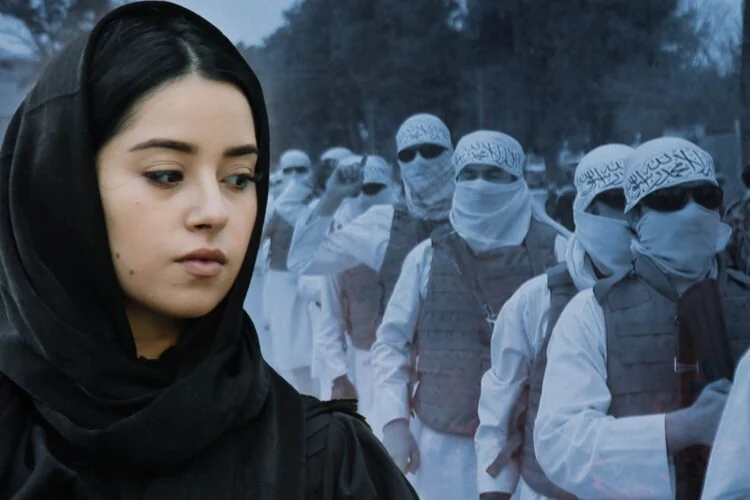
There seemed to be no room for the possibility of collapse. Yet, during those frightening days and nights, as security forces received orders to surrender and people found themselves surrounded by darkness, everyone was offering their own interpretation of the situation: men and women, young and old, politicians, doctors, students, shopkeepers and even street vendors. Some analyzed events in ways that suited their own interests, while fear of the Taliban’s return had taken root in the hearts of others. That fear was visible on many faces, especially those of women: fear of revenge, murder, restrictions and the return of darkness.
Meanwhile, because of the worsening security situation, three of my classmates and I had no choice but to walk from the university to Kote Sangi. The shuttle buses that used to transport students between their homes and the university had been suspended. The long walk, along with the thoughts that kept us from thinking about anything other than war and the Taliban’s return, gave us an opportunity to speculate about what was happening, based on our limited understanding of the day’s political analysis.
We all believed the security forces would prevail. The idea that two decades of democracy could collapse and the country could fall from prosperity into ruin seemed unimaginable, especially with a military force and equipment dozens of times more powerful than those of the Taliban, the presence of US troops, the constant involvement of foreign countries in Afghanistan’s affairs and, above all, the record of fighting terrorism and striving for world peace, justice and equality. But among us, Hamasa believed that any change, even a collapse, was possible. A year earlier, she had read a book predicting Afghanistan’s future. It said: “Afghanistan will once again fall into the hands of the Taliban.” Hamasa always trusted the author’s words and predictions, saying, “Everything he says is the absolute truth.”
Hamasa rarely walked with us. Even amid all the uncertainty over whether to stay or leave, she was living in the university dormitory. That day, she planned to visit some acquaintances and had perhaps left the dormitory intending it to be a final farewell. In an atmosphere filled with anxiety, fear and the silence that followed the latest discouraging remarks, Hamasa once again said with complete seriousness: “Anything can happen. Do not put so much faith in a government whose hands are in other people’s pockets and whose head moves at the command of foreigners.”
Her words, as always, carried the bitterness of someone deeply resentful of a government and its officials, whose rule had been built on discrimination, injustice and corruption. We all laughed and said that Hamasa was once again speaking from her wounded heart. That day and the days that followed passed much as they always had, while reports of provincial capitals falling continued to arrive. Meanwhile, Ashraf Ghani, with his angry and forceful speeches, kept assuring the public that the Taliban would be defeated.
It was August 12, and classes were still being held as usual. Professors continued teaching without commenting on the situation unfolding around us. As always, the university streets were filled with male and female students. Young women and men, each carrying a heavy load of hope to the university every day, were still leaving campus with unsteady steps. In those days, it seemed that something had disappeared from the atmosphere: the loud laughter, excitement, hope and motivation. Enthusiasm had given way to fear and anxiety, and the campus no longer felt as lively as it once had.
The tall poplar and pine trees, which for years had witnessed the presence of students from across the country, seemed to move less in the wind, as though they too were reflecting the students’ mood. Their branches swayed less, and they seemed less willing to shelter us beneath their cool, inviting shade. The shoulders of students, especially the young women, were weighed down not by notebooks and books but by confusion and worry. With their shoulders bent, they left the university grounds as the sun set.
My head felt heavy, and I was leaving campus with my shoulders hunched. Lost in my thoughts, I was suddenly brought back to reality by Shima’s voice. Holding her phone with both hands, she looked bewildered and distressed. Shaking my arm, she asked, “Can you believe Herat has fallen too?”
It was heartbreaking and shocking news, as though something heavy had struck me on the head. I felt a sharp pain. I realized that Shima and Soraya were even more distressed than I was. Trying to comfort one another, we once again clung to hope and said, “It is impossible for them to reach Kabul.”
But something inside me had changed. As tears streamed down my face, I whispered to myself: How could a group that had recently massacred university students come to rule our country? How could people whose hands were stained with the blood of so many children, young people and innocent civilians be about to take power?
Little did I know that those were my final days at university, and that our bitter nightmare was about to become reality. I wish I had taken a longer look at the university in those days, committing every corner of it to memory. Yet the feeling I had, shared by my friends, was much like the feeling of a final farewell. We were saying goodbye to classmates whose numbers dwindled every day, to professors who seemed even more worried than we were, to the excitement of learning, to the laughter that would never return, and to a place whose warmth and sense of belonging made it more welcoming than anywhere else. We did not even get the chance to say goodbye.