Nearly 8 million Afghans have left their country since 2020, according to a recent United Nations report, sparking widespread reactions. Many citizens explain that the harsh and oppressive conditions under the Taliban regime have pushed even those with relatively better lives to consider leaving. They point to the deprivation of women’s and girls’ fundamental rights, acts of revenge, ongoing executions, oppression, vigilante justice, the ban on political parties, lack of civil freedoms, and the rise in poverty and unemployment as the main reasons for mass emigration and dissatisfaction with Taliban rule.
Citizens feel the Taliban want them to live like slaves, without the right to protest, criticize, or participate in public life, while controlling all aspects of their lives, including personal matters. The police state, “Mullahcracy,” ethnic and political monopolization, and arbitrary arrests and forced relocations have led many to view their future in the country as bleak, driving them to seek escape.
The report indicates that 85% of those who left have migrated to neighboring countries, mainly Iran, while nearly one million others have moved to Europe. According to the latest data from the International Organization for Migration (IOM), about 70% of Afghan citizens moved to Iran due to a lack of job opportunities in their country. The report also mentions that in 2023, nearly one million migrants returned from Iran to Afghanistan, with 70% lacking legal documents and 60% being forcibly returned.
The UN report highlights that many Afghans, due to difficulties in obtaining passports and visas, migrate through unofficial routes, often paying smugglers to cross illegally through borders. The organization notes that most migrants have to borrow money or sell family assets to cover their travel expenses.
Meanwhile, some citizens say that with the Taliban’s control over Afghanistan, they have lost hope for a brighter future. They emphasize that due to the extensive and severe suppression by the Taliban, no one can protest, and leaving the country is the only option to reject the group’s extremist and discriminatory practices.
These citizens add that they are frustrated with the Taliban’s oppression and see migration as their only means of protest. They want to show the Taliban and the international community that the group’s presence in Afghanistan has become intolerable, and everyone is considering fleeing the country.
Ghausuddin Jalali, a resident of Ghor province, says that most educated and talented young people are not interested in continuing their lives in the country. According to him, “Mullahcracy” and the discriminatory restrictions imposed by the Taliban have made everyone think about leaving the country. He states, “People have no hope for the future under the Taliban regime; they believe that if this group stays, education and learning will become useless. Either people will become mullahs or leave to pursue their own lives.”
Negina, a third-year student whose university was closed by the Taliban’s order, is currently trying with all her might to find a way out of the country with her family. She emphasizes, “I am disgusted with life under the Taliban’s rule because I have no rights in society and life. As a prisoner in the corner of my home, I cannot accept darkness and despair forever. I want to live as a human being, and living humanely under the Taliban regime is not possible for a woman.”
Revenge by the Taliban: A Major Reason for Leaving the Country
A large number of citizens, particularly former military personnel and elites, have left the country due to the deteriorating political and security situation. They say that the Taliban have created an environment where breathing is difficult, if not impossible, for dissenting citizens. According to these individuals, people do not have any freedom, even the right to choose their clothing.
Many of those who have left Afghanistan held important and influential roles in the previous government and the private sector, but now, in addition to being sidelined from their specialized jobs, they face direct threats and severe retaliation from the Taliban, leading them to leave the country to protect their lives and their families.
Dost Mohammad, a former soldier, describes the Taliban’s general amnesty as a “lie and trap” designed to arrest former security forces. He says that dozens of his comrades have been arrested and disappeared by the Taliban over the past three years. According to him, those who have not been arrested live in deplorable conditions, lack work, and face threats of poverty and hunger, while being deprived of all government job opportunities.
Faryal, a professor at one of the universities in the country, says that all her hopes of educating the young generation have been shattered, and the environment has become severely Talibanized, forcing her to take her children and leave the country. She emphasizes that there is no hope for a better future for the country and that three years of Taliban rule have set the country back by a century. She adds that her daughters were deprived of education, and she was barred from teaching. Eventually, she decided to endure the hardships of migration for a brighter future.
Fear of Executions and Vigilante Justice
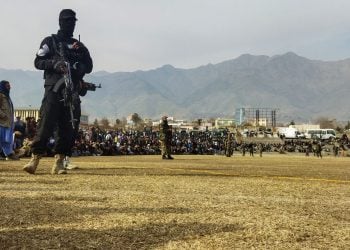
Over the past three years, the Taliban have shown a lack of civil behavior towards citizens and accused individuals. They have executed dozens of former military personnel and civilians in public, without arrest or court verdicts. The group’s violent behavior has made many citizens fear that they could face Vigilante Justice for the slightest mistake.
In a recent case, Taliban fighters in the village of Nowruzi, Ruyi Du Ab district of Samangan province, executed a 17-year-old youth named Abdulhaq after severely beating him with his hands bound. He was killed by the Taliban last Wednesday. The group has executed dozens more in this manner over the past three years.
Ban on Political Parties and Criminalization of Party Names
The Taliban have not allowed any political activities, criticism, or protests from their opponents and citizens over the past three years. The group’s Ministry of Justice has decreed that mentioning a political party is a “crime” and that parties have no place under their regime. The ministry has also revoked the licenses of all political parties and declared their activities illegal.
Ali (pseudonym), a member of the Jamiat-e-Islami party who wishes to remain anonymous for security reasons, says that the Taliban even punish the families of those who speak out against the group.
He further says, “The Taliban’s political and ethnic exclusivism is intensifying daily. Opposing and diverse voices are suppressed and silenced, and those who speak out are killed. There is no tolerance. In this situation, either everyone must rebel or leave the country. One cannot live as a slave. The Taliban want everyone to live without a voice, which is impossible.” He adds that the group does not even value individuals from their ethnic groups and has imprisoned many of them.
The number of Those Who Have Left the Country May Be Higher Than Reported
Some citizens believe that the actual number of those who have left the country exceeds the figures provided by the International Organization for Migration. They argue that these figures only reflect what the UN has recorded, while thousands more leave daily through smuggling and illegal routes. According to these citizens, even the UN’s reported figures do not fully reflect the dire and dangerous conditions in Afghanistan under Taliban rule.
Faizullah, a fourth-year student, says that most students are no longer interested in studying. He believes that education and learning require a free environment, devoid of fear and retaliation, which is currently unattainable.
This student says, “The Taliban have created an atmosphere of fear and revenge. Alongside the group’s stringent regulations, people are afraid of the police state. When someone speaks, they worry that everyone around them is listening to ensure they haven’t said anything contrary to the Taliban’s beliefs. In such a situation, is it possible to continue studying and learning?”
You can read the Persian version of this daily report here:
بیزاری شهروندان از حاکمیت طالبان؛ ترک گروهی کشور برای فرار از آینده تاریک است | روزنامه ۸صبح