• 8AM.MEDIA
  • ویب‌سایت فارسی
  • پښتو ویب‌پاڼه
  • اۉزبېکچه ویب‌سایت
  • Podcast
Wednesday, October 14, 2026
Hasht-e Subh
  • Home
  • News
    • Afghanistan News
    • World News
  • Opinion
    • Editorial
    • Analysis
  • Reports
    • Daily Reports
    • Investigative Reports
  • Society
    • The story of people
  • Women’s Word
  • Columns
    • Three Years After Afghanistan’s Fall: The Taliban’s Resurgence
    • Towards Equality
    • The Resurgence of the Taliban: Two Years Since Afghanistan’s Fall
    • Hebatullah Report Special Edition
    • Resistance for Education Special Edition
    • Special Column on Taliban’s Education Curriculum
    • Nawroz
  • Interviews
  • Contact Us
    • About Us
    • 8AM MEDIA Annual Awards
    • Submit an Article to Hasht-e-Subh
  • 8am.mediaBack
Subscribe
No Result
View All Result
  • Home
  • News
    • Afghanistan News
    • World News
  • Opinion
    • Editorial
    • Analysis
  • Reports
    • Daily Reports
    • Investigative Reports
  • Society
    • The story of people
  • Women’s Word
  • Columns
    • Three Years After Afghanistan’s Fall: The Taliban’s Resurgence
    • Towards Equality
    • The Resurgence of the Taliban: Two Years Since Afghanistan’s Fall
    • Hebatullah Report Special Edition
    • Resistance for Education Special Edition
    • Special Column on Taliban’s Education Curriculum
    • Nawroz
  • Interviews
  • Contact Us
    • About Us
    • 8AM MEDIA Annual Awards
    • Submit an Article to Hasht-e-Subh
  • 8am.mediaBack
No Result
View All Result
Hasht-e Subh
No Result
View All Result

Menstruation: The Pain Is Not Physical, It Is Social

Muhadisa Ibrahimi Muhadisa Ibrahimi
3 June 2026 - Solar Hijri Date: 1405/03/13 [t_time:1780472386]
Menstruation is not just physical pain; for many girls, it is also silence, shame, and social judgment. Awareness and understanding can change that (Photo credit: Getty Images)

Getty Images

In our English class, five of us had become very close friends. Every Friday, we gathered at one of our homes to practice speaking English. These gatherings were not only about learning the language; they also brought us closer together and gave us the chance to talk about things we rarely had the opportunity to discuss in daily life. Sometimes we talked about the future, sometimes about our dreams, and sometimes about the challenges girls face in society.

Last Friday, it was our turn to host the gathering at our house. My friends arrived at 12:40 p.m. I prepared tea and, with a smile, said: “While I bring the tea, you choose today’s topic.”

When I returned, I saw that no topic had been chosen yet. Everyone seemed lost in thought. A quiet silence filled the room, broken only by the soft sound of the fan. Each of us was thinking about something. Suddenly, my mind went back to an experience I had witnessed some time ago, one that changed my understanding of menstruation.

One of our acquaintances was a girl whose condition became very serious because of complications related to menstruation. Her family considered the issue shameful and refused to take her to a doctor. She suffered severe pain for days, but no one took her condition seriously. When we finally managed, after much insistence, to take her to a doctor and have tests done, it became clear that her condition had worsened dangerously. The doctor said that if she had been brought any later, she might have suffered serious harm.

That day, I realized that ignorance and silence can sometimes be more dangerous than the pain itself.

Remembering that incident, I turned to my friends and said: “Let’s talk about menstruation today.”

For a moment, there was silence. Some of them felt embarrassed, others lowered their eyes, but gradually the atmosphere opened up and the conversation began. One of my friends said: “I have never been able to speak comfortably about this topic at home.” Another said: “When I am in pain at school, I do not even dare to explain why I feel unwell.”

Their words weighed heavily on me. How could something so natural remain hidden behind so much silence and shame? Calmly, I said: “Menstruation is not a disease. It is a natural part of our bodies. It is a sign of growth and maturity, not something to be ashamed of.”

Everyone became quiet again. It felt as though each of us had returned in our minds to our own personal experiences. At that moment, I realized we were not only discussing one subject; we were speaking about years of silence.

One of my friends quietly said: “The problem is not only the pain; the problem is that we have learned to remain silent in pain.” Her words stayed with me. Why should a girl who is suffering remain silent instead of receiving support? Why should something so natural become a secret?

I looked at my cup of tea and continued: “As girls, we experience pain every month, yet we continue. We study, we work, we smile, and we keep striving for the future. This is not weakness; it is strength.”

Gradually, the atmosphere in the room changed. The earlier silence gave way to conversation. Each of us had experiences that perhaps we had never shared before. I felt as though a heavy burden had been lifted from our minds.

Then we decided not only to talk about this issue, but also to raise awareness. We decided that if we ever met a girl who felt ashamed of her pain, we would stand beside her. We would tell her that menstruation is not shameful, not a sin, and not a sign of weakness, but a natural part of life’s cycle.

One of my friends said: “If we become aware, perhaps we can help other girls as well.” Her words gave us hope. We understood that change always begins with a small group. That day, our English practice session may not have gone as usual, but we learned something far more important. We learned that talking about pain can be the beginning of awareness. We learned that silence is not always a sign of respect; sometimes it is a sign of fear and ignorance.

After my friends left our house, I kept thinking about our conversation for a long time. I felt that we were not just five girls sitting around a table; we were the voices of girls who have lived in silence for years.

Some wounds are not caused by illness, but by ignorance and people’s judgment. If there were greater awareness, if families responded with understanding instead of shame, and if schools educated students about this subject, much suffering could be reduced.

No girl should feel ashamed of her body. No girl should suffer in silence. Menstruation is a natural process of life; it is a sign of the female body’s strength, a sign of maturity, growth, and the continuation of life.

A day will come when girls can speak about their bodies without fear, talk about their pain without shame, and live without judgment; a day when awareness replaces superstition and humanity replaces silence. Menstruation is not a taboo, but a sign of girls’ physical, emotional, and intellectual maturity.
ShareTweetSendSendShare

Related Posts

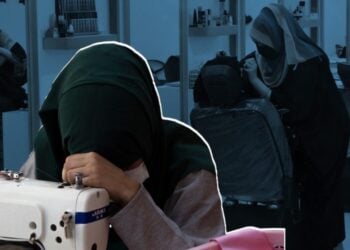
A collage shows Afghan women working in beauty salons alongside a woman sitting sadly beside a sewing machine (Photo: AFP)
No category

Closure of Women’s Beauty Salons: Female Hairdressers Struggle with Unemployment and Fight to Make Ends Meet

13 October 2026 [t_time:1791896243]
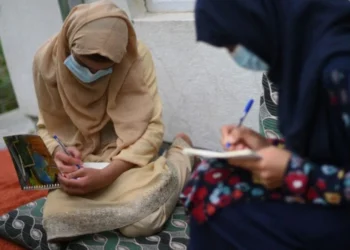
Two young Afghan girls sitting outside and writing in their notebooks (Photo: AFP)
No category

(9) The Unfinished Pashto Exam Papers: The Girl Whose Education Was Interrupted Twice

12 October 2026 [t_time:1791808720]
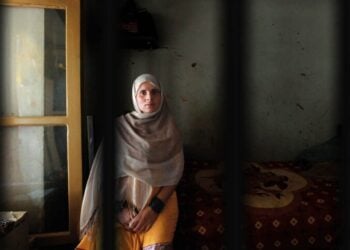
An Afghan woman wearing a headscarf sits quietly inside a dimly lit room (Photo: Gabriela Maj)
No category

(4) A Story from Behind Bars: What Happens to Women in Taliban Prisons?

11 October 2026 [t_time:1791721808]

Latest

Loading latest news...

Popular stories

  • An aerial view shows collapsed buildings and widespread damage following an earthquake in Panama (Photo: Reuters)

    More Than 200 Aftershocks Recorded in Panama Since Friday’s Earthquake

    Share
    Share Tweet
  • Axios: Trump Expects Ukraine Not to Attack Russian Oil Refineries

    Share
    Share Tweet
  • UN Report Reveals Shifts in Family Attitudes and Rise in Domestic Violence in Afghanistan

    Share
    Share Tweet
  • The Politics We Inherited: Rethinking Afghanistan’s Political Culture

    Share
    Share Tweet
  • Mujahid: Pakistan Should Address Its Internal Problems Instead of Making Accusations

    Share
    Share Tweet

Podcast

Insights
Insights

Join Lynne O’Donnell for 8AM’s podcast series, Insights.
Lynne talks with generals, diplomats, soldiers, journalists, politicians, activists, people who have front row seats for conflicts around the world, and citizens with a story to tell, happy or sad. For this first series, Afghanistan is the focus. Lynne and her guests talk about the collapse of the republic in August, 2021, and the impact since — for the people of Afghanistan, for the security of the region, for the safety of the world. It’s important, interesting and insightful.

Insights/22: Controlling the Narrative with Mina Sharif
byinsights8am

Controlling the Narrative

Lynne O’Donnell talks with Mina Sharif, author, activist, women’s rights campaigner, educator and mentor. They discuss who controls the narrative and who speaks for Afghanistan’s people when the Taliban appear to have seized control not only of the country but of the message, too.

Have a listen

Insights/22: Controlling the Narrative with Mina Sharif
Episode play icon
Insights/22: Controlling the Narrative with Mina Sharif
Episode Description
Episode play icon
Insights/21: Media Meltdown with Zahra Joya
Episode Description
Episode play icon
Insights/20: Terror Inc with Scott Richards
Episode Description
Episode play icon
Insights/19: Busting Stereotypes with Bushra Gohar
Episode Description
Episode play icon
Insights/18: Media Matters with Waliullah Rahmani
Episode Description
Episode play icon
Insights/17: What Goes Around Comes Around with Sima Samar
Episode Description
Search Results placeholder
Hasht-e Subh

8AM Media, also known as Hasht-e-Subh Daily, stands as Afghanistan's premier independent and non-profit newspaper, resonating as a beacon of journalistic integrity since its establishment in June 2007 by esteemed Afghan journalists and human rights advocates. With a steadfast commitment to citizen journalism and civic education, Hasht-e-Subh Daily has earned its place as the most esteemed publication in the nation.

Publisher: Sanjar Sohail
Email: [email protected]
Executive Director: Parwiz Kawa
Email: [email protected]

Read More

Community-Funded Healthcare Center Completed in Ghazni

UNICEF: More Than 2.6 Million Girls in Afghanistan Barred from Education Since 2021

Kenneth Roth: Forced Returns of Afghans from France Increase Risk of Persecution and Torture

The Nightmare of the White-Robed Men: Wounds That Linger in the Minds and Souls of Women in Herat

UN: Cities Must Be at the Center of Planning

Editor’s Choice

Every Saturday morning, 8AM MEDIA English Services Department will guide you through the week’s biggest stories from Afghanistan and the international community.

Subscribe

© 2026 - ©Hasht-e Subh Daily

No Result
View All Result
8am.Media
پښتو ویب‌پاڼه
ویب‌سایت فارسی
اۉزبېکچه ویب‌سایت
  • Home
  • News
    • Afghanistan News
    • World News
  • Opinion
    • Editorial
    • Analysis
  • Reports
    • Daily Reports
    • Investigative Reports
  • Society
    • The story of people
  • Women’s Word
  • Columns
    • Three Years After Afghanistan’s Fall: The Taliban’s Resurgence
    • Towards Equality
    • The Resurgence of the Taliban: Two Years Since Afghanistan’s Fall
    • Hebatullah Report Special Edition
    • Resistance for Education Special Edition
    • Special Column on Taliban’s Education Curriculum
    • Nawroz
  • Interviews
  • Contact Us
    • About Us
    • 8AM MEDIA Annual Awards
    • Submit an Article to Hasht-e-Subh
  • 8am.media

© 2026 - ©Hasht-e Subh Daily