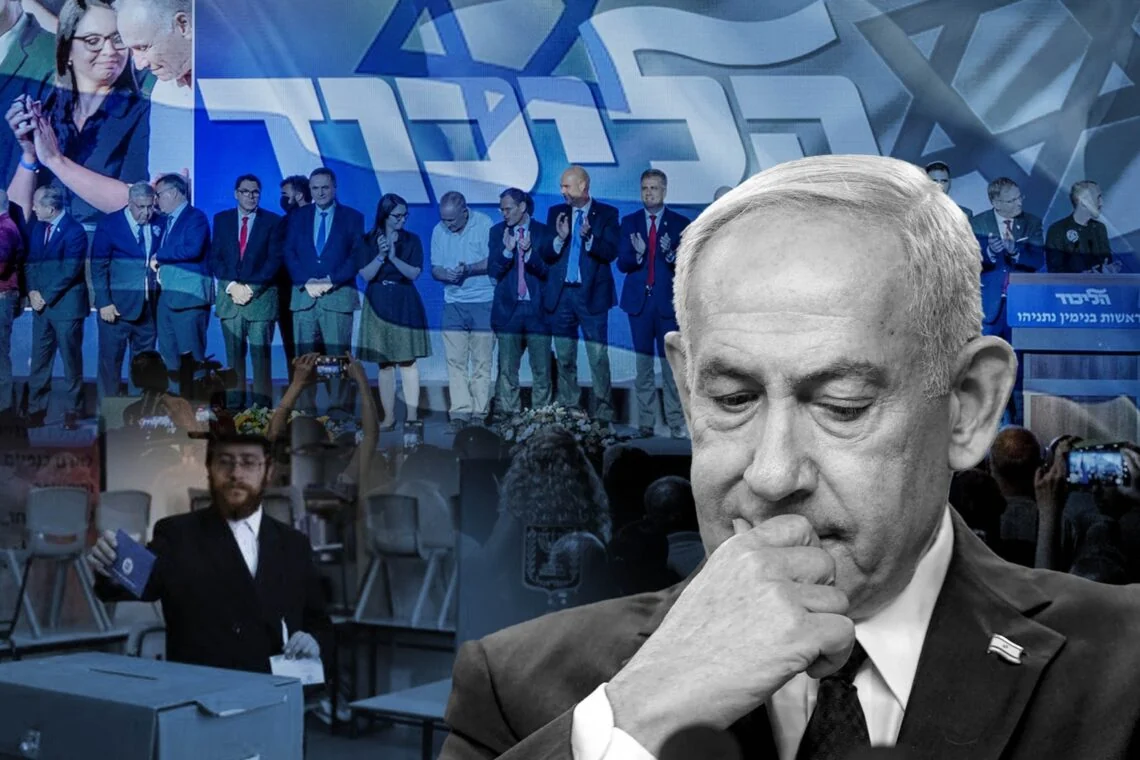
Eventually, Gadi Eisenkot, leader of the camp opposed to Benjamin Netanyahu, was tasked by Isaac Herzog, President of Israel, with forming a new cabinet. Eisenkot has received 67 recommendations from Knesset members for forming the cabinet, which is the highest number. Both Arab blocs are also included in this figure. However, this 67 is only a number and is still far from becoming a formal coalition. By contrast, Netanyahu has received 47 recommendations, fewer than the number of seats held by his electoral coalition, which is 53. The United Torah Judaism (UTJ) party, which was previously a member of Netanyahu’s cabinet and is still counted as part of his camp, has abstained from recommending either side. For now, the party holds seven seats in the Knesset. The reason for its exit from Netanyahu’s government was the ambiguity of his position on the exemption of Haredi seminary students from military service.
Now that Eisenkot has been tasked with forming the cabinet, the question about Netanyahu’s fate has grown louder: will he stay or go?
The reality is that tasking Eisenkot with forming a new government does not necessarily mean Netanyahu’s removal from the scene, although he has little chance of remaining in power either. Unlike Netanyahu’s bloc, which is uniform and cohesive, Eisenkot’s bloc is made up of different tendencies, some of them opposed to one another (left, center, right, and so on). This flaw serves as an Achilles’ heel for Eisenkot on the path to forming a new government. The only common ground among the forces in Eisenkot’s bloc is keeping their distance from Netanyahu, and even that mostly in rhetoric, not beyond it.
Of course, the slogan of distancing from Netanyahu mostly suited the pre-election situation and will not be very effective in the post-election phase. Apart from that, parties that chanted slogans against Netanyahu before the elections may now moderate their positions, particularly the liberal-secular right-wing parties that, in their hostility toward the Islamic Republic, not only match Netanyahu but in some respects even surpass him.
The recent position of Avigdor Lieberman, head of the Yisrael Beytenu party, which is part of Eisenkot’s bloc, has made the formation of a new government difficult. He recently announced that dialogue and a coalition with UTJ is possible. UTJ is a party that is a staunch supporter of Haredi seminary students and does not want this group to be subject to military service. For this party, the issue is a “red line.” The same applies to the Shas party, which is for now an active member of the government and of Netanyahu’s bloc. This comes even though Lieberman is a staunch opponent of granting exemptions to the Haredim. Since 2018, Lieberman has repeatedly stressed that the exemption should be stripped from the Haredim. Apparently, his position has now been temporarily moderated. Here, things become difficult for Eisenkot, because he won votes on the slogan and promise of not granting exemptions to the Haredim. If Eisenkot yields on this and accepts the demands of UTJ, he will certainly have violated his slogans and promises, which would be a costly move for him.
Why is Lieberman, departing from his position of many years, insisting on dialogue with the parties that support the Haredim? Apparently, he aims to keep Eisenkot from seeking help from the two Arab blocs, because a coalition with Arabs is unacceptable to Lieberman, just as it is for Netanyahu. Although the inclusion of UTJ would not complete the government quorum Lieberman has in mind, he wants to draw the other Haredi-supporting party, Shas, into Eisenkot’s bloc as well. In that case, the quorum would be completed, and the need for the Arabs would be removed.
Let us assume that both Haredi parties unite with Eisenkot. In that case, the questions about how the parties would reach an agreement on military service for Haredi seminary students remain unanswered. Both parties want an exemption, and Eisenkot wants no exemption. Finding a middle path is not very easy either.
The danger of a split in Eisenkot’s camp also comes from Naftali Bennett, who leads the “Together” coalition with Yair Lapid, leader of the Yesh Atid party. There are rumors that Bennett is not uninterested in joining Netanyahu’s bloc. Bennett’s tone toward Netanyahu is somewhat conciliatory. More importantly, he has not announced so far that he refuses to take part in a government led by Bibi. In turn, Netanyahu is also trying to recruit allies from Eisenkot’s bloc, and Bennett is one of the attainable options for him. The likelihood of Bennett sliding toward Netanyahu becomes stronger if Eisenkot is forced into an alliance with the Arab parties. Netanyahu is quite serious about recruiting allies and creating a breach in Eisenkot’s bloc, to the extent that he does not shy away from making contact with Mansour Abbas. Media outlets recently reported that Netanyahu is secretly in contact with Mansour Abbas, leader of the Ra’am party, while at press conferences he declares Abbas’s party and Hamas to be the same.
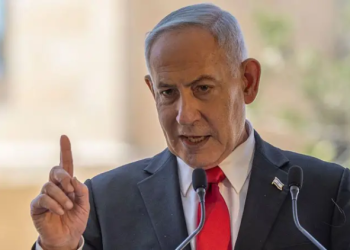
Given the disagreement in the opposition bloc on two fronts (an alliance with the Arabs and with the Haredim), the formation of a new government by Eisenkot is not certain. Eisenkot has 28 days to complete his mission. This period can be extended by 14 days. If he fails, Netanyahu, as the next option, will be tasked with forming a new government. At this stage, Netanyahu’s chances of success will rise. If he fails as well, matters will lead to fresh elections, which Netanyahu’s camp will most likely win.
Apart from what has been stated, the possibility of forming a “national unity” government still appears strong. In order not to be pushed off the stage, Netanyahu longs for such a government, but his opponents do not. In this regard, Bibi will use two tools: Donald Trump, President of the United States, and the securitization of the atmosphere through an attack on Hezbollah or even Iran. When a war breaks out, some parties in the opposition camp will also find themselves compelled to form a national unity government, one in which it is unclear whether Netanyahu will remain at the head until the end or whether it will be run on a rotating basis.
You can read the Persian version of this analysis article here: