• 8AM.MEDIA
  • ویب‌سایت فارسی
  • پښتو ویب‌پاڼه
  • اۉزبېکچه ویب‌سایت
  • Podcast
Monday, September 28, 2026
Hasht-e Subh
  • Home
  • News
    • Afghanistan News
    • World News
  • Opinion
    • Editorial
    • Analysis
  • Reports
    • Daily Reports
    • Investigative Reports
  • Society
    • The story of people
  • Women’s Word
  • Columns
    • Three Years After Afghanistan’s Fall: The Taliban’s Resurgence
    • Towards Equality
    • The Resurgence of the Taliban: Two Years Since Afghanistan’s Fall
    • Hebatullah Report Special Edition
    • Resistance for Education Special Edition
    • Special Column on Taliban’s Education Curriculum
    • Nawroz
  • Interviews
  • Contact Us
    • About Us
    • 8AM MEDIA Annual Awards
    • Submit an Article to Hasht-e-Subh
  • 8am.mediaBack
Subscribe
No Result
View All Result
  • Home
  • News
    • Afghanistan News
    • World News
  • Opinion
    • Editorial
    • Analysis
  • Reports
    • Daily Reports
    • Investigative Reports
  • Society
    • The story of people
  • Women’s Word
  • Columns
    • Three Years After Afghanistan’s Fall: The Taliban’s Resurgence
    • Towards Equality
    • The Resurgence of the Taliban: Two Years Since Afghanistan’s Fall
    • Hebatullah Report Special Edition
    • Resistance for Education Special Edition
    • Special Column on Taliban’s Education Curriculum
    • Nawroz
  • Interviews
  • Contact Us
    • About Us
    • 8AM MEDIA Annual Awards
    • Submit an Article to Hasht-e-Subh
  • 8am.mediaBack
No Result
View All Result
Hasht-e Subh
No Result
View All Result

Why Did Pakistan Strike After Mediation?

Translated by Farhad Farhaad | Originally written in Persian by Kiomars Samadi

Mohammad Farhaad Mohammad Farhaad
28 September 2026 - Solar Hijri Date: 1405/07/06 [t_time:1790598729]
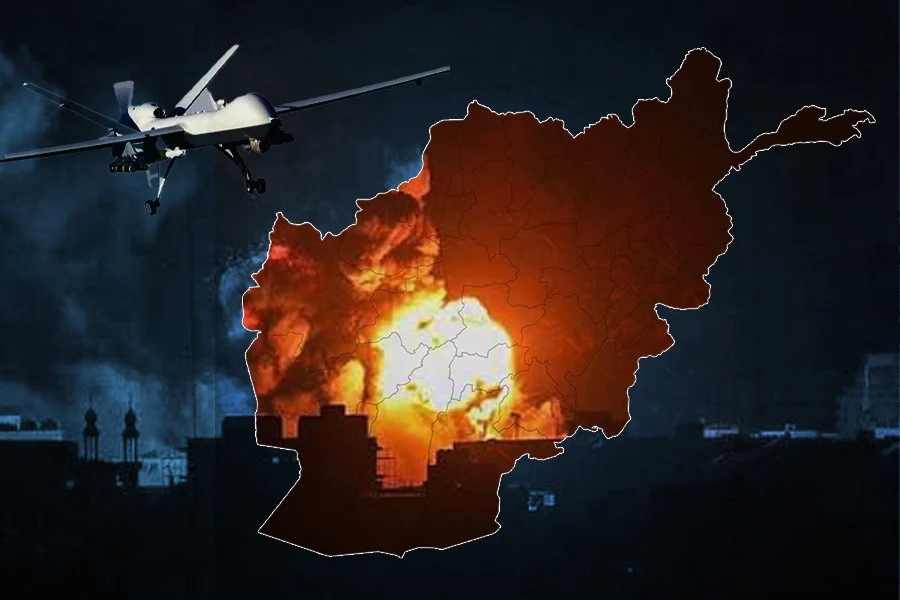
A military drone flies over a map of Afghanistan engulfed in flames and smoke, illustrating Pakistan's recent airstrikes. (Photo credit: Social Media)

Social Media

Pakistan’s intensified attacks on Afghanistan, coming only days after senior Turkish and Qatari security officials visited Kabul and Kandahar, raise an important question: was the trip a diplomatic “final warning” before the shift from dialogue to military pressure? On the surface, the visit by Ibrahim Kalin, head of Turkey’s National Intelligence Organization, and Hamad bin Khamis al-Kubaisi, deputy head of Qatar’s National Security Council, was a mediation mission. But what followed has made it more significant: Pakistan resumed airstrikes on several Afghan provinces, including Kandahar, the Taliban’s main center of decision-making.

That the strikes began after the mediators visited Kabul and Kandahar and relayed the Taliban’s message to Pakistan is telling and worth noting. It is as though the mediators carried a stern warning to the Taliban, which the group did not heed: that the status quo, in which Afghan territory is used against Pakistan, is intolerable for Islamabad, and that if the Taliban cannot or will not take serious, practical steps, the consequences will soon fall on Kabul. It cannot be said with certainty that Turkey and Qatar issued the Taliban an “ultimatum.” But the sequence of meetings and events suggests that this time the mediation came with a degree of warning. If so, Pakistan’s subsequent strikes will be of a different character. Islamabad will argue that the Taliban were given a diplomatic opportunity, that the messages were delivered through mediators, and that the expected response never came. Raising the cost for the Taliban, it will say, is therefore now on the agenda.

Another notable point is the Turkish delegation’s trip to Kandahar. In Kandahar, Kalin met Mullah Shirin Akhund, the Taliban’s governor, but was unable to meet Hibatullah Akhundzada, the group’s leader. This failure may seem diplomatically minor, but it could matter for understanding what came next. If the aim of the trip was to deliver a message to the Taliban’s real center of decision-making, then not meeting Hibatullah means the Turkish delegation could not speak directly with the group’s most important decision-maker. Just days later, Kandahar was among the targets of Pakistan’s new strikes. This coincidence does not necessarily imply cause and effect, but politically it raises questions. Did Islamabad conclude, after the Turkish and Qatari consultations, that the diplomatic message had not had the necessary effect? Or were the recent strikes already on Pakistan’s agenda, and the mediators’ trip simply failed to stop them?

The mediators’ conduct after Pakistan’s latest strikes is also significant. Turkey and Qatar had earlier explicitly condemned the deadly attack in Kohat, in Pakistan’s Khyber Pakhtunkhwa province. But after Pakistan’s strikes on Afghanistan, a review of the two countries’ published official positions shows, at least so far, no reaction of comparable clarity condemning the strikes. This silence should not automatically be read as support for Pakistan. The mediators may be refraining from public condemnation to preserve a channel of communication with the attacking side, or to keep the talks from collapsing.

In foreign policy, however, silence too can carry a message. This is especially true when a mediator has explicitly condemned a terrorist attack in Pakistan but takes no similar stance on Pakistan’s attacks on Afghanistan. It invites the question of whether, in Turkey’s and Qatar’s security assessment, Islamabad’s claims that the Taliban support the TTP (Tehrik-e-Taliban Pakistan) are credible and serious enough that they are unwilling to take a clear position against Pakistan’s military action. Seen this way, Turkey and Qatar may be less than fully neutral mediators in this crisis, and closer to Pakistan’s security concerns in their understanding. That does not mean the mediators endorse Pakistan’s strikes. There is an important difference between “endorsing an attack” and understanding or accepting “the security logic of the attacking party.” Yet this difference may explain why the main pressure in the mediation process has fallen on the Taliban.

For this reason, the silence of the Turkish and Qatari mediators deserves close attention. If it continues, the perception may harden in Kabul that Turkey and Qatar, far from opposing Pakistan’s attacks, are part of the mechanism of pressure on the Taliban. Once the Taliban reach that conclusion, they will most likely keep saying no to Qatar’s and Turkey’s requests, continue backing the TTP, and escalate tensions. Conversely, if both mediators now adopt a clear official position, calling for an end to Pakistan’s strikes and for the parties to return immediately to the negotiating table, it would show that their earlier silence was mostly about keeping diplomatic channels open, not about siding with Pakistan at the Taliban’s expense, or the reverse. In that case, we would be looking at a different situation.


You can read the Persian version of this analysis article here:
چرا حمله پس از میانجی‌گری؟

ShareTweetSendSendShare

Related Posts

Spectators pack an indoor sports hall in Kabul as young players compete in a futsal match amid a shortage of sports facilities. (Photo credit: 8am.media)
Daily Reports

Kabul Youth Struggle to Exercise Amid Shortage of Sports Facilities and High Fees

28 September 2026 [t_time:1790598490]
Thousands of people gather in an open area near desert hills in Sarpul province during a Tablighi Jamaat event. (Photo credit: Social Media)
Daily Reports

From Unemployment to Religious Gatherings: Is the Tablighi Jamaat Filling Society’s Void With Spectacle?

28 September 2026 [t_time:1790596886]
A Taliban municipality official seals a shop in Kandahar city as traders complain of high taxes and licence fees, with a busy city roundabout seen above. (Photo credit: 8am.media)
Daily Reports

Taliban Tax Burden Squeezes Kandahar Traders: “We Are Tired of Carrying On”

28 September 2026 [t_time:1790595172]

Latest

Loading latest news...

Popular stories

  • Surveillance footage shows Taliban fighters surrounding and shooting a bound man in Herat. (Photo credit: Social Media)

    Taliban Shoot Young Man from Herat After Torturing Him with Hands Tied

    Share
    Share Tweet
  • Al-Qaeda Releases Hamza bin Laden Message on 9/11 Anniversary

    Share
    Share Tweet
  • UN Report Reveals Shifts in Family Attitudes and Rise in Domestic Violence in Afghanistan

    Share
    Share Tweet
  • Pakistani Army Says Five Killed Over Alleged Links to Terrorism

    Share
    Share Tweet
  • Afghanistan: A New Battlefield as Iran and America Redraw the Taliban’s Role in Regional Power

    Share
    Share Tweet

Podcast

Insights
Insights

Join Lynne O’Donnell for 8AM’s podcast series, Insights.
Lynne talks with generals, diplomats, soldiers, journalists, politicians, activists, people who have front row seats for conflicts around the world, and citizens with a story to tell, happy or sad. For this first series, Afghanistan is the focus. Lynne and her guests talk about the collapse of the republic in August, 2021, and the impact since — for the people of Afghanistan, for the security of the region, for the safety of the world. It’s important, interesting and insightful.

Insights/22: Controlling the Narrative with Mina Sharif
byinsights8am

Controlling the Narrative

Lynne O’Donnell talks with Mina Sharif, author, activist, women’s rights campaigner, educator and mentor. They discuss who controls the narrative and who speaks for Afghanistan’s people when the Taliban appear to have seized control not only of the country but of the message, too.

Have a listen

Insights/22: Controlling the Narrative with Mina Sharif
Episode play icon
Insights/22: Controlling the Narrative with Mina Sharif
Episode Description
Episode play icon
Insights/21: Media Meltdown with Zahra Joya
Episode Description
Episode play icon
Insights/20: Terror Inc with Scott Richards
Episode Description
Episode play icon
Insights/19: Busting Stereotypes with Bushra Gohar
Episode Description
Episode play icon
Insights/18: Media Matters with Waliullah Rahmani
Episode Description
Episode play icon
Insights/17: What Goes Around Comes Around with Sima Samar
Episode Description
Search Results placeholder
Hasht-e Subh

8AM Media, also known as Hasht-e-Subh Daily, stands as Afghanistan's premier independent and non-profit newspaper, resonating as a beacon of journalistic integrity since its establishment in June 2007 by esteemed Afghan journalists and human rights advocates. With a steadfast commitment to citizen journalism and civic education, Hasht-e-Subh Daily has earned its place as the most esteemed publication in the nation.

Publisher: Sanjar Sohail
Email: [email protected]
Executive Director: Parwiz Kawa
Email: [email protected]

Read More

Why Did Pakistan Strike After Mediation?

Kabul Youth Struggle to Exercise Amid Shortage of Sports Facilities and High Fees

From Unemployment to Religious Gatherings: Is the Tablighi Jamaat Filling Society’s Void With Spectacle?

Afghan Journalists Safety Committee Calls for Timely Access to Information

Taliban Tax Burden Squeezes Kandahar Traders: “We Are Tired of Carrying On”

Editor’s Choice

Every Saturday morning, 8AM MEDIA English Services Department will guide you through the week’s biggest stories from Afghanistan and the international community.

Subscribe

© 2026 - ©Hasht-e Subh Daily

No Result
View All Result
8am.Media
پښتو ویب‌پاڼه
ویب‌سایت فارسی
اۉزبېکچه ویب‌سایت
  • Home
  • News
    • Afghanistan News
    • World News
  • Opinion
    • Editorial
    • Analysis
  • Reports
    • Daily Reports
    • Investigative Reports
  • Society
    • The story of people
  • Women’s Word
  • Columns
    • Three Years After Afghanistan’s Fall: The Taliban’s Resurgence
    • Towards Equality
    • The Resurgence of the Taliban: Two Years Since Afghanistan’s Fall
    • Hebatullah Report Special Edition
    • Resistance for Education Special Edition
    • Special Column on Taliban’s Education Curriculum
    • Nawroz
  • Interviews
  • Contact Us
    • About Us
    • 8AM MEDIA Annual Awards
    • Submit an Article to Hasht-e-Subh
  • 8am.media

© 2026 - ©Hasht-e Subh Daily