You can read part 1 here: Part 1 – The Enemies of the Taliban
Military Fronts
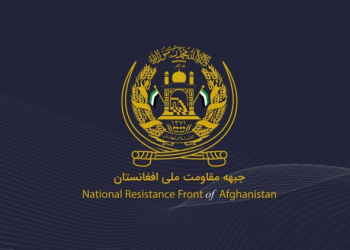
Since the return of the Taliban to power, two military fronts (the National Resistance Front (NRF) of Afghanistan and the Afghanistan Freedom Front (AFF)) have been active in Afghanistan, occasionally launching attacks against the Taliban. Although these two fronts have not managed to capture a district or even a village in Afghanistan over the past three years, they have managed to stay alive through sporadic, individual attacks in the cities. Since their attacks mostly target lower-ranking Taliban members, and the casualties from these attacks are minimal, their impact has been limited. Consequently, neither front has achieved significant success in the propaganda war. Both the National Resistance Front (NRF) of Afghanistan and the Afghanistan Freedom Front conduct attacks against the Taliban separately, indicating that despite their shared cause in fighting this group, they have yet to coordinate their actions effectively. If they could launch joint attacks against the Taliban, they would likely see more success than they currently do. However, up to this point, neither front seems to be seriously committed to collaboration. The leadership of both fronts (particularly the National Resistance Front (NRF) of Afghanistan) has been accused of nepotism, favoritism, and regionalism, which has caused other political groups to distrust them or view these military fronts as lacking the competence and authority to lead a fight against the Taliban.
Additionally, the National Resistance Front (NRF) of Afghanistan and the Afghanistan Freedom Front have not been able to secure the support of any global or regional powers. Most countries, especially Afghanistan’s neighbors, are preoccupied with dealings with the Taliban. Even Tajikistan, which has taken a firmer stance against the Taliban and hosts one of the National Resistance Front (NRF) of Afghanistan’s offices, is reportedly trying not to fall behind in the “engagement” with the Taliban. Given all these factors, the military activities of both fronts over the past three years have not expanded as expected, and currently, it is difficult to foresee a hopeful outlook for either of the two military fronts active against the Taliban. In the future, if circumstances change, these fronts may play a more significant role. But for now, it appears that their military activities will not undergo any major changes to the extent that we would witness a strategic shift.
Political Movements Active Abroad
After September 11 and the Western intervention in Afghanistan, there was a sudden surge in the formation of political parties. More than a hundred parties, seemingly grassroots, entered the political arena. Most of these parties, which emerged from the transformation of jihadist organizations, the fragmentation of the Democratic Party, and Maoist groups, registered with the Ministry of Justice of the previous government by renting or buying people’s identity cards, due to their lack of mass support. These parties, which needed funding and had been established with the tacit encouragement to do so, did nothing for the people with their NGO-like activities and instead became part of the widespread corruption in the government supported by the West. As a result, they scrambled to secure funding from various donors to fill their empty coffers. Parties affiliated with Western countries managed to secure funding and obtain scholarships and medals, while others, who had fewer affiliations or lacked the “skill” of securing projects, were left with only their registration certificates, and no one paid attention to them. Those parties that managed to secure funds and flourished in their NGO-like activities carried out a few demonstrations with rented participants, mainly to attract the attention of Western embassies (donors) rather than the public. These parties did nothing fundamental or sustainable to help institutionalize women’s rights or combat the religiosity and patriarchy dominant in Afghan society. On the contrary, by exploiting human rights and democracy, they contributed to the discrediting of these values.
With the Taliban’s return to power in Afghanistan, most of these parties have faded into history, and their leaders’ share of political maneuvering has been nothing but some wealth and humanitarian visas for themselves and their families. However, the leaders of some jihadist-leaning movements still pretend to be active abroad and claim to sympathize with the people’s plight. Nevertheless, they are still waiting for the “international community” to permit military-political activity against the Taliban. Some new political movements have also been established outside Afghanistan, with the general goal of fighting the Taliban. However, a political movement that aims to challenge this group should not be solely established abroad, nor should it rely on foreign countries, hoping that if they change their policies, the movement can once again ride the wave of public support. Such movements, even if they come to power with foreign backing, will face the same fate as the Western-backed technocrats in Afghanistan. Political movements dependent on foreign support have short lives and only remain relevant in politics when their foreign patrons deem it necessary.
With more than three years having passed since the Taliban regained power in Afghanistan, there are still no significant signs of genuine popular resistance against this group. The Taliban remain firmly in control, and the situation is not progressing in the way their enemies would like. It seems that everyone is tired of genuine political activity except the Taliban, who, with high enthusiasm and energy, continue to solidify their grip on Afghanistan. They have established an ironclad order based on severe repression of civil and democratic demands, a system that could best be described as “security through the bayonet.” In this type of security, only the military dimension is considered; it is a repressive order where fear is the main element, and the enforcers of this enslaving system invest heavily in a policy of maximum terror and intimidation, to the point that people are afraid of their shadows. While this policy may work in the short term, it will not be effective in the long run and will eventually face popular resistance. All closed and authoritarian regimes throughout history have faced such a fate, and the Taliban cannot be an exception.
You can read the Persian version of this analysis here:
You can read part 3 here: Part 3 – The Enemies of the Taliban