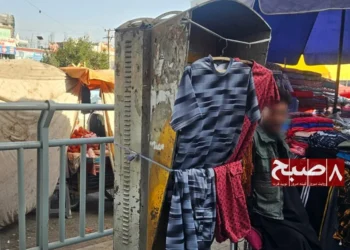
Residents of Kabul city have raised complaints over the growing frequency of power outages. They state that although the weather has not yet turned cold, the number of electricity cuts has already increased. Residents of the capital emphasize that the prolonged outages and the lack of a clear plan or policy to resolve this issue have disrupted the daily lives of the people.
Bilal, a 23-year-old resident of the 11th district of Kabul, criticizing the Breshna Company and its performance, says: “Despite having abundant renewable energy resources, we are still using imported electricity, and for years now, power outages have become one of the persistent problems for residents of the capital.”
This Kabul resident adds: “Power shortages in Kabul are not a new issue; we have been grappling with it for years, and it has turned into a chronic, ongoing problem. Although our country has extensive resources to produce energy, and with investment, this challenge could be resolved, we continue to import electricity.”
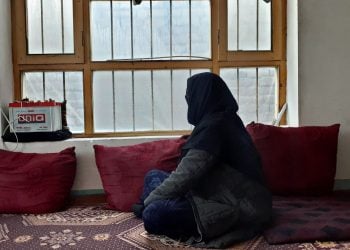
Sadra, a resident of the 6th district of Kabul, says the increase in outages has disrupted all of her daily activities. She adds that low voltage is another serious problem, to the extent that, without the use of a transformer or power booster, it is impossible to use electricity.
This Kabul resident adds: “In the Omid-e Sabz Township, power outages are extremely frequent. For example, if we have electricity one night, we do not have it the next night. Normally, electricity comes at 10 or 11 p.m. and is cut again at dawn. Sometimes we only have electricity until 9 p.m. before it goes off again.”
Sadra stresses: “We practically have no electricity during the day, and even if it is available, the voltage is extremely weak, to the point that without a transformer or booster, it does not work. Many household chores, such as laundry and ironing, are always left unfinished.”
Surah Siddiqi, another resident of Kabul, says: “Recently, the situation had slightly improved, but it has become disordered again. The weather has not yet turned cold, but with the approach of winter and increased consumption, outages have intensified once more.”
This Kabul resident adds: “I do not know when this problem in Afghanistan will be resolved. Power outages have affected every aspect of our lives, from household chores to studying and outdoor activities. I do not think this issue will be resolved any time soon, as it is beyond the capabilities of the Taliban.”
Meanwhile, some economic experts state that to resolve the problem of power outages, investment must be made in energy production inside Afghanistan so that disruptions to the country’s social and economic activities can be prevented.
Qutbuddin Yaqubi, an economic expert, says: “To resolve this challenge, a comprehensive and overall policy must be drafted that includes assessment, planning, and implementation of short-term programs so that part of the electricity needs of the people, especially in large cities, can be met.”
This economic expert says: “Afghanistan has various sources for energy production, including solar power, and if necessary, thermal energy can also be used, although it is costly. However, in any case, investment must be made in domestic electricity production so that we do not face such problems in the future, and the country’s social and economic activities are not disrupted.”
Residents of Kabul are voicing complaints over increased outages while the 220-kilovolt power transmission line carrying imported electricity from Uzbekistan, in an area related to the Amu River on the border between Afghanistan and Uzbekistan, has fallen into the water due to a line break, reducing electricity imports from that country to less than half.
According to the Breshna Company’s announcement, following this technical issue, additional electricity outages have been implemented in the provinces of Samangan, Baghlan, Parwan, Kapisa, Panjshir, and Kabul. Electricity shortage is one of the challenges that has remained fundamentally unresolved for years. Despite possessing abundant energy resources, Afghanistan still imports more than 79 percent of its required electricity from neighboring countries.
You can read the Persian version of this report here:
پرچاوی دوامدار برق در کابل؛ اعتراضها به بیکفایتی طالبان شدت گرفته است