
The human rights organization “Rawadari” has revealed the shocking state of the educational system under Taliban rule in its latest report. The findings expose how the Taliban has radically reshaped the curriculum, aligning it with their ideology and mandating the teaching of their religious doctrines. The report highlights the disorder and chaos caused by the Taliban’s arbitrary approach to education in the country’s universities and schools. It also points to the poor quality of education, which has led many boys to drop out of school and join Taliban religious institutions.
Furthermore, the report reveals that some female teachers and girls in Taliban-controlled schools and religious institutions have been subjected to sexual harassment. However, these incidents remain hidden due to social repression and vulnerability. The report cites a specific example of six schoolgirls who were raped at a religious school in Ghor province. The Taliban’s pressure and threats ensured the incident was not made public. The report stresses that the Taliban’s policies have deepened gender inequality, hatred, and further discrimination against women. It highlights how the group’s educational system promotes gender stereotypes, violence, and prejudice.
The “Rawadari” report also documents the dire situation for girls and women in education under Taliban rule. It states that the Taliban have systematically and purposefully deprived women and girls of their right to education. Since the enactment of the “Law for the Propagation of Virtue and Prevention of Vice,” the Taliban has imposed stricter restrictions on educational institutions, making extensive changes to school and university curricula. These changes include inspecting educational center libraries and overhauling the entire educational system to reflect the Taliban’s ideology and enforce the compulsory teaching of their religious doctrines.
The report further notes that the Taliban have established their criteria for hiring teachers and professors, continuing to violate human rights standards. It also addresses a range of critical issues, including access to education in native languages, religious education, and cultural and historical education for ethnic and religious minorities. The report covers the lack of educational opportunities for disabled girls, disciplinary methods used in schools, and the social, economic, and psychological consequences of denying women the right to education. Additionally, it evaluates alternative educational solutions for women and girls. These issues are discussed in the 40-page report.
Rawadari reported that it gathered much of its information through questionnaires and consultations with various local sources across 26 provinces of Afghanistan. These sources include women and girls deprived of their right to education, victims of violence, eyewitnesses, journalists, civil activists, human rights defenders, health center officials, teachers from schools and universities, students, and employees of relevant international organizations.
The human rights organization also highlighted the growing restrictions on access to information, explaining that the Taliban’s strict measures have made it increasingly difficult to obtain and share information. They have created a climate of fear and intimidation, preventing the release of any information that contradicts their interests or exposes human rights violations. Interviewees reported that the Taliban even monitor phone calls and social media platforms like WhatsApp, Facebook, and Telegram.
The report reveals that the Taliban are not following the educational curriculum and laws of the previous government. Instead, they are directing educational institutions through a series of written and oral decrees based on their preferences. There is currently no formal law governing educational institutions, which has led to disorder and chaos in the country’s universities and schools.
The report also notes that the Taliban’s Ministry of Education and Ministry of Higher Education have made significant changes to the curricula of schools and universities over the past three years, prioritizing the Taliban’s interpretation of concepts. Due to pressure from the Taliban, many teachers and professionals have left the country, contributing to a significant decline in the quality of education at all levels.
The findings show that the Taliban have made fundamental changes to the educational curriculum in schools and universities, with the primary goal of promoting their ideology. The report indicates that the low quality of education has led many male children to drop out of school and join religious schools. The Taliban do not prioritize regular school subjects and actively encourage families to send their children to religious institutions. For example, in Ghor province, many students have left schools and enrolled in Taliban-run religious schools.
The report also reveals that the Taliban’s Ministry of Education has removed subjects such as life skills, civil education, calligraphy, patriotism, culture, social sciences, and topics related to Jafari jurisprudence in Shiite-majority provinces, deeming them “unnecessary.” These subjects have been replaced with religious content tailored to the Taliban’s ideology. Furthermore, the Taliban have hired religious scholars and Quran reciters to teach religious matters to teachers and students at every school.
The Taliban’s Ministry of Education has recently issued a directive in several provinces, mandating that girls below grade six wear masks, and gloves, and follow the group’s prescribed hijab. Additionally, in some provinces, girls over the age of ten are not allowed to enroll in private educational centers.
The findings also reveal that the Taliban’s Ministry of Higher Education has made substantial changes to university curricula over the past three years. The report highlights the introduction of new subjects, including “Emirate Studies, Quranic Recitation, Religions and Sects, Islamic Economic System, Islamic Political System, Islamic Social and Family System, Hanafi Jurisprudence, Psychology, History of Islamic Thoughts, Islamic Ethics, and Important Islamic Figures.”
The report further indicates that the subject of Islamic Culture, previously taught as a six-credit course over four years, has now been increased to 24 credits—four times the original amount. According to the report, the Taliban Ministry of Higher Education recently expanded the Islamic Culture subject, previously taught over eight credits across eight semesters, to 36 credits. The credits have now been increased sixfold in faculties where this subject was previously a two-credit course in a four-year program. The report notes that these changes vary from province to province.
The report also mentions that the Taliban have removed subjects related to human rights, peace, and democracy, which were taught in some faculties, replacing them with religious and Pashto subjects. In most units, the Persian Dari subject has been reduced or eliminated. The human rights organization also reports that the Taliban have appointed a new teacher for the subject of “Emirate Studies.” The exam for this subject is regularly administered by the Taliban’s Ministry of Education, Information and Culture, and Intelligence Directorate at both the school and university levels. The exam consists of 50 to 250 questions, and all teachers are required to participate.
The report reveals that many questions on the “Emirate Studies” exam focus on Mullah Omar’s life and the group’s war with American forces. Some key questions include: “In which year was Mullah Mohammad Omar born into a religious family? Which five-year period marked the stage of invitation and secret jihad activity? During the occupation, what type of corruption was the puppet Kabul administration (the former government) involved in? How did the Islamic Emirate defeat NATO forces?”
The organization also emphasized that, in some provinces, the Taliban have appointed graduates of religious schools, who lack higher education, to replace experienced and qualified female teachers. Additionally, the Taliban have dismissed some professors and replaced them with individuals loyal to their cause. For example, in Baghlan province, several Tajik and Uzbek teachers were dismissed and replaced by the Taliban’s supporters.
Promotion of Gender Inequality and Hatred Toward Women
The human rights organization has stated that the Taliban’s policies have fostered gender inequality, hatred, and further discrimination against women. According to the report, the Taliban have embedded gender stereotypes, violence, and discrimination into their political and educational systems. For example, the report from Badakhshan province reveals that the Taliban tell students that women leaving the house is against Sharia law and immoral. They also claim that if women seek equal rights with men, society will fall into corruption and decay.
The report further notes that the Taliban argue that if women take on decision-making roles within the family and society, it will lead to moral corruption and societal downfall. Students are also taught that “women are mentally deficient and incapable of doing anything properly, so they must consult with their husbands or male family members on all matters.”
The report stresses that the Taliban’s extreme and ideological views on women and their role in society serve as tools to undermine the human dignity of women and legitimize gender discrimination.
Rawadari has reported receiving information about sexual harassment of female teachers and young girls in schools and religious institutions controlled by the Taliban. According to the report, only a small fraction of sexual assault cases against children in schools are reported. The organization explains that children are unable to disclose their abuse due to the oppressive environment and lack of opportunities to speak out. Additionally, families, fearing the Taliban and concerned about their social status and reputation, often keep such matters hidden.
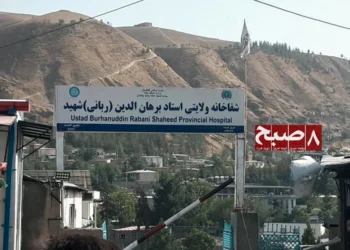
The report provides an example of the sexual assault of six female students at a religious school in Ghor province. The incident has not been reported in the media due to pressure and threats from the Taliban. Rawadari states that one victim married four days after the assault, while the families of three other victims in Ghor province have fled. The religious school, which once had approximately 250 female students, now has fewer than half remaining.
The report also mentions an incident on September 2, 2023, in which a Taliban member named Shah Wali, along with two colleagues, attempted to sexually assault a female teacher in the Ghandak area of Bamyan province. They entered the school, but the teacher managed to escape and seek refuge in the home of a local elder.
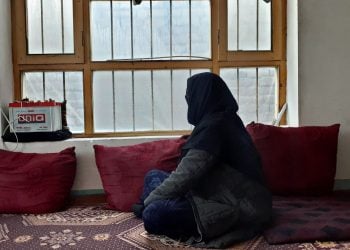
The report further highlights the psychological toll on the victims. Information indicates that the mental and emotional damage caused by violence and the violation of women’s and girls’ rights in Afghanistan has significantly increased. Interviewees report that many women and girls experience hopelessness, fear, anxiety, isolation, depression, suicidal thoughts, anger, and nightmares.
The report also addresses the issue of forced and early marriages, which result from the Taliban’s discriminatory policies and restrictions. A student from Ghazni shared that she was forced into an early and arranged marriage last year. The daughter of a street vendor, she had hoped to study medicine, but due to the denial of her right to education, she was instead forced into marriage.
Rawadari states that alongside their repression, the Taliban have arrested, tortured, and threatened protesting women. According to the report, the Taliban have sexually assaulted some of the women in their detention centers and have also killed several of them.
The report also reveals that on September 16, 2021, the Taliban mysteriously killed eight female protesters in Mazar-e-Sharif, the capital of Balkh province, for organizing protests. Rawadari’s findings show that between August 2021 and July 2024, the Taliban arrested and imprisoned at least 78 female protesters.
You can read the Persian version of this daily report here:
گزارش رواداری؛ تجاوز جنسی و ایدیولوژی طالبان در نصاب آموزشی | روزنامه ۸صبح