• 8AM.MEDIA
  • ویب‌سایت فارسی
  • پښتو ویب‌پاڼه
  • اۉزبېکچه ویب‌سایت
  • Podcast
Thursday, October 1, 2026
Hasht-e Subh
  • Home
  • News
    • Afghanistan News
    • World News
  • Opinion
    • Editorial
    • Analysis
  • Reports
    • Daily Reports
    • Investigative Reports
  • Society
    • The story of people
  • Women’s Word
  • Columns
    • Three Years After Afghanistan’s Fall: The Taliban’s Resurgence
    • Towards Equality
    • The Resurgence of the Taliban: Two Years Since Afghanistan’s Fall
    • Hebatullah Report Special Edition
    • Resistance for Education Special Edition
    • Special Column on Taliban’s Education Curriculum
    • Nawroz
  • Interviews
  • Contact Us
    • About Us
    • 8AM MEDIA Annual Awards
    • Submit an Article to Hasht-e-Subh
  • 8am.mediaBack
Subscribe
No Result
View All Result
  • Home
  • News
    • Afghanistan News
    • World News
  • Opinion
    • Editorial
    • Analysis
  • Reports
    • Daily Reports
    • Investigative Reports
  • Society
    • The story of people
  • Women’s Word
  • Columns
    • Three Years After Afghanistan’s Fall: The Taliban’s Resurgence
    • Towards Equality
    • The Resurgence of the Taliban: Two Years Since Afghanistan’s Fall
    • Hebatullah Report Special Edition
    • Resistance for Education Special Edition
    • Special Column on Taliban’s Education Curriculum
    • Nawroz
  • Interviews
  • Contact Us
    • About Us
    • 8AM MEDIA Annual Awards
    • Submit an Article to Hasht-e-Subh
  • 8am.mediaBack
No Result
View All Result
Hasht-e Subh
No Result
View All Result

Remittance Disruption from Iran Deepens Economic Crisis for the People of Afghanistan

Amin Kawa Amin Kawa
16 July 2025 - Solar Hijri Date: 1404/04/25 [t_time:1752652743]
A street money changer in Kabul holds bundles of Afghan banknotes as economic uncertainty grips the country. (Photo Credit: AFP)

AFP

The forced deportation of migrants from Iran has not only triggered a severe humanitarian crisis in Afghanistan but also dealt a significant blow to the country’s economy. Many families in Afghanistan who relied on remittances sent by relatives working in Iran have now lost their primary source of income and are facing widespread hardship. These migrants also played a critical role in supporting the liquidity of Afghanistan’s informal economy. The money sent home through informal transfer systems has been vital to the survival of numerous households.

Economic experts estimate that migrants from Afghanistan residing in Iran send approximately $500 million annually to support their families, purchase property, or fund charitable activities. With the mass deportation of these migrants, remittance flows have sharply declined, severely impacting household purchasing power and the overall economy of Afghanistan.

Thousands of citizens of Afghanistan working in Iran regularly send their income through informal remittance systems to their families back home. These funds fuel Afghanistan’s domestic economy and are crucial to financial stability and household sustenance. However, with the onset of widespread deportations, access to these financial resources has dwindled. This decline has led to reduced cash circulation, further stagnation in the informal economy, and mounting pressure on families who relied on such remittances. Consequently, poverty among these families has intensified, raising growing concerns over renewed migration or increased dependence on foreign humanitarian aid.

Some remittance service providers confirm that since the wave of deportations began, the volume of customer transfers has dropped sharply. According to them, migrants in Iran used to send money to relatives not only in Afghanistan but also in Pakistan. With the mass deportations, the ability to send money has diminished and become more restricted.

One remittance agent, who asked to remain anonymous, said: “In the past few days, transfers have drastically decreased. During this wave of deportations, we had only one remittance. Previously, we had many. Now we sit idle. Most of the migrants have been deported or haven’t received their wages from employers. This situation has had a major impact on the money market.”

Azarkhsh Hafizi, an economic expert and board member of Afghanistan’s Chamber of Commerce and Investment (ACCI), told the Hasht-e Subh Daily that Afghan workers and citizens in Iran send an estimated $500 million annually to their families or for property purchases and other investments in Afghanistan. He said that with the mass exodus of these individuals from Iran, the amount of transferred funds has declined significantly, weakening household purchasing power, stalling the market, and disrupting the currency balance and financial services in the country.

Hafizi added that by the end of 2024, estimates showed that out of the approximately $2.7 billion remitted annually by Afghanistan’s migrant workers abroad, about $500 million originated from Iran. He emphasized that these migrants, who share their income with families back home, play a vital role in boosting purchasing power and energizing markets. Their collective departure from Iran constitutes an economic disaster for Afghanistan.

He further noted that most of those being deported from host countries are young, skilled workers. However, there are no job opportunities for them within Afghanistan, leading to an even more serious crisis. According to Hafizi, not only Iran and Pakistan but also countries like the United States, Germany, Turkey, and others that are deporting migrants from Afghanistan are not only putting the lives of these individuals at risk but also plunging their families in Afghanistan into economic turmoil.

Mir Shekab Mir, former head of financial services development at the Central Bank of Afghanistan under the previous government, also told the Hasht-e Subh Daily that migrants residing in Iran played a major role in sustaining their families by sending money back home. He said these remittances not only supported daily needs but also had a generally positive impact on household economies in Afghanistan.

The International Organization for Migration (IOM) had earlier reported that after the collapse of Afghanistan’s financial system, approximately 90 percent of financial transactions in the country are carried out via remittances. According to the report, over 900 remittance companies and individuals are active across Afghanistan and play a vital role in maintaining liquidity and cash flow. These reports also indicate that about 15 percent of rural households receive remittances, covering an average of 20 percent of their living expenses.

For years, migrant remittances have been a significant source of income for many households in Afghanistan. Estimates suggest that around 5 percent of the population lives in households where remittances are the primary source of income. For many, the money sent by relatives abroad has been essential, sometimes the only means of survival. For example, in 2020, the total remittances sent to Afghanistan were estimated at approximately $787 million—an amount equal to roughly 4 percent of the country’s GDP.

Concerns are growing as, under Iran’s Ministry of Labor and Social Affairs directive, workers from Afghanistan are only allowed to work in hard and low-paying jobs such as construction labor, waste collection, and agriculture. This policy severely restricts employment opportunities for migrants and exposes them to exploitation, economic insecurity, and forced deportation.

Following the 12-day war with Israel, Iran has accelerated the mass deportation of asylum seekers from Afghanistan, reportedly returning up to 30,000 individuals daily. This move has sparked widespread alarm.

Deported migrants are only able to return to their home provinces from the Islam Qala border with the help of local charitable aid. In Herat, residents have distributed food and water to them.

Roza Otunbayeva, Head of the United Nations Assistance Mission in Afghanistan (UNAMA), has called for an urgent response to the situation of returnees. She warned that this issue should sound the alarm for the international community, stressing that managing this crisis exceeds the capacity of humanitarian organizations.

You can read the Persian version of this report here:

قطع جریان حواله‌ها از ایران؛ بحران اقتصادی در افغانستان عمیق‌تر می‌شود 

ShareTweetSendSendShare

Related Posts

Weathered chess pawns stand before towering king and queen pieces on a cracked board, with thin strings hovering above, symbolizing unwitting tools of power. (Photo credit: AI)
Opinion

Useful Idiots: The Unwitting Soldiers of Power

1 October 2026 [t_time:1790854687]
The young man who was arrested for allegedly criticizing the Taliban (Photo: Exclusive)
Afghanistan News

Young Man Arrested in Ghazni for Allegedly Criticizing Taliban on Social Media

23 September 2026 [t_time:1790155760]
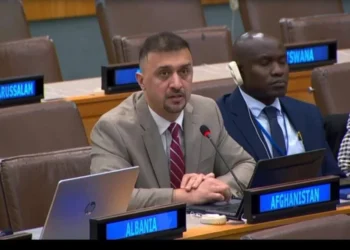
Diplomats stand together during a United Nations meeting as 43 countries call for the removal of restrictions on women and girls. (Photo credit: @franceonu)
Afghanistan News

43 Countries Urge Taliban to Lift Restrictions on Women and Girls

17 September 2026 [t_time:1789661770]

Latest

Loading latest news...

Popular stories

  • Surveillance footage shows Taliban fighters surrounding and shooting a bound man in Herat. (Photo credit: Social Media)

    Taliban Shoot Young Man from Herat After Torturing Him with Hands Tied

    Share
    Share Tweet
  • UN Report Reveals Shifts in Family Attitudes and Rise in Domestic Violence in Afghanistan

    Share
    Share Tweet
  • Al-Qaeda Releases Hamza bin Laden Message on 9/11 Anniversary

    Share
    Share Tweet
  • Sources: Kandahar Bombing Leaves Seven Dead and Eight Injured at Mirwais Hospital

    Share
    Share Tweet
  • Afghanistan’s Empty Seat at the Annual UN General Assembly

    Share
    Share Tweet

Podcast

Insights
Insights

Join Lynne O’Donnell for 8AM’s podcast series, Insights.
Lynne talks with generals, diplomats, soldiers, journalists, politicians, activists, people who have front row seats for conflicts around the world, and citizens with a story to tell, happy or sad. For this first series, Afghanistan is the focus. Lynne and her guests talk about the collapse of the republic in August, 2021, and the impact since — for the people of Afghanistan, for the security of the region, for the safety of the world. It’s important, interesting and insightful.

Insights/22: Controlling the Narrative with Mina Sharif
byinsights8am

Controlling the Narrative

Lynne O’Donnell talks with Mina Sharif, author, activist, women’s rights campaigner, educator and mentor. They discuss who controls the narrative and who speaks for Afghanistan’s people when the Taliban appear to have seized control not only of the country but of the message, too.

Have a listen

Insights/22: Controlling the Narrative with Mina Sharif
Episode play icon
Insights/22: Controlling the Narrative with Mina Sharif
Episode Description
Episode play icon
Insights/21: Media Meltdown with Zahra Joya
Episode Description
Episode play icon
Insights/20: Terror Inc with Scott Richards
Episode Description
Episode play icon
Insights/19: Busting Stereotypes with Bushra Gohar
Episode Description
Episode play icon
Insights/18: Media Matters with Waliullah Rahmani
Episode Description
Episode play icon
Insights/17: What Goes Around Comes Around with Sima Samar
Episode Description
Search Results placeholder
Hasht-e Subh

8AM Media, also known as Hasht-e-Subh Daily, stands as Afghanistan's premier independent and non-profit newspaper, resonating as a beacon of journalistic integrity since its establishment in June 2007 by esteemed Afghan journalists and human rights advocates. With a steadfast commitment to citizen journalism and civic education, Hasht-e-Subh Daily has earned its place as the most esteemed publication in the nation.

Publisher: Sanjar Sohail
Email: [email protected]
Executive Director: Parwiz Kawa
Email: [email protected]

Read More

Taliban: All Miners Trapped Under Rubble in Takhar Rescued

UNICEF Announces Safe Water Provision in 12 Provinces of Afghanistan

Human Rights Watch: Taliban Divided Over Decree Implementation

Faiq: Civilians in Afghanistan Should Not Pay the Price of Pakistan-Taliban Dispute Over TTP

11 Miners Trapped Under Debris After Mine Collapse in Takhar Province

Editor’s Choice

Every Saturday morning, 8AM MEDIA English Services Department will guide you through the week’s biggest stories from Afghanistan and the international community.

Subscribe

© 2026 - ©Hasht-e Subh Daily

No Result
View All Result
8am.Media
پښتو ویب‌پاڼه
ویب‌سایت فارسی
اۉزبېکچه ویب‌سایت
  • Home
  • News
    • Afghanistan News
    • World News
  • Opinion
    • Editorial
    • Analysis
  • Reports
    • Daily Reports
    • Investigative Reports
  • Society
    • The story of people
  • Women’s Word
  • Columns
    • Three Years After Afghanistan’s Fall: The Taliban’s Resurgence
    • Towards Equality
    • The Resurgence of the Taliban: Two Years Since Afghanistan’s Fall
    • Hebatullah Report Special Edition
    • Resistance for Education Special Edition
    • Special Column on Taliban’s Education Curriculum
    • Nawroz
  • Interviews
  • Contact Us
    • About Us
    • 8AM MEDIA Annual Awards
    • Submit an Article to Hasht-e-Subh
  • 8am.media

© 2026 - ©Hasht-e Subh Daily