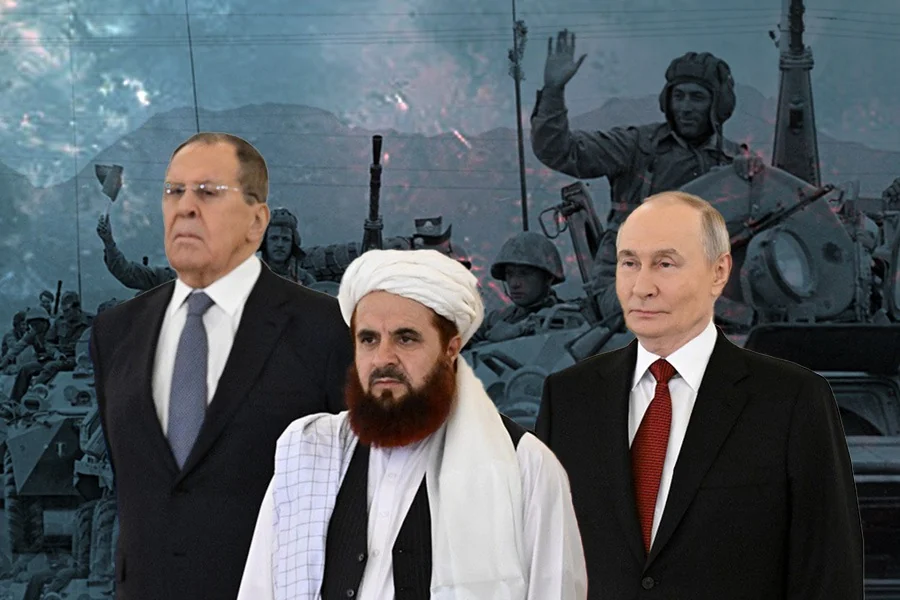
Afghanistan holds a special place in Russia’s geopolitical calculations, and the memory of the Soviet war remains in Moscow’s political and historical consciousness. Even so, Russia has not returned to Afghanistan today with tanks and an army. Instead, it is present in the country through diplomacy, trade, security, energy, and geopolitical calculations. After the fall of the Republic of Afghanistan and the Taliban’s return to power in August 2021, Moscow, unlike many Western countries, decided to keep its channel of communication with the group open. In 2025 and 2026, this policy entered a new phase, one that moved Russia from being a party in dialogue with the Taliban to becoming one of the closest foreign partners of the group’s regime.
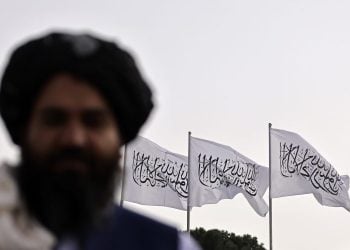
This shift reached its peak in 2025. In April of that year, Russia suspended the ban on Taliban activities, which had been in place in the country since 2003, a step that paved the way for more formal expansion of economic and political relations between the two sides. On July 3, 2025, Russia also became the first country to recognize the Taliban regime, replacing the white flag of the Taliban with the tricolor flag of the Republic. Experts did not regard the decision as merely a diplomatic step, but as a sign of a fundamental change in Moscow’s view of the Taliban, a group that Russia once considered a security threat and has now accepted as an official counterpart for state-level engagement.
This change of approach cannot be explained without taking regional and international developments into account. On one hand, Russia is concerned about the spread of insecurity and the activities of extremist groups, including the Islamic State group (ISIS) and foreign terrorists, from Afghanistan into Central Asia. On the other hand, after its confrontation with the West intensified following the war in Ukraine and the imposition of sweeping sanctions on Moscow, Russia is seeking markets, trade routes, and new partners in Asia and the Global South. In this new calculation, Afghanistan can be both a security issue and an economic and transit opportunity for Moscow.
Russia’s relations with the Taliban, however, were not so close from the beginning. The Taliban held no goodwill toward the Soviet Union because of its military invasion in December 1979, a war that lasted nearly a decade in Afghanistan, and after the withdrawal of Soviet forces, Afghanistan remained on the margins of Moscow’s policy for a long time.
With the emergence of the Taliban in the 1990s, Russia initially tried to establish relations with the group. After receiving a rejection from the Taliban, however, it ultimately regarded the group as a security threat and provided political and logistical support to the then Islamic government against the Taliban. Russia also cooperated in transporting equipment and logistics for the International Security Assistance Force (ISAF) to Afghanistan through Central Asia. In 2003, Moscow placed the Taliban on its list of terrorist organizations.
However, developments after 2014, particularly the emergence of the Islamic State Khorasan Province (ISKP), the gradual withdrawal of Western forces, and then the collapse of the Republic government of Afghanistan, changed Russia’s outlook. Moscow came to believe that, given regional and global geopolitical games, removing the Taliban from Afghanistan’s equations was practically impossible, and that any regional policy toward Afghanistan without dialogue with the group would be costly for Russia.
By activating the “Moscow Format” for talks on Afghanistan in 2017, Russia also invited Taliban representatives to these meetings alongside government officials and other politicians from Afghanistan. This process demonstrated the determination of Kremlin officials to create a direct channel with the Taliban before the collapse of the Republic.
After the Taliban’s return to power in August 2021, Russia was one of the few countries that kept its embassy open in Kabul. While many regional and Western countries limited or suspended their diplomatic relations, Moscow decided to remain in Kabul and maintain its direct contact with the new power structure. Russia believed that the Taliban held Afghanistan’s political and military power, and that without engaging with them, Moscow could not have a significant influence on the country’s security, political, and economic developments.
But 2025 moved this cautious engagement into a new phase. The suspension of the ban on Taliban activities in Russia and then the official recognition of the group’s regime significantly narrowed the distance between Moscow and Kabul. For the Taliban, this development carried special political importance, because Russia became the first country to formally recognize the group’s regime. Of course, this step did not mean that all countries in the world had adopted a similar position.
Why Did Russia Make This Decision?
Security is perhaps the most important link between Moscow and Kabul. Above all, Russia is concerned that Afghanistan could become a base for extremist groups and that insecurity could spill over from Afghanistan’s borders into Central Asia. ISKP, al-Qaeda, and armed groups from Central Asia hold special importance in Russia’s security calculations. The deadly attack in March 2024 at the Crocus City Hall concert venue near Moscow, and ISIS’s role in it, heightened Russia’s concerns about threats linked to Afghanistan and the region.
From Moscow’s perspective, ISKP, backed by Western intelligence services, is seeking to destabilize Russia and the countries within its sphere of influence, and the Taliban may be able to serve as a security partner for Russia in confronting this group. The Taliban, for their part, because they lack broad legal legitimacy, need the cooperation of regional countries, especially major global powers such as Russia, to maintain power and consolidate their position. These shared interests have laid the ground for security cooperation between the two sides.
This cooperation took on broader dimensions in 2026. In May, Sergei Shoigu, Secretary of the Security Council of the Russian Federation, announced that Moscow was building a “full partnership” with Taliban-ruled Afghanistan. He spoke of cooperation in the areas of security, trade, culture, and humanitarian aid, and stressed the importance of Afghanistan for regional security and development.
A Russian C-17 aircraft landed at Kabul International Airport on July 2, 2026, carrying 17 Russian engineers and technical specialists who had come to Kabul to cooperate with the Taliban Ministry of Defense. The flight took place under a military-technical agreement between the two sides, one that was signed during the visit of Mullah Mohammad Yaqoob Mujahid, the Taliban’s Minister of Defense, to Russia in late May 2026.
Russian technical delegations have entered Kabul several times before, and their main mission has been described as helping with the repair and maintenance of Russian-made military equipment held by the Taliban. This equipment includes tanks, military aircraft, weapons, and heavy equipment. Under these agreements, Russia provides the Taliban with the spare parts needed for this equipment so that part of the existing military capacity, which consists mainly of Soviet- and Russian-made equipment, can become operational again. One notable point in this report is the possible role of Uzbekistan in transferring parts and equipment.
The economy is another part of this relationship. In May 2025, the first Russia-Afghanistan business forum was held on the sidelines of KazanForum, where officials from both sides discussed the development of trade, energy, transport, agriculture, mining, and infrastructure projects. The Russian government announced that areas such as the development of power plants, transport equipment, railways, mining industries, and energy projects could play a role in future cooperation between the two countries.
Moscow is also paying attention to the capacity of Afghanistan’s market and the country’s geographic location. From Russia’s perspective, Afghanistan can connect it through Central Asia to Iran and the markets of South and West Asia. For this reason, the issue of transit has found a special place in the economic talks between Russia and Afghanistan.
The Trans-Afghan Railway is one of the projects that is important in this regard. In 2025, Russia and Uzbekistan cooperated on a feasibility study of the project. The proposed route could connect Central Asia through Afghanistan to Pakistan and then to the markets of South Asia. Russian officials announced in 2025 that the feasibility study of the project was under way, and that its potential capacity for transporting millions of tons of Russian cargo per year was being considered.
The importance of this project for Russia becomes clearer when we examine it within the framework of developments after the war in Ukraine. In recent years, Moscow has tried to reduce its dependence on Western trade routes and expand its connections with the markets of Asia, Iran, India, and other countries of the Global South. If security is ensured and the necessary infrastructure is built, Afghanistan could become part of this new network of connections.
Energy is another important part of the expanding relations between Russia and the Taliban. Afghanistan is heavily dependent on fuel imports, and Russia is one of the world’s largest producers of oil and petroleum products. In 2025, cooperation between the two sides in the areas of energy and fuel increased. In November of that year, a shipment of about five thousand tons of Russian diesel entered Afghanistan through the Iranian railway, a route that shows the possibility of forming new energy transfer networks among Russia, Iran, and Afghanistan.
On the other hand, Taliban officials invited Russian companies in 2025 to invest in Afghanistan’s oil and gas sector. At an economic meeting in Tatarstan, the Taliban’s Minister of Mines and Petroleum announced that Afghanistan was ready to attract Russian investment in the oil and gas sector, and described the Amu Darya basin and a number of other fields as having hydrocarbon potential.
But perhaps the most attractive part of the economic relations between Russia and Afghanistan is mining. Afghanistan holds significant reserves of gold, copper, iron, lithium, and other minerals, and Russia has extensive experience in geology, extraction, and heavy industry. In May 2025, Sergei Shoigu announced that during a trip to Afghanistan, a Russian delegation had discussed with Taliban officials the joint development of mines, the creation of transport corridors, the expansion of trade, and cooperation in the agricultural sector.
According to field reports, three Russian companies have currently invested in the gold mines of Takhar and Badakhshan, and the gas of Sheberghan is also being extracted jointly by Russian and domestic companies. However, broad Russian investment in Afghanistan’s mines faces serious obstacles. Weak infrastructure, banking problems, international sanctions, a lack of sufficient transparency in contracts, security risks, and competition among companies from different countries are among the challenges that could slow the investment process. Therefore, there is still a gap between the announcement of political readiness and the realization of major economic projects.
Bilateral trade between Kabul and Moscow, which did not flourish much over the past two decades, is on the rise. According to statements by Russia’s Deputy Prime Minister, the volume of trade between the two countries in 2025 was about 326 million dollars, of which more than 50 million dollars consisted of flour and food products.
He also said that trade between the two countries in the first six months of 2026 had increased 2.5 times compared with the same period of the previous year. Russian exports to Afghanistan also grew significantly in the same period.
These figures show that Western sanctions against Russia and the limits on its economic relations with Western countries have drawn Moscow’s attention to the markets of the Middle East and South Asia through Afghanistan. Russia can export fuel, food, machinery, and some industrial goods to Afghanistan and, at the same time, activate the third link of the North-South corridor for access to Iran and the markets of South and West Asia.
Behind these economic relations lies a larger calculation: Afghanistan is positioned to act as a bridge among Central Asia, Iran, Pakistan, and South Asia. From Russia’s perspective, this geographic position has taken on added importance at a time when the economic order of Eurasia is changing.
Nevertheless, Russia’s presence in Afghanistan cannot be regarded as purely economic. This presence is part of the broader competition and cooperation among regional powers. China, Iran, India, Pakistan, and the Central Asian countries each have different interests in Afghanistan. In this complex environment, Russia has no choice but to strike a balance between its own interests and those of its regional partners.
On the other hand, Moscow’s closeness to the Taliban must also be examined within the framework of Russia’s relations with the West. Since the start of the war in Ukraine and the tightening of sanctions, Russia has tried to expand its relations with non-Western countries. Closeness to Afghanistan could be part of Moscow’s effort to strengthen its position in Central Asia, the Middle East, and South Asia. But this does not mean that Afghanistan has replaced all of Russia’s other markets or partners. Rather, it is more a part of the broader network that Moscow is pursuing in order to build a “Greater Eurasia.”
In this context, Central Asia holds a special place. Tajikistan, Uzbekistan, and Turkmenistan are Afghanistan’s direct neighbors, and Russia has deep security and economic relations with them. Any instability in northern Afghanistan could affect the security of these countries and, as a result, increase Moscow’s concerns as well. For this reason, alongside its direct engagement with the Taliban, Russia is trying to manage and control developments in Afghanistan through the Shanghai Cooperation Organisation (SCO) and bilateral relations with the Central Asian countries.
This approach, of course, is not without challenges. The Taliban continue to face major issues in the areas of women’s rights, girls’ education, political participation, and international legitimacy. In its engagement with the Taliban, Russia has emphasized security and geopolitical interests more, but continuing this policy could confront Moscow with questions about how to strike a balance between its security and economic interests, on one hand, and human rights concerns, on the other.
Today, Moscow is present in Afghanistan not with the Red Army, but with diplomacy, trade, energy, security, mining, and transit. Another important difference is that Russia is now trying to view Afghanistan not as the arena of an ideological war, but as part of the security and economic environment of Eurasia.
Russia is no longer pursuing a single goal in Afghanistan. It wants security, markets, natural resources, and new routes for connecting to South Asia all at once. The Taliban, for their part, see Russia not only as an economic and security partner, but also as a country that can help reduce part of the group’s international isolation. It is this convergence of interests that has made relations between Moscow and the Taliban one of the important geopolitical developments for Afghanistan in recent years.
Therefore, the main question is no longer whether Russia has returned to Afghanistan, because Moscow has maintained its political and economic presence and is now seeking to expand it. The more important question is how far Moscow is willing to invest in turning Afghanistan into part of Eurasia’s security and economic architecture, and to what extent the Taliban can turn this opportunity into a lasting partnership. The answer to this question will shape not only the future of relations between Russia and the Taliban, but also part of the new power equations in Central Asia and South Asia.
You can read the Persian version of this analysis article here:
نفوذ دوباره روسیه در افغانستان؛ نبرد قدیمی با همپیمانی طالبان