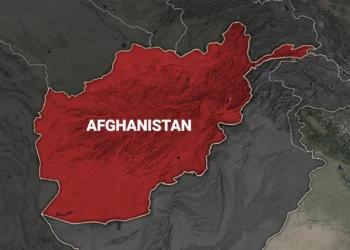
Several residents of the Bagh-e Attar and Gul Koh areas in Qarabagh district of Ghazni province say Taliban forces have confiscated their private and inherited farmland. According to residents, part of this land was allocated two years ago for the construction of a township for Tehrik-e Taliban Pakistan (TTP), and another part has been leased out over the past month.
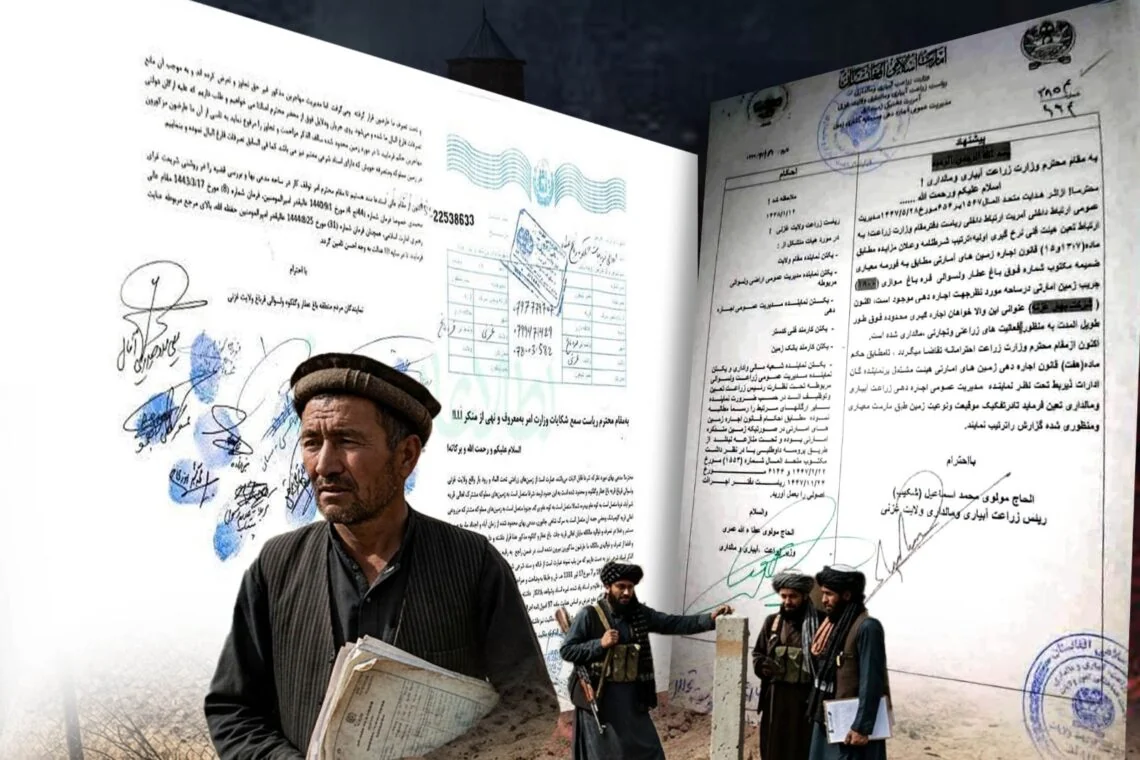
Residents of the Gul Koh area told the Hasht-e Subh Daily that the land covers roughly 360 hectares. They say the Taliban’s Directorate of Agriculture and Livestock declared the land state property and leased it to others through a private company. They stress that the land was passed down from their ancestors, and that they hold deeds, Sharia-based documents, and tax payment records dating back to 1948. Despite appealing to dozens of relevant institutions under Taliban control, however, none of the group’s officials have addressed their requests.
According to a letter obtained by the Hasht-e Subh Daily, the Taliban’s Directorate of Agriculture and Livestock, in a proposal to the group’s Ministry of Agriculture, Irrigation and Livestock (MAIL), asked that the disputed land be leased to a private company for cultivation. The Taliban’s MAIL approved the proposal, even though residents say they hold legal and Sharia-based documents proving ownership of the land.
Mehdi, a resident of Qarabagh district in Ghazni province, says that over the past several months he and several local elders have visited several ministries and offices under Taliban control, but none of the Taliban authorities have examined their Sharia documents and deeds.
This Qarabagh resident says: “We went to the Taliban’s Ministry of Agriculture, Irrigation and Livestock, the group’s justice ministry, the Afghanistan Land Authority (ARAZI), the Taliban’s Ministry for the Propagation of Virtue and Prevention of Vice (MPVPV), and several other institutions, but nobody was willing to look at our documents. We have farmed this land for years; we have deeds, and under various governments in the country we have paid taxes on this very land. Yet now, overnight, it has been decided that the land belongs to the state. This is truly an injustice.”
Another resident of the Gul Koh area told the Hasht-e Subh Daily that three years ago, too, a large part of their land was allocated for building the TTP township, and that the remaining land has now been handed over to Taliban members under the label of state land. He calls this action blatant discrimination against Hazaras and says: “Unfortunately, the Taliban are openly and plainly at odds with the Hazara people. Two years ago they gave our land to the TTP and the Waziristanis, and now they have handed the remaining part to their armed members. They have completely ignored our documents and deeds.”
Meanwhile, since regaining control, the Taliban have imposed harsh restrictions on the country’s citizens and have also increased pressure on the Shia community to an unprecedented degree, confiscating tens of hectares of land belonging to Shia in various provinces. In the past month alone, the Taliban have shut down several scientific, educational, health, sports, and media institutions linked to Shia, and by declaring the land of the Omid-e Sabz township in western Kabul to be state property, they have also begun evicting its residents from their homes.
Note: The original report measured land in jeribs, a traditional unit used in Afghanistan equal to 2,000 square meters (0.2 hectares), so 1,800 jeribs was converted to 360 hectares and “hundreds of jeribs” to “tens of hectares.”
You can read the Persian version of this report here:
برخورد طالبان با هزارهها؛ مصادره یکهزار و ۸۰۰ جریب زمین در غزنی