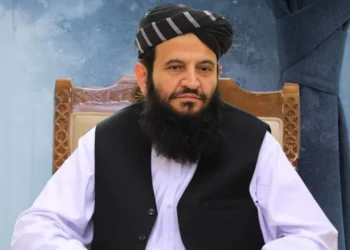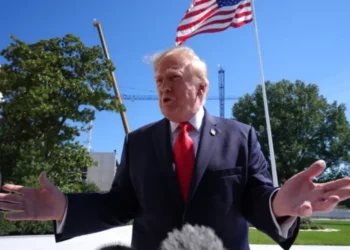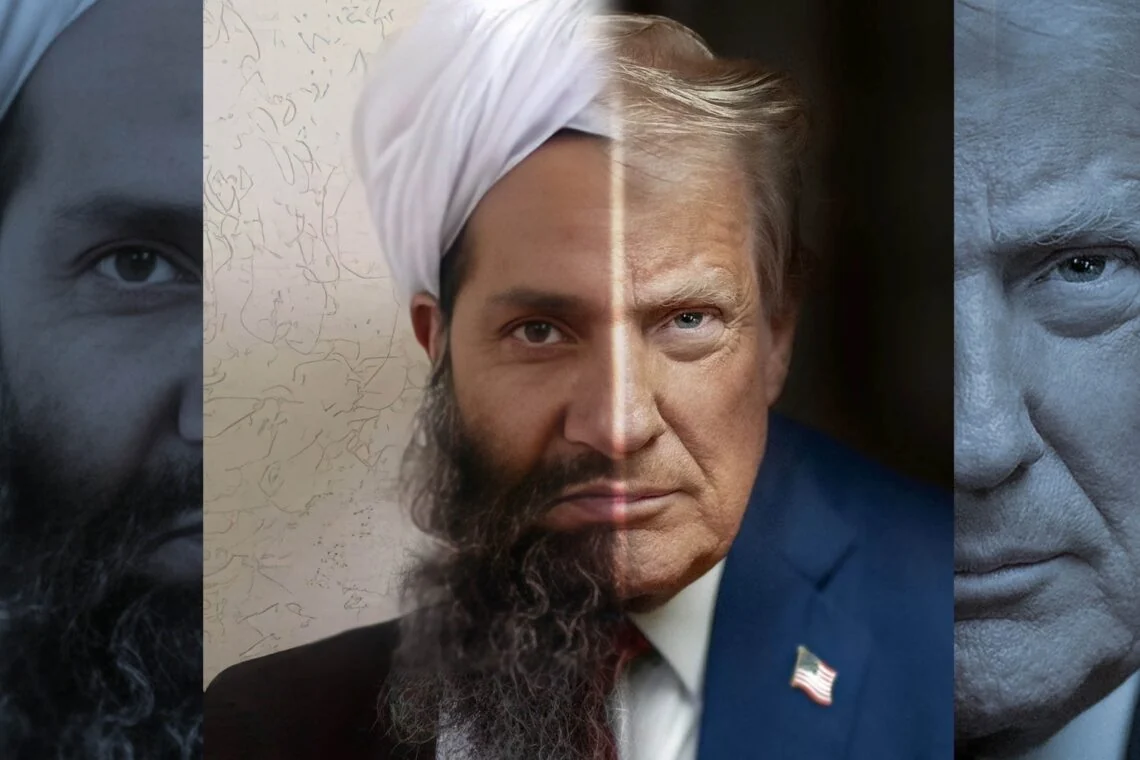
The inclusion of Donald Trump, the US president, alongside Mullah Hibatullah Akhundzada, the Taliban Supreme Leader, in the list of those restricting media freedom published by Reporters Without Borders (RSF) may seem strange at first glance. The two differ fundamentally in political standing, power structure, worldview, and style of governance. One is the president of a country whose political system rests on elections and democratic institutions. The other leads a regime that came to power by force and recognizes no electoral mechanism or public accountability. Even so, the appearance of both names on the same list shows that differences in political structure do not necessarily prevent similarities in authoritarian behavior.
The key common ground between Trump and Mullah Hibatullah should be sought in their views on freedom of expression, their tolerance of criticism, and their relationship with the truth. Both take a hostile approach toward dissent and the independent media. Instead of accepting the critical role of the press, both try to undermine its credibility, and both present an image of themselves in which the leader is not an accountable official but a superior figure beyond criticism. The intensity, tools, and consequences of these behaviors are certainly not the same, but the similarity in their logic toward freedom of expression cannot be overlooked.
Hostility to Freedom of Expression: From Direct Repression to the Destruction of the Media
Mullah Hibatullah does not recognize freedom of expression as an independent, guaranteed right of citizens. Under the Taliban regime, the media are subjected to restrictive orders, censorship, threats, detentions, and denial of access to information. Journalists face red lines in their professional work that keep growing wider. Criticizing the Taliban Supreme Leader, the group’s policies, and the decisions of its officials can carry security and judicial consequences for journalists and media outlets. In such a structure, an independent media outlet is seen not as a pillar of oversight of power but as a threat to the leader’s authority.
Trump does not face such a structure in the United States, and his tools also differ from the Taliban’s instruments of repression. Even so, the RSF report indicates that the pressure from his administration on the media has gone beyond verbal attacks and has extended to restricting journalists’ access to government institutions and decision-making centers. Attacking the credibility of critical outlets, accusing them of lying, and turning journalists into targets of political attacks are part of an approach that weakens media independence.
The important difference is that in the United States, independent media, courts, civil institutions, and legal mechanisms still exist to resist government pressure, whereas the Taliban have eliminated nearly all independent tools of oversight and protest or severely restricted them. Therefore, the placement of Trump and Mullah Hibatullah on the same list does not mean equating the state of media freedom in the United States and Afghanistan. Rather, it points to similarities in the behavior and political tendencies of the two leaders.
Political Narcissism
Another similarity between Trump and Mullah Hibatullah lies in their political narcissism and the image they hold of their own standing. Trump has repeatedly portrayed himself as an exceptional politician, superior to his predecessors and able to solve problems that others could not. In his speeches, he usually exaggerates his achievements, blames others for his failures, and presents his critics not as political opponents but as his personal enemies.
Mullah Hibatullah, for his part, occupies a position within the Taliban structure in which his decisions and decrees are effectively immune from public oversight and free criticism. He is accountable neither to the people nor to any independent institution that could review his decisions. The concentration of power in his position and the Taliban structure’s unquestioning obedience to his decrees have produced an image of leadership in which the leader’s personal will takes precedence over the rights of citizens and even the public interest.
Narcissism, of course, cannot be attributed to individuals as a psychological diagnosis merely on the basis of political behavior. At the political level, however, self-aggrandizement, claims of absolute superiority, an inability to tolerate criticism, and the personalization of power are traits visible in the public conduct of both men. In such an outlook, the leader sees himself as the standard for judging right and wrong, and treats any voice that does not fit his narrative as illegitimate or hostile.
Lying and Narrative Building
Lying and distortion of reality are another area of similarity between the two leaders. In Trump’s politics, the line between fact and personal claim has repeatedly blurred. To showcase his abilities, he makes promises that do not fit the complexity of political and international realities. When a politician reconstructs reality to suit his wishes in order to attract attention or preserve his heroic image, he is in effect sacrificing public trust to personal propaganda.
Trump’s recent remarks about the war in Afghanistan are a clear example of this approach. He has said that the United States never fought to win in Afghanistan and that he himself could have won the war in three weeks. More than a serious analysis of the war in Afghanistan, this claim is an attempt to display extraordinary personal ability and belittle the performance of former US presidents. A war that lasted two decades was not a simple military operation that one president’s will could end in a few weeks. It was bound up with a range of political, military, social, and regional factors, including the complex structure of the war in Afghanistan, foreign support for the Taliban, the weakness of the Republic government, widespread corruption, and strategic mistakes by the United States and its allies.
In these remarks, Trump does not explain why, if victory in Afghanistan was so easy, he signed the Doha Agreement with the Taliban during his first term and paved the way for the withdrawal of US forces instead of acting on this claim. In that agreement, he accepted the withdrawal of American troops in exchange for commitments from the Taliban. Yet today, distancing himself from responsibility for the decisions of that period, he speaks as though the only obstacle to American victory was the incompetence of the presidents before him. This kind of narrative building erases one’s own share of responsibility and attributes every failure to others.
Trump’s promise on the war in Ukraine is another example of the same hollow claims. During his election campaign, he said that if elected president, he would end the Ukraine war quickly. This promise rested on the notion that his personal will and ability were enough to resolve a complex international war. But the Ukraine war did not end with campaign promises, and the complexity of the interests and calculations of Russia, Ukraine, and the world powers showed that ending such a war is not as simple as Trump claimed. In practice, he was unable to fulfill his promise of a quick end. The gap between his campaign claim and political reality is an instance of the same gap between word and deed seen in his behavior.
On the other side, Mullah Hibatullah, using the Taliban’s propaganda apparatus, presents a one-sided picture of the situation in Afghanistan. In it, the leader’s decisions are always right, the regime’s policies are always for the good, and opposition to them is portrayed as a form of hostility to the order and values the Taliban uphold. In this narrative, the suffering of the people, the deprivation of women of education and work, the restrictions on the media, and the crisis of political legitimacy are either ignored or covered over with ideological justifications. Such an approach is neither accountability nor truth-telling. It is an attempt to replace social reality with the official narrative.
Different Tools, Similar Logic of Power
Despite these similarities, Trump and Mullah Hibatullah cannot be considered identical in terms of the degree of repression, the structure of power, and the consequences of their policies. Mullah Hibatullah heads a regime that has systematically restricted the basic freedoms of citizens, particularly women and girls, and has left no real space for political competition or independent oversight. In the United States, despite the Trump administration’s pressure on the media, judicial institutions, independent media, civil society, and electoral mechanisms still exist and can resist executive power. This fundamental difference must not be overlooked in any comparison.
But a difference in tools does not erase a similarity in tendency. One restricts the space for criticism through decrees and a repressive structure, while the other tries to weaken critics through verbal attacks, political pressure, and limits on media access. One places himself beyond questioning by relying on ideological authority, while the other, through political self-aggrandizement, presents himself as the only person capable of solving major crises. In both, tolerance of opposition and acceptance of the limits of power face difficulty.
From this perspective, the placement of Trump and Mullah Hibatullah on the RSF list matters. The list does not mean that the US political system and the Taliban regime are the same. Rather, it draws attention to the reality that restrictions on media freedom can occur in very different political systems. Freedom of expression has meaning only when leaders, especially the most powerful figures in a political structure, recognize the right of citizens and the media to criticize them.
Ultimately, the main similarity between Trump and Mullah Hibatullah should be sought in a kind of politics in which personal power takes priority over truth, propaganda over accountability, and loyalty over freedom of thought. Both hold a hostile stance toward criticism and the independent media, both present an exaggerated image of their abilities and standing, and both resort to narrative building and distortion of reality to preserve that image.
You can read the Persian version of this analysis here: