Note: Five years have passed since the Taliban took control of Afghanistan. During this period, hundreds of women have been abducted, arrested and imprisoned by the Taliban. Many of them have been jailed without proof of a crime, following vague accusations or because of family and social issues. What they have experienced and continue to endure behind prison bars is part of the painful reality faced by Afghan women over the past five years.
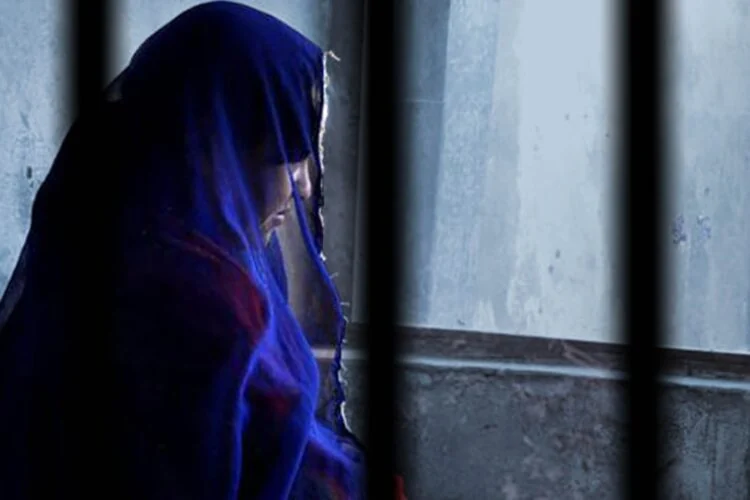
This account is based partly on the author’s direct observations and personal experiences during her imprisonment in Taliban prisons in Kabul. While in detention, the author also heard accounts of the lives and experiences of the women and girls imprisoned alongside her. This article therefore offers a firsthand account of some aspects of prison life, the treatment of women and what has taken place behind prison walls.
Many Afghan girls have lived for years under pressure from restrictive customs and misguided interpretations imposed in the name of culture and, at times, religion, in addition to the restrictions imposed by the Taliban. Some of these traditions make home a less safe place for a girl than the outside world. The story of Mastura is that of one such girl, whose family violence and pressure drove her to flee home and eventually led her to a Taliban prison.
Mastura, an 18-year-old girl, told me during our conversation that she had been in a Taliban prison for nearly four months. Recounting her life, she said that when she was only 13, her grandmother had promised her in marriage to a 48-year-old man without her consent. The man already had a wife and children. According to Mastura, when she turned 15, her family tried to arrange the marriage, but she refused. Despite her opposition, the pressure from her family increased year after year. Finally, when she was 18, she was told that she had to accept the marriage because “the family had given its word, and the family’s honour and reputation were at stake.”
Mastura says no one was willing to listen to her objections. She repeatedly told her family that, under Islam, a marriage without a woman’s consent is not valid, but the family continued to insist. Eventually, she left home, not to run away with another man or pursue a romantic relationship, but simply to escape a forced marriage.
However, her decision did not lead to freedom. Her family reported her to the Taliban, and Taliban forces arrested her on the charge of “running away from home.” Mastura had not left home out of passion to elope with a lover. She was trying to escape the bleak future her family wanted to impose on her for the rest of her life. Yet the charge, which is treated harshly under Taliban rule, did not spare her. She had already spent months in prison.
Under the Taliban regime, “running away from home” carries a prison sentence of only three months. More than half of the women under the age of 25 held in Pul-e-Charkhi prison were detained on this very charge. But for many girls, completing those three months does not mean freedom. Even after serving their full sentences, they remain behind bars, not because they have committed another offence, but simply because no one comes to collect them.
Yes, in Taliban prisons, a woman’s release is not determined by the end of her sentence. It depends on the presence of a male mahram, or close male guardian. Her father, brother, husband, uncle or grandfather must come to the prison gates and take custody of her. If none of them is willing to come, the prison gates remain closed to her.
Mastura’s fate is no different. She did not flee home to build a life with another man. She fled to escape a forced marriage. Yet even after spending months in prison, freedom remains beyond her reach. The family that once tried to force her into an unwanted marriage continues to determine her fate by refusing to come and collect her from prison.
Mastura says that whenever she called her sister, she received the same response: “Father said that whenever Mastura repents for what she has done and agrees to the marriage, we will come and collect her.”
In other words, the prison gates could have opened for Mastura that very day. All she had to do was agree to marry a man she had never wanted. Her freedom came at a price: giving up her right to choose and surrendering to the marriage she had spent years resisting. But Mastura has refused to accept this injustice. She has chosen to remain behind bars rather than spend the rest of her life imprisoned in a forced marriage.
But the fundamental question is this: Should “running away from home” be the end of an investigation, or the beginning of one?
When a girl flees her home, should she not first be asked why she made such a decision? Does every girl who leaves home do so out of impulse or without reason? Or might her decision be rooted in years of violence, coercion and fear?
In Mastura’s account, the reason for her departure was clear. She said she had left home to escape a forced marriage. If that was the case, another question arises: Why was the girl the only one treated as a criminal? Why was no one questioned about those who tried to force her into an unwanted marriage? If a woman’s consent is considered a condition for a valid marriage under Islamic jurisprudence, what place does forced marriage have, and who bears responsibility for it?
In Mastura’s case, she was the only person arrested and imprisoned. Her father, who, according to Mastura, had pressured her to accept an unwanted marriage, was never held accountable or asked to answer for his actions.
This question extends beyond Mastura. It is repeated in the stories of dozens of other girls: Why, in cases like these, is the girl who flees her home always treated as the offender, rather than those who drove her to flee?