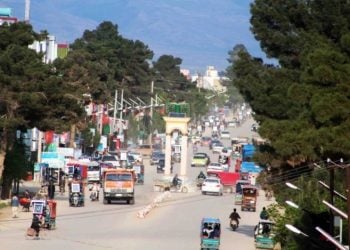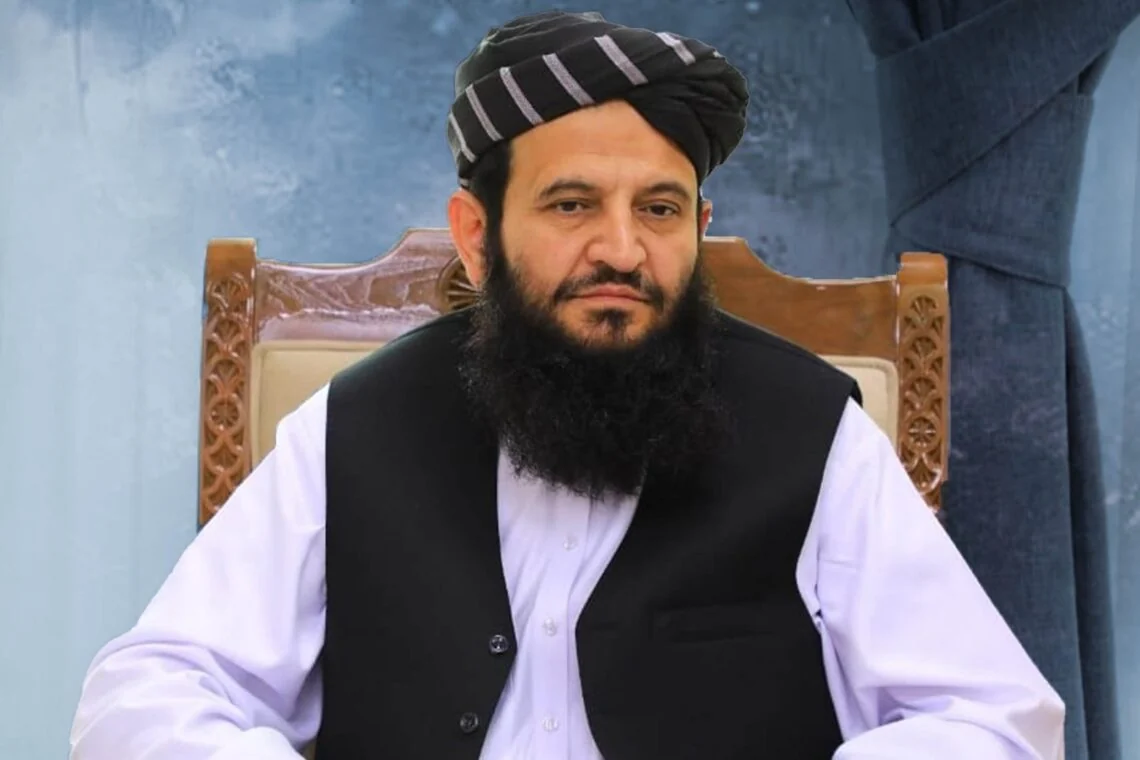
Local sources in Parwan province say that Azizurrahman Mansoor, the Taliban governor in the province, has dismissed several heads of departments under the group’s control and appointed people close to and affiliated with him in their place. According to the sources, he has handed a number of key positions in the province to his friends, relatives, and family members, and the process is continuing. The sources add that the Taliban governor has appointed his cousin as head of the group’s rural development department, one of his close friends as the group’s finance chief, and another friend as the group’s mayor. He also tried to appoint his son-in-law as head of the Taliban’s labor and social affairs department, but the attempt led to an armed clash between men from the two sides, in which six of the group’s fighters were wounded. According to the sources, this Taliban official has turned the government institutions under the group’s control into gathering places for his friends and relatives. The sources also say that the Taliban treat the government institutions under their domination as “spoils of war,” and that each of the group’s officials considers it his right to appoint and install his relatives and loyalists. According to the sources, the dismissal of former government employees has now reached its highest level, and a large number of experienced and specialized employees have been removed from their posts.
According to the sources, the Taliban’s rural development department, the group’s mayoralty, the directorate of Islamic education, the Taliban’s department of education, and the group’s finance office are among the institutions where Azizurrahman Mansoor has installed people close to and affiliated with himself. The sources say he introduced his cousin, Mohammad Amin, as head of the Taliban’s rural development department and one of his close friends as the group’s finance chief.
The sources say the most recent dispute arose over replacing the head of the Taliban’s labor and social affairs department in Parwan and introducing Qari Rayhan, Azizurrahman Mansoor’s son-in-law, in his place. According to the sources, Qari Rayhan currently works as the Taliban governor’s secretary. They add that Qudratullah Zakir, the head of the Taliban’s labor and social affairs department in Parwan, opposed the decision, and that this led to tension between him and people close to the Taliban governor.
The sources say that Hazratullah Khalid, one of the people close to the Taliban governor in Parwan, played a role in the dispute and had been assigned by Azizurrahman Mansoor to force the head of the Taliban’s labor and social affairs department to resign. According to the sources, Hazratullah Khalid is also involved in several killings of former military personnel. The sources specifically accuse him of involvement in the killing of Agha Shirin, the brother of the former head of tribal affairs in the previous government, after the Taliban took control.
The sources add that, following the dispute, armed men from both sides took action, and a clash broke out between people close to the Taliban governor and the bodyguards of the head of the group’s labor and social affairs department. According to the sources, at least six people from the two sides were wounded in the incident. However, the exact number of casualties and their condition are unclear.
The sources also say that, in addition to changing local officials of the group in the aforementioned departments, the Taliban governor in Parwan has dismissed several other local Taliban officials and appointed other people in their place. According to them, the former head of the Taliban’s Hajj and endowments department, who was from Panjshir, has been dismissed and someone else has been appointed in his place.
According to the sources, he has also appointed Mawlawi Rozi Mohammad Afkar, the former Taliban mayor in Bamyan and one of his close friends, through a transfer, as the group’s new mayor in Charikar city.
Mawlawi Shirajan, the former head of the Taliban’s Islamic education directorate, has also been dismissed, and Mawlawi Tahir, who previously served as a mosque imam, has been introduced in his place.
The sources add that the head of the Taliban’s physical education directorate has also been replaced by Azizurrahman Mansoor, and a letter introducing a man named Mawlawi Ansarullah as the new head of the department has been issued. However, the appointment has not yet received final approval. According to sources, the head of the Taliban’s oil and gas directorate has also been replaced, and a person close to the Taliban governor has been installed in his place.
Azizurrahman Mansoor previously served as the Taliban’s deputy governor in Paktia and later as deputy minister in the group’s Ministry of Guidance, Hajj and Endowments, in charge of coordinating religious and Sufi centers.
Over the past five years, numerous media reports and findings by the Hasht-e Subh Daily have shown that the Taliban have widely installed their affiliates and loyalists in government posts. The findings of one of the Hasht-e Subh Daily’s investigative reports show that the traffic department under Taliban control has turned into a center of ethnic monopoly and domination by people affiliated with Maidan Wardak and Kandahar provinces. According to those findings, about 80 percent of the department’s managers, heads of directorates, and key staff are from Maidan Wardak province, and all managerial posts and directorates are held by Wardak and Kandahari Pashtuns. The report’s findings also show that, of the 21 managerial posts and directorates in the General Directorate of Traffic, 18 are held by people from Maidan Wardak province.
Earlier, the Hasht-e Subh Daily had also found in an investigative report that the head of the Taliban’s education department in Nimroz had appointed 17 of his relatives to posts in that department. The report’s findings indicated that some of these people had also been placed in the positions in exchange for payment.
Meanwhile, the 2026 Bertelsmann Transformation Index (BTI) report on Afghanistan states that, in appointing people to government institutions, the Taliban consider personal loyalty and affiliation with the group more than expertise, merit, and work experience. According to the report, mullahs and people close to the Taliban have taken on a more prominent role in decision-making and executive structures, while many specialized and experienced employees of the previous government have been pushed out of the administrative structure.
You can read the Persian version of this report here:
از غنیمت جنگی تا پاتوق اندیوالی؛ درگیری بر سر گماشتن داماد والی طالبان در پروان