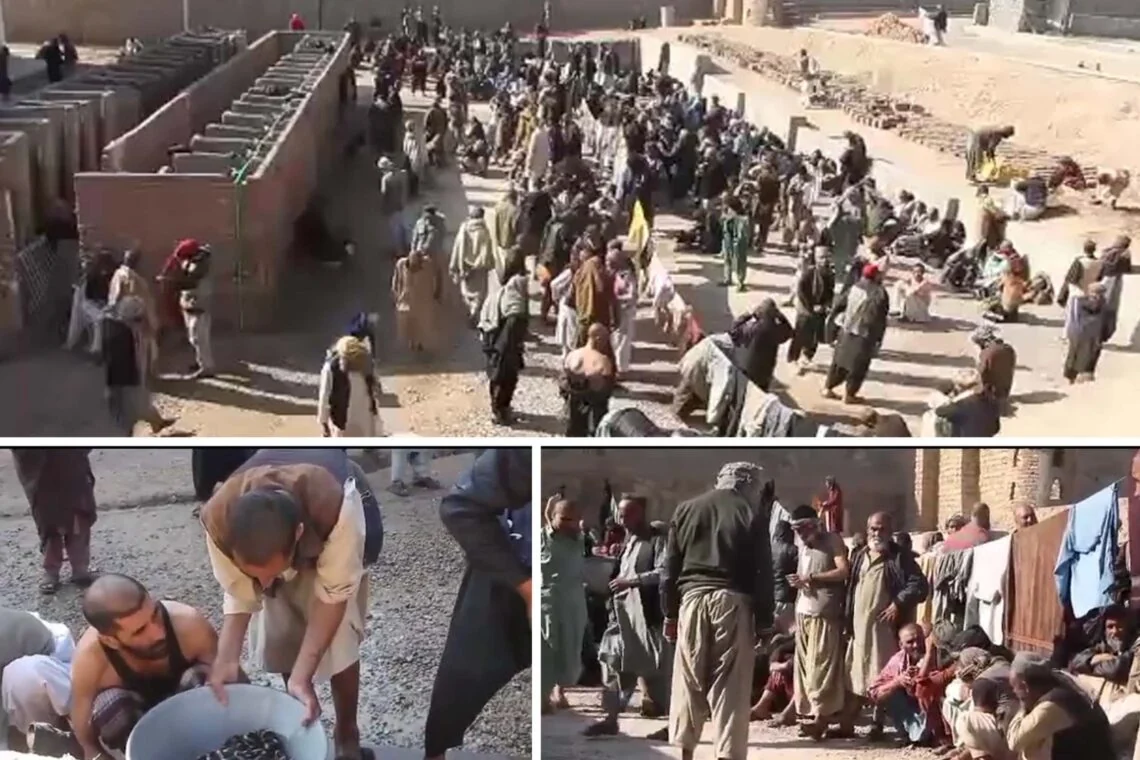
Sources in Herat say that several drivers of transit vehicles on the Islam Qala highway are being detained by the Taliban on charges of drug use and taken to a camp known as “4000”, located east of the city’s passenger terminal. According to the sources, drivers whose drug tests come back positive are released from the camp in exchange for payments of up to 30,000 Afghanis, without completing treatment or receiving approval from doctors, and then return to work. The sources claim that this process has turned into a business, and that several Taliban counter-narcotics officials in Herat, along with officials of the camp, are involved in it. They also complain about unsanitary conditions, overcrowding of detainees, a lack of facilities, and insulting treatment of drivers at the center. The sources add that the drug tests are conducted at a 150-bed hospital, where substances such as hashish, methamphetamine, opium, alcohol, and heroin are screened for.
Sources in Herat say that several drivers of transit vehicles on the Islam Qala highway who are detained by the Taliban on charges of drug use are released again in exchange for money. According to the sources, the Taliban carry out drug tests on drivers of transit vehicles on the Islam Qala highway and transfer those who test positive to the camp known as “4000”, east of the passenger terminal in Herat city. The sources add that the camp is now known among transit vehicle drivers as “8000” and has turned into a place resembling a prison for them.
One source says that the detainees are held in difficult conditions with limited facilities at the center. According to this source, some of the detainees, especially those with financial means, can be released from the camp in exchange for 30,000 Afghanis, without completing treatment or receiving approval from doctors, and then return to work. The source says that a number of people are unwilling to speak about what goes on inside the camp, out of fear of damage to their reputation and exposure of their detention records.
Another source, expressing concern about the unsanitary conditions and the severe overcrowding of drivers accused of drug use in the camp, says that there is not even a proper toilet and that basic principles of hygiene are not observed. According to this source, the sanitary situation of the camp is extremely poor and pitiful, and nobody is willing to stay there even for a single day. He adds that the detainees try to be released from the center as soon as possible by paying bribes.
This source also reveals the pressure and insulting treatment of drivers by the Taliban at the center and says: “They oppress people so much that perhaps such treatment does not happen in any prison. This place is worse than a prison. They detain wealthy drivers more often and bring them here, and then release them in exchange for money. This process has turned into a business.”
The sources claim that the sanitary situation in this camp is extremely poor and pitiful. According to them, nearly 8,000 patients are held in the camp under unsanitary conditions, and no care is provided to them.
Another source claims that collecting money from drivers has turned into a major business, and that the Taliban’s head of counter-narcotics in Herat, as well as the head and deputy head of the camp, are also involved in this process. According to this source, a wide circle of people is involved, and they collect money from drivers under various pretexts.
According to this source, the drug tests are conducted at a 150-bed hospital, where substances such as hashish, methamphetamine, opium, alcohol, and heroin are screened for. The source also stresses that detaining people on charges of drug use, without observing legal procedures, providing access to reliable tests, and guaranteeing the right to challenge test results, creates grounds for violations of the detainees’ rights and further abuses.
This comes as numerous complaints had previously been published about the conditions of this treatment camp for people suffering from addiction, but the Taliban have not responded to any of these complaints and have continued to round up and punish people suffering from addiction in their own way.
Videos had also previously been published on social media in which Taliban fighters were seen whipping people suffering from addiction and pouring cold water on their heads during winter. The Taliban’s method of treatment has repeatedly been criticized by the medical community and public health experts as well.
The Taliban’s counter-narcotics directorate in Herat said in 2023 that at that time more than 70,000 people in the province were suffering from drug addiction, of whom 5,000 were homeless, and most of them were residents of other provinces of the country. According to the directorate’s statistics, women and children made up 13 percent of all people suffering from drug addiction.
Meanwhile, the United Nations Office on Drugs and Crime (UNODC) recently announced in a report that opium production in Afghanistan has increased from around 300 tons in 2025 to nearly 1,500 tons in 2026. According to the report, the area of poppy cultivation has also risen from around 10,000 hectares to more than 43,000 hectares. According to the UNODC, many poppy fields have been hidden among grain fields or behind walls.
Field findings by the Hasht-e Subh Daily also show that, following the Taliban’s announcement of a ban on the cultivation and trade of narcotics, the price of one kilogram of opium in Helmand has risen from 3,000 Afghanis to 50,000 Afghanis. The Sharafat, Sarwan Qala, Sangin, Musa Qala, Bahramcha and Chanjir markets are considered major centers for buying and selling opium in this province. Local sources confirm that several Taliban commanders and officials have also invested in these markets, hold a share in the drug trade, and profit from it. According to these sources, Hibatullah Akhundzada is also aware of the activity of these markets, but does not take any action against them because of the interests of Taliban officials.
According to the findings of this report, Taliban officials, in addition to cultivating opium in remote areas of Helmand, are also supplying their earlier stockpiles to the market. The report’s findings show that local commanders and Taliban fighters in the southern provinces are widely involved in drug trade and trafficking. At present, major drug traffickers, especially of opium, in the southern provinces are mainly members of the Taliban and local officials of the group. The findings of this report also show that the commander of Akhundzada’s special unit is a partner of local traffickers in stockpiling opium.
You can read the Persian version of this report here:
درمان یا تجارت؟ رانندهگان از تحقیر و باجگیری طالبان در شاهراه اسلامقلعه شکایت دارند