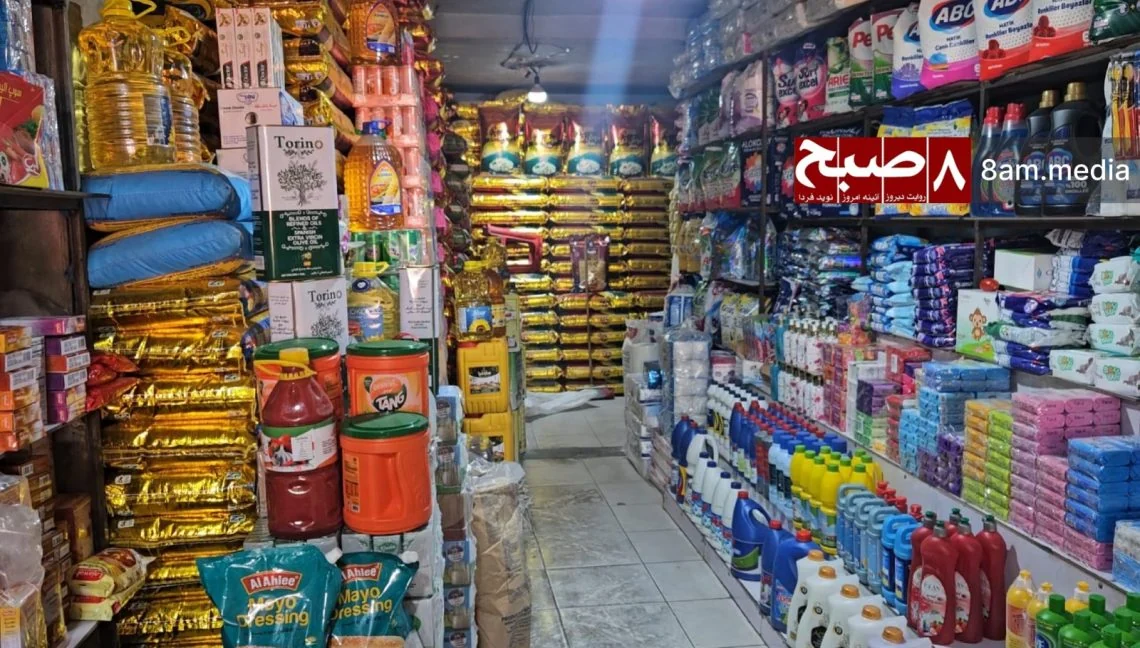
A number of Kabul residents have expressed concern over rising food prices and the increasing cost of living. They say the prices of most basic goods have gone up in the markets, and that this has further eroded families’ purchasing power. Meanwhile, some economic experts warn that the continuous rise in food prices and the decline in families’ purchasing power in Afghanistan could have wide-ranging humanitarian and economic consequences. In their view, if this situation continues, meeting basic living needs will become even harder, especially for low-income families.
Shukrullah, a resident of Kabul, complains about rising prices for food and gas. He says: “The price of all food items has gone up. It is not only flour. The prices of gas, cooking oil, rice, potatoes, and onions have also risen, and almost everything has become more expensive.”
Shakila, a woman responsible for buying her family’s food, also complains about rising prices of basic ingredients and essential goods. She says: “In the Microrayan markets, the price of 50 kilograms (1 sack) of flour used to be between 1,400 and 1,500 afghanis, but it has now reached 1,650 afghanis. One barrel (Sixteen litres) of cooking oil that previously cost 1,800 afghanis has now gone up to 2,200 afghanis. Likewise, the price of seven kilograms of potatoes has gone from 200 afghanis, and seven kilograms of tomatoes from 50 afghanis, up to 170 afghanis. In the same way, the prices of black tea, sugar, macaroni and even toilet paper have also increased.”
Rafi, another Kabul resident, says that with a meager income and the arrival of winter, they have fallen into even more difficult circumstances. He says: “We are in a very hard situation. I earn 100 afghanis a day, and I am at a loss over whether to spend this money first on food, on gas, or on firewood. We truly have a bitter life.”
Meanwhile, Seyar Qureshi, an economic affairs analyst, says that rising food prices at a time when people’s incomes have remained unchanged have had a direct impact on families’ livelihoods and have increased the economic pressure on them. According to him, families that were already struggling to cover their living costs are now forced to prioritize one among buying food, paying rent, and covering the costs of medicine and treatment, a situation that has confronted low-income families in particular with serious problems.
The economic analyst says: “Even a slight increase in the price of food items, including flour, cooking oil and rice, puts great pressure on families and forces them to economize further. However, if families’ incomes are not sufficient, saving alone cannot resolve their livelihood problems, and it should not be expected that people can endure this situation for a long time by cutting their spending. Therefore, providing urgent and targeted assistance, as well as removing obstacles to the transport and distribution of food items, requires serious action.”
Maqsood (pseudonym), an economic affairs expert in Afghanistan who does not want his real name mentioned in the report due to security concerns, warns that the growing increase in food prices and the decline in families’ purchasing power in Afghanistan carry serious humanitarian and economic consequences. According to him, this situation exposes children and women in particular to malnutrition, a weakened immune system and illness.
This economic expert says: “To secure the bare minimum of food, families are forced to sell their assets, take their children out of school and send them to work, or marry them off early. This situation also leads to increased psychological pressure, involuntary migration and social harm.”
Maqsood adds: “Practical solutions for supporting vulnerable families include expanding humanitarian assistance, distributing food packages and cash aid by international organizations, monitoring prices, preventing hoarding and reducing customs tariffs on imports of essential food items.”
This comes as the World Food Programme (WFP), in a report released between late August and late September 2026, said that despite the relative stability of prices in Afghanistan’s markets, the prices of some basic food items and agricultural products remain higher than last year.
The programme’s report states that the price of wheat has increased by 13 percent compared with last year, and the price of mid-grade wheat flour has increased by 12 percent.
In one section of the report, it is stated that the prices of pilaf rice and shola rice have also increased by 22 and 35 percent respectively compared with last year. According to the WFP, the prices of cooking oil and sugar have also risen by 14 and 11 percent, respectively, compared with last year.
Nevertheless, the United Nations Office for the Coordination of Humanitarian Affairs (OCHA) announced yesterday that hunger and malnutrition are on the rise in southern Afghanistan.
The organization reported that some families skip their own meals in order to feed their children.
OCHA added that with the decline in financial resources, the number of families able to receive the assistance they need has decreased.
Note: Traditional units from Afghanistan were converted to SI units at standard market sizes: one seer equals about 7 kilograms, one sack of flour equals 50 kilograms, and one barrel of cooking oil equals 16 litres.
You can read the Persian version of this report here:
افزایش بهای مواد خوراکی؛ سفره خانوادههای کمدرآمد خالیتر میشود