• 8AM.MEDIA
  • ویب‌سایت فارسی
  • پښتو ویب‌پاڼه
  • اۉزبېکچه ویب‌سایت
  • Podcast
Wednesday, September 30, 2026
Hasht-e Subh
  • Home
  • News
    • Afghanistan News
    • World News
  • Opinion
    • Editorial
    • Analysis
  • Reports
    • Daily Reports
    • Investigative Reports
  • Society
    • The story of people
  • Women’s Word
  • Columns
    • Three Years After Afghanistan’s Fall: The Taliban’s Resurgence
    • Towards Equality
    • The Resurgence of the Taliban: Two Years Since Afghanistan’s Fall
    • Hebatullah Report Special Edition
    • Resistance for Education Special Edition
    • Special Column on Taliban’s Education Curriculum
    • Nawroz
  • Interviews
  • Contact Us
    • About Us
    • 8AM MEDIA Annual Awards
    • Submit an Article to Hasht-e-Subh
  • 8am.mediaBack
Subscribe
No Result
View All Result
  • Home
  • News
    • Afghanistan News
    • World News
  • Opinion
    • Editorial
    • Analysis
  • Reports
    • Daily Reports
    • Investigative Reports
  • Society
    • The story of people
  • Women’s Word
  • Columns
    • Three Years After Afghanistan’s Fall: The Taliban’s Resurgence
    • Towards Equality
    • The Resurgence of the Taliban: Two Years Since Afghanistan’s Fall
    • Hebatullah Report Special Edition
    • Resistance for Education Special Edition
    • Special Column on Taliban’s Education Curriculum
    • Nawroz
  • Interviews
  • Contact Us
    • About Us
    • 8AM MEDIA Annual Awards
    • Submit an Article to Hasht-e-Subh
  • 8am.mediaBack
No Result
View All Result
Hasht-e Subh
No Result
View All Result

Taliban Opposition Meeting in Islamabad: Between Optimism and Skepticism

Shujauddin Amini Shujauddin Amini
4 October 2025 - Solar Hijri Date: 1404/07/12 [t_time:1759575508]
Afghan opposition leaders and political figures attend the historic "Toward Unity and Trust" conference in Islamabad, marking Pakistan's first formal hosting of Taliban opponents amid deteriorating Pakistan-Taliban relations. (Photo Credit: Social Media)

Social Media

Pakistan has finally hosted the Afghan opposition for a two-day conference. The gathering, held under the slogan “Toward Unity and Trust” and organized by the South Asia Strategic Stability Institute (SASSI), drew attention precisely because it marked the first time Taliban opponents had been formally hosted by Pakistan. Although virtual and in-person meetings among anti-Taliban groups have become common and often go unnoticed, the Islamabad summit was different: it took place amid heightened tensions between Islamabad and the Taliban relations that have moved beyond calm and now teeter on the edge of open strain. Despite numerous criticisms of the meeting, there are several reasons to view it with cautious optimism.

1) It is worth recalling that the Islamabad conference was postponed three times, delays that were not coincidental but rather the result of intense Taliban opposition and lobbying. For example, Zalmay Khalilzad, the former U.S. special representative for Afghan peace, was among the first to react angrily, urging participants to boycott the meeting, a message that some found appealing. When the Taliban and their supporters react so sharply to an event and demand its cancellation, it is usually an indication of its potential impact. In contrast, the group has ignored numerous other anti-Taliban gatherings around the world without comment.
Therefore, the fact that the organizers managed to overcome multiple political and logistical barriers and held the meeting over two days, openly criticizing the Taliban, is itself a meaningful step forward.

2) Pakistan has long been a staunch supporter of the Taliban, and although frictions arise periodically, its overall loyalty to the group has not diminished significantly. From the Taliban’s emergence in the 1990s until just four years ago, Islamabad never supported anti-Taliban forces nor did it utter a single word that might offend the group. Even the persistent threat posed by Tehrik-e-Taliban Pakistan (TTP) has not fully convinced Islamabad of the need for a non-Taliban, democratic government in Kabul. Given this history, hosting an openly anti-Taliban conference on Pakistani soil, one that served as a platform for vocal opposition, is a deliberate, calculated, and symbolically powerful act. It should not be dismissed as inconsequential.

3) Nearly forty former Pakistani government officials, including several former ambassadors to Afghanistan, reportedly attended the conference, an element that added to both its complexity and significance. Their participation suggests that Pakistan does not intend for the opposition merely to use its territory as a “free platform.” Rather, Islamabad appears to be seizing the moment to send a warning to the Taliban. This is what distinguishes the Islamabad meeting from those held in Vienna. The Vienna conferences have been organized by an Austrian NGO, with the Austrian government playing only a neutral host role and no current officials attending. Pakistan, in contrast, seems to have made a deliberate strategic choice: by hosting anti-Taliban political figures, it aims to pressure Kabul’s rulers while simultaneously diverting public attention from the domestic challenge of the TTP.

4) Both hosts and participants declared that the Islamabad meeting marked the beginning of a “process,” not a one-off event. Pakistan appears intent on demonstrating to the international community that it can address Afghanistan’s crisis through diplomatic engagement and sustained dialogue. If this meeting evolves into an ongoing process and more Taliban opponents gradually join, it could potentially eclipse the Vienna Process. While the Vienna initiative has its merits, Austria’s influence in Afghan affairs is far less substantial than Pakistan’s. In mediation efforts, the most effective players are those with a deep understanding of the conflict’s dynamics, and Pakistan fits that description better than most. It is also possible that Islamabad aims not only to overshadow the Vienna Process but even the Doha Process. After 2001, Qatar emerged as a key actor by hosting the Taliban leadership and opening their political office, effectively stealing the diplomatic spotlight from Pakistan. Now, Islamabad may be seeking to reclaim the influence it once held between 1996 and 2001.

Why Were Prominent Afghan Politicians Absent?

The reality is that many well-known Afghan politicians still consider engagement with Pakistan a source of shame, largely due to the prevailing belief that Pakistan is the root cause of Afghanistan’s instability. This perception has become deeply ingrained in the Afghan public consciousness and will take time and effort to dispel. As a result, Afghan politicians hesitate to speak openly about the need for dialogue with Islamabad, fearing public backlash. Yet privately, many recognize the importance of repairing ties and leveraging Pakistan’s influence. For this reason, several parties and political leaders sent representatives instead of attending personally to gauge public reaction and assess Pakistan’s seriousness before committing to future rounds. They also sought to test whether Islamabad would remain consistent or abandon the effort midway, thereby confirming public suspicions about Pakistan’s duplicity. For its part, Pakistan seems determined to move cautiously, avoiding the immediate inclusion of Afghanistan’s most prominent anti-Taliban figures. Given the fluid political situation, Islamabad appears to be taking a gradual approach, one step at a time.


You can read the Persian version of this analysis here:
نشست مخالفان طالبان در اسلام‌آباد؛ از خوش‌بینی تا بدبینی

ShareTweetSendSendShare

Related Posts

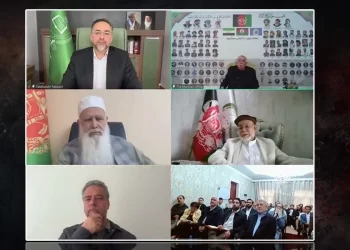
Anti-Taliban figures and supporters take part in a virtual meeting marking the anniversary of Ahmad Shah Massoud's assassination. (Photo credit: Afghanistan International)
Analysis

Virtual Meetings, Virtual Warnings: How Long Will the Taliban Opposition’s Cycle Continue?

15 September 2026 [t_time:1789498076]
Fighters and flags of the Sepahiyan-e Mihan front are seen amid a show of force following its brief capture of a Badakhshan district. (Photo credit: Social Media)
Analysis

The Emergence of Sepahiyan-e Mihan: A “Test of Unity” for the Taliban’s Opponents

22 July 2026 [t_time:1784742972]
President Donald Trump says he plans to visit Turkey and China later this year and expects Chinese President Xi Jinping to travel to the United States in September (Photo credit: BRENDAN SMIALOWSKI / AFP)
World News

Trump Says He Will Visit Turkey and China This Year

20 June 2026 [t_time:1781929225]

Latest

Loading latest news...

Popular stories

  • Surveillance footage shows Taliban fighters surrounding and shooting a bound man in Herat. (Photo credit: Social Media)

    Taliban Shoot Young Man from Herat After Torturing Him with Hands Tied

    Share
    Share Tweet
  • UN Report Reveals Shifts in Family Attitudes and Rise in Domestic Violence in Afghanistan

    Share
    Share Tweet
  • Al-Qaeda Releases Hamza bin Laden Message on 9/11 Anniversary

    Share
    Share Tweet
  • Sources: Kandahar Bombing Leaves Seven Dead and Eight Injured at Mirwais Hospital

    Share
    Share Tweet
  • Afghanistan’s Empty Seat at the Annual UN General Assembly

    Share
    Share Tweet

Podcast

Insights
Insights

Join Lynne O’Donnell for 8AM’s podcast series, Insights.
Lynne talks with generals, diplomats, soldiers, journalists, politicians, activists, people who have front row seats for conflicts around the world, and citizens with a story to tell, happy or sad. For this first series, Afghanistan is the focus. Lynne and her guests talk about the collapse of the republic in August, 2021, and the impact since — for the people of Afghanistan, for the security of the region, for the safety of the world. It’s important, interesting and insightful.

Insights/22: Controlling the Narrative with Mina Sharif
byinsights8am

Controlling the Narrative

Lynne O’Donnell talks with Mina Sharif, author, activist, women’s rights campaigner, educator and mentor. They discuss who controls the narrative and who speaks for Afghanistan’s people when the Taliban appear to have seized control not only of the country but of the message, too.

Have a listen

Insights/22: Controlling the Narrative with Mina Sharif
Episode play icon
Insights/22: Controlling the Narrative with Mina Sharif
Episode Description
Episode play icon
Insights/21: Media Meltdown with Zahra Joya
Episode Description
Episode play icon
Insights/20: Terror Inc with Scott Richards
Episode Description
Episode play icon
Insights/19: Busting Stereotypes with Bushra Gohar
Episode Description
Episode play icon
Insights/18: Media Matters with Waliullah Rahmani
Episode Description
Episode play icon
Insights/17: What Goes Around Comes Around with Sima Samar
Episode Description
Search Results placeholder
Hasht-e Subh

8AM Media, also known as Hasht-e-Subh Daily, stands as Afghanistan's premier independent and non-profit newspaper, resonating as a beacon of journalistic integrity since its establishment in June 2007 by esteemed Afghan journalists and human rights advocates. With a steadfast commitment to citizen journalism and civic education, Hasht-e-Subh Daily has earned its place as the most esteemed publication in the nation.

Publisher: Sanjar Sohail
Email: [email protected]
Executive Director: Parwiz Kawa
Email: [email protected]

Read More

US Senator Calls for End to Military Aid to Israel

Axios: Qatar’s Mediation Efforts Between Iran and US Hit Deadlock

Global Oil Prices Rise

Trump: War with Tehran Will End “Very Soon”

Hurricane Polo Destroys Homes and Fells Trees in Mexico

Editor’s Choice

Every Saturday morning, 8AM MEDIA English Services Department will guide you through the week’s biggest stories from Afghanistan and the international community.

Subscribe

© 2026 - ©Hasht-e Subh Daily

No Result
View All Result
8am.Media
پښتو ویب‌پاڼه
ویب‌سایت فارسی
اۉزبېکچه ویب‌سایت
  • Home
  • News
    • Afghanistan News
    • World News
  • Opinion
    • Editorial
    • Analysis
  • Reports
    • Daily Reports
    • Investigative Reports
  • Society
    • The story of people
  • Women’s Word
  • Columns
    • Three Years After Afghanistan’s Fall: The Taliban’s Resurgence
    • Towards Equality
    • The Resurgence of the Taliban: Two Years Since Afghanistan’s Fall
    • Hebatullah Report Special Edition
    • Resistance for Education Special Edition
    • Special Column on Taliban’s Education Curriculum
    • Nawroz
  • Interviews
  • Contact Us
    • About Us
    • 8AM MEDIA Annual Awards
    • Submit an Article to Hasht-e-Subh
  • 8am.media

© 2026 - ©Hasht-e Subh Daily