
At the 63rd session of the United Nations Human Rights Council (HRC) in Geneva, the human rights situation in Afghanistan, particularly the sweeping restrictions imposed by the Taliban on women, girls and children, became the central focus of criticism from Afghanistan’s representative, United Nations bodies, human rights activists and several countries from the region and around the world. Speakers pointed to the denial of education to girls, restrictions on women’s employment and participation in public life, systematic discrimination, forced marriages involving children, violations of minority rights, restrictions on civil liberties and the weakening of child protection mechanisms, and called for a change in this situation. Some countries and institutions emphasized holding the Taliban accountable and establishing an independent investigative mechanism, while several others called for the recognition of “gender apartheid.” The session also stressed the need to lift the ban on girls’ education, to ensure Afghanistan’s compliance with its international obligations, to guarantee unhindered access to humanitarian aid, and to take practical action by the international community to improve the human rights situation in Afghanistan.
Nasir Ahmad Andisha, Afghanistan’s Permanent Representative in Geneva, called for the recognition of “gender apartheid” as a crime against humanity and for the process of incorporating it into the forthcoming convention on crimes against humanity to begin. Referring to the sweeping restrictions imposed by the Taliban on women and girls, he said these restrictions have been institutionalized through decrees and directives, and that women who are victims of violence face serious obstacles in accessing justice and legal protection.
Andisha expressed concern about the situation of children, saying that the dismantling of child protection and juvenile justice mechanisms, corporal punishment, and reports related to the recruitment and use of children are worrying. According to him, restrictions on freedom of expression and peaceful assembly, arbitrary detentions, and concerns over due process have further narrowed Afghanistan’s civic space.
Afghanistan’s representative, referring to the rise in violence against Shias, called for investigation into and accountability for the perpetrators, and stressed the urgent implementation of an independent investigative mechanism for Afghanistan. He emphasized that the Human Rights Council must go beyond documenting and condemning human rights violations and, based on the report of Richard Bennett, the UN Special Rapporteur on Afghanistan, move into a phase of practical action and the creation of enforcement guarantees.
The Perspective of United Nations Bodies
Richard Bennett, the UN Special Rapporteur on Afghanistan, told the Human Rights Council that through the imposition of new laws and restrictions, the Taliban have institutionalized the repression of women, ethnic and religious minorities, journalists and human rights defenders, and that the scope of these restrictions continues to expand. He expressed concern over the rise in reports of suicide among girls, child labor, and poverty and hunger affecting around nine million children, saying that in some cases families have been forced to sell their children. Bennett also reported that clandestine education for girls and young people is continuing, and warned about the pressure faced by Shias, Ismailis, Hazaras, Uzbeks, Tajiks, LGBT individuals and people with disabilities. He criticized the detention of journalists, human rights defenders and humanitarian workers. Bennett called on Iran, Pakistan and European countries to refrain from forced deportations, and urged members of the Human Rights Council to refrain from normalizing relations with the Taliban.
The representative of the UN Women’s division, criticizing the Taliban’s sweeping bans, said these restrictions have severely damaged the lives and futures of Afghan women and girls. Citing UN reports and statistics, she added that two-thirds of mothers in Afghanistan are worried about their daughters’ futures. She stressed that the people of Afghanistan must be able to build their country’s future, and that supporting them is the responsibility of the international community. This UN official called on the international community to place Afghanistan at the top of its agenda and to stand alongside Afghan women and girls.
The United Nations Children’s Fund (UNICEF) said the United Nations verified more than a thousand serious violations of children’s rights in Afghanistan in 2025. The agency warned that changes to regulations concerning domestic violence under Taliban rule have weakened legal protections for children against violence. It also projected that in 2026, nearly 2.7 million people will return to Afghanistan from neighboring countries, more than 60 percent of them children, who will require immediate support. According to the agency, landmines, unexploded ordnance and improvised explosive devices remain among the leading causes of child casualties in Afghanistan.
UNICEF has called on the Taliban to lift the bans on girls’ education, to abandon the enforcement of regulations that normalize child marriage and domestic violence, and to guarantee women’s and children’s access to humanitarian aid. The agency also called for the lifting of the ban on Afghan women working for the United Nations and urged all parties to protect children from serious violations of their rights.
The Perspective of Afghanistan Human Rights Activists
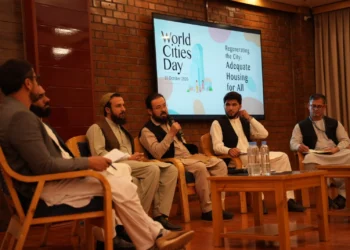
Humaira Rezaei, a human rights activist, called on the international community at the UN Human Rights Council session to recognize the historical and ongoing persecution of Hazaras in Afghanistan as “the Hazara genocide.” She said Hazaras continue to face targeted attacks, religious discrimination, persecution, forced displacement, and the seizure of ancestral lands, a situation that has driven some of them to migrate via dangerous routes.
Rezaei also referred to the bombing of the Shamsi Hedayat school in western Kabul, which wounded at least 42 children, as well as the detention of at least 30 women in Herat, and called on the UN Special Rapporteur on Afghanistan to prepare a dedicated report on the situation of Hazaras. She stressed that Afghanistan’s independent investigative mechanism must prioritize examining the genocide and crimes committed against Hazaras and holding the perpetrators accountable.
Sonita Alizadeh, a rapper, said in a video message to the UN Human Rights Council session that the Taliban’s repression of women and girls has intensified over the past five years. She described the Taliban’s recent ruling on child marriage as alarming, and, drawing on her own personal experience, said she was forced into marriage twice as a child but managed to escape it.
Alizadeh emphasized that Taliban policies have erased decades of progress made by women and have deprived a generation of girls of equal life, human dignity and personal independence. According to her, women and girls under Taliban rule have been placed in a subordinate position, and equality is not possible without the full realization of their rights. She called on the international community to hold the Taliban accountable for human rights violations and breaches of international commitments, and to make use of international legal mechanisms toward that goal.
The Perspective of Neighboring and Regional Countries
Pakistan’s representative at the United Nations, expressing concern over Afghanistan’s social and economic situation, called on the Taliban to lift restrictions on girls’ education and to respect equal rights and opportunities for all citizens. He stressed that the Taliban must adhere to the UN Charter, the Charter of the Organisation of Islamic Cooperation (OIC), and Afghanistan’s international commitments, particularly about human rights and children’s rights.
Pakistan’s representative also emphasized support for those in need, children and the elderly, saying that Pakistan’s position in support of the rights of women, children and minorities is “clear and unambiguous.” He noted that the Taliban’s role in harboring terrorist groups must also be addressed in discussions related to Afghanistan. He called on the Taliban to take action against all terrorist groups in Afghanistan and to create the conditions for a peaceful and stable life for Afghanistan with its own people and with neighboring countries.
Iran’s representative at the United Nations, referring to the consequences of the denial of education in Afghanistan, said this situation has deepened the cycle of social and developmental underdevelopment, with consequences that could affect the entire region. He called for the Human Rights Council to pay attention to the voices of Afghan children, particularly girls.
Iran’s representative said that hosting refugees has placed considerable economic and social pressure on Iran, and that the international community has not shouldered a sufficient share of this burden. He concluded by calling for increased international assistance and burden sharing to support Iran and other countries neighboring Afghanistan.
Turkey’s representative at the United Nations said education is a human right that everyone should be able to enjoy without discrimination. He stressed that Afghanistan’s future depends on access to education for all citizens, including girls, and that the country’s development is not possible without women’s presence, participation and access to education. He called on the international community to take “practical measures” to improve the human rights situation in Afghanistan.
Russia’s representative at the United Nations said his country is aware of the rights of the people of Afghanistan and called on the Taliban to uphold those rights and to fight terrorism and narcotics. He accused the West of applying a “double standard” toward Afghanistan, saying that on one hand the West restricts Afghanistan’s assets while on the other it demands improvements in living conditions for its people.
Russia’s representative stressed that humanitarian aid should not be made conditional on various demands. He also said that years of Western presence in Afghanistan left unfortunate consequences behind. According to him, the Taliban are in a difficult position due to a shortage of resources, and the international community should not allow political considerations to interfere with the provision of humanitarian assistance to the people of Afghanistan.
Japan’s representative at the United Nations said his country is deeply concerned about the human rights situation in Afghanistan, particularly the “institutionalized discrimination” against women and girls. According to him, since the Taliban takeover, women and girls have faced serious restrictions on education, employment and participation in public life. He expressed concern over the harmful consequences of these restrictions on the younger generation, adding that girls in Afghanistan face growing restrictions in accessing opportunities. According to him, these restrictions not only affect girls’ lives today but also endanger Afghanistan’s future.
Malaysia’s representative at the United Nations said the Taliban’s bans on women’s education, employment and social participation have jeopardized their role in Afghanistan’s future. He called on the Taliban to guarantee the rights of women and girls and to lift the bans imposed on them. According to him, no child should be used in military operations. Malaysia’s representative also called on the international community to engage constructively with Afghanistan, adding that his country remains committed to supporting capacity-building efforts and providing humanitarian assistance.
The Perspective of European and Western Countries
France’s representative at the United Nations said that five years after the Taliban’s takeover by force, the human rights situation in Afghanistan continues to deteriorate. According to him, France, together with the United Nations and civil society institutions, is using every available tool to improve the situation of the people of Afghanistan. He added that women and girls have been particularly targeted by the Taliban’s policy of “segregation and discrimination” and have been excluded from public, political and economic life.
France’s representative emphasized that “gender discrimination is a crime against humanity,” and, referring to the two arrest warrants issued by the International Criminal Court (ICC), called on the Taliban to lift all bans imposed on women and girls and to comply with the obligations set out in Security Council Resolution 2593. He also praised the work of the UN Special Rapporteur on human rights in Afghanistan and emphasized Paris’s support for the continuation of his mandate. France’s representative also strongly condemned executions carried out by the Taliban, adding that his country opposes the death penalty under all circumstances.
Spain’s representative at the United Nations said the Taliban have made human rights violations in Afghanistan “institutionalized and systematic.” He stressed that Spain supports investigative mechanisms to hold the Taliban accountable, and that the international community must not overlook gender based repression in Afghanistan.
The Spanish official called on the Taliban to respect human rights and women’s rights and to end all forms of ethnic and religious discrimination. He also said that child labor and forced marriages contradict Afghanistan’s commitments under the Convention on the Rights of the Child.
Italy’s representative at the United Nations said Taliban laws and policies are increasingly intensifying the marginalization of women in Afghanistan. He added that the dismantling of child protection systems has exposed women to greater violence and increased their vulnerability. He called on the Taliban to adhere to international commitments and laws and to abolish the system of “institutionalized discrimination and abuse” against women and girls.
Austria’s representative at the United Nations said the dismantling of the legal system protecting children in Afghanistan has exposed a large number of them to harm and abuse. According to him, millions of Afghan girls are barred from attending school and university. He added that social initiatives and online education show that Afghan girls still want to continue their studies, but that these programs cannot replace formal education.
Switzerland’s representative at the United Nations said the human rights situation in Afghanistan, five years after the Taliban takeover, continues to deteriorate, and that the normalization of this situation and the shifting attitudes toward women’s rights are “deeply concerning.” He added that systematic discrimination against women in education, employment and participation in public life continues, and that institutions that previously documented human rights violations have been dissolved. According to him, forced marriages have also increased in an environment where perpetrators face no accountability.
The Swiss official also condemned the death penalty, saying that establishing an independent mechanism to investigate human rights violations in Afghanistan is an important step toward stopping these violations and holding perpetrators accountable.
Belgium’s representative at the United Nations said the Taliban have shaped Afghanistan according to their own ideological worldview. He added that the rights and freedoms of the people of Afghanistan have been increasingly stripped away, and that the situation, particularly for women and girls, is “dark and dire.” He stressed that women and girls face systematic discrimination, and that through decrees and new regulations, the Taliban have imposed further restrictions on them. According to him, the Taliban’s rules on marital separation make it nearly impossible for women to separate from their husbands, effectively perpetuating violence against women.
Bulgaria’s representative at the United Nations said that through an increasing number of decrees, orders and procedures, the Taliban have institutionalized restrictions that violate the rights and freedoms of the people of Afghanistan. According to him, these restrictions have particularly affected women, girls, boys and members of ethnic and religious minorities. He added that the system governing Afghanistan, through discrimination, segregation and the exclusion of women and girls, has deprived them of basic rights, including education, freedom of expression and movement, employment and access to justice.
Bulgaria’s representative also expressed concern over the suspension of the 2019 Child Protection Law, saying this move has weakened legal protections for children and safeguarding mechanisms against abuse and exploitation. He also described restrictions on freedom of expression and media activity as “a matter of serious concern,” and called on the Taliban to adhere to Afghanistan’s international commitments regarding human rights, women’s rights and children’s rights.
Australia’s representative at the United Nations said his country is concerned about the “systematic repression of human rights” by the Taliban. He added that the Taliban have consistently shown they place no value on human rights and fundamental freedoms, and have targeted various groups, including ethnic and religious minorities, LGBT individuals, and women and girls. According to him, through the issuance of hundreds of decrees and orders, the Taliban have sought to exclude women from public life and strip them of the right to education and employment.
Australia’s representative also expressed concern over Taliban interference in the delivery of humanitarian aid to those most in need. He said his country has sanctioned the Taliban and called for increased international pressure to hold the group accountable.
Canada’s representative at the United Nations strongly condemned the systematic violation of human rights in Afghanistan, saying that women, children and minorities are among the victims of these violations. He added that the Taliban have created an “unacceptable, discriminatory and ideological” system, and that women face extensive obstacles to accessing education and participating in public life. According to him, these bans have created conditions for an increase in early and forced marriages. He stressed that the people of Afghanistan deserve justice and that the Taliban must be held accountable. According to him, Canada will work alongside other countries to hold the Taliban accountable.
Romania’s representative at the United Nations said the long term consequences of the policy of “systematically erasing women” in Afghanistan will be very severe. According to him, more than two million girls in Afghanistan have been denied education, a situation that will have serious consequences for their future and for Afghan society. He emphasized his country’s support for the mandate of the UN Special Rapporteur on human rights in Afghanistan and for the independent investigative mechanism.
South Africa’s representative at the United Nations said children in Afghanistan are growing up in conditions where “childhood and the future” have been denied to them, a situation that is particularly true for girls. According to him, children in Afghanistan face physical and psychological violence and insecurity, conditions he believes are the result of decades of war and discriminatory decrees.
The Perspective of African Countries
South Africa’s representative, citing the words of Nelson Mandela, said the true character of a society is revealed by how it treats its children. He also described the conditions created for children and adults in Afghanistan as “dire” and voiced support for an independent investigative mechanism on Afghanistan.
Chile’s representative at the United Nations, expressing concern over the rise in forced marriages and child marriage in Afghanistan, said many girls have been confined to their homes and are not permitted to leave without a male guardian.
You can read the Persian version of this report here:
دیدگاه کشورها در نشست شورای حقوق بشر درباره افغانستان؛ سرکوب طالبان «نظاممند» است