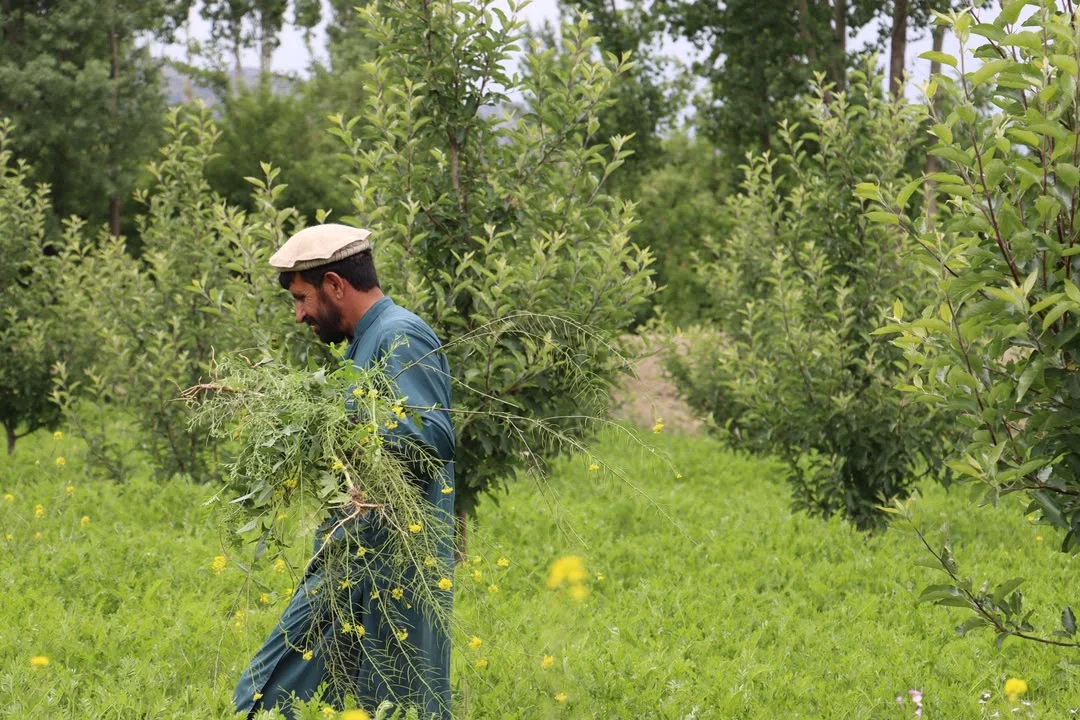
The Food and Agriculture Organization of the United Nations (FAO) says the use of modern agricultural technologies in Afghanistan has helped reduce food waste and increase the income of farming families.
On Tuesday, October 13, ahead of World Food Day 2026, the organization highlighted six examples of these innovations.
FAO added that these modern methods help Afghan farmers cope with water shortages and climate change, reduce crop losses, and protect natural resources.
The methods include laser land leveling, mushroom cultivation by women, establishing fruit orchards, solar drying of vegetables, using solar cookers, and constructing raisin-drying houses.
According to FAO, the average rate of crop losses among households that received solar dryers fell from 26 percent to 7 percent.
Similarly, in raisin-drying houses in Herat, the time needed to dry grapes has been reduced from 30 days to 15 days, while losses have fallen from 40–50 percent to 10–15 percent.
FAO said these methods help improve water and natural resource management, increase farmers’ income, and strengthen household food security.