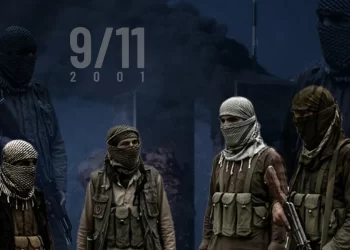

In a display of astonishing audacity, al-Qaeda executed the September 11, 2001 attacks with meticulous planning and extraordinary complexity in a country that boasted the world’s most robust intelligence and defense organizations. On this day, members of the terrorist group hijacked four passenger planes and used them as weapons against strategic targets in the United States. Two planes struck the Twin Towers of the World Trade Center in New York, causing the collapse of the buildings, while a third plane hit the Pentagon, the U.S. Department of Defence headquarters. The fourth plane crashed in Pennsylvania after passengers attempted to overpower the hijackers.
These unprecedented attacks, which resulted in nearly 3,000 deaths and thousands more injuries, shocked the global community and challenged both U.S. and global security. In response, the United States quickly declared a “war on terror” and initiated military action in Afghanistan, which was known to be a haven for al-Qaeda. The September 11 attacks not only transformed the security and defense structures of the U.S., but they also had far-reaching effects on international policies, security laws, and global relations, with their repercussions still felt worldwide.
To this day, many people and security analysts around the world view aspects of these attacks as a mystery, genuinely uncertain about the security gaps that allowed such a catastrophe to occur. Various theories and analyses, often accompanied by conspiracy theories, particularly within Islamic societies and among critics of the U.S., suggest that the U.S. might have been complicit in the attacks. However, the reality is that the profound transformation following these terrorist attacks has impacted global security dynamics in numerous ways. Most notably, the global security dynamics have been fundamentally altered, regional and international polarizations have emerged, and several regimes, especially in the Middle East, Afghanistan, and even parts of Africa, have been overthrown.
A significant concern that has been exacerbated by these transformations is the rise of religious-Islamic terrorism and the proliferation of various jihadist groups in Islamic countries, along with the spread of radical Islamic ideologies worldwide. Comparing concerns about jihadist and radical Islamic groups before 2001 to those in 2024 reveals a stark increase in security worries related to terrorism and Islamic extremism, affecting not only governments but also global communities. These concerns are prominently featured in the national security strategies of all European countries, North America, Russia, and notable regional-Islamic states, with consequences such as illegal migration and drug trafficking also becoming top security threats globally.
But is our world truly at a security risk comparable to that of 2001, necessitating concern over terrorist acts similar to those of September 11 and other major attacks, such as the 2005 London bombings (7/7) and the 2015 Paris attacks (November attacks)? Evidence and analyses suggest that today’s world is far more vulnerable to terrorism and Islamic radicalism than it was in the 1990s. Al-Qaeda did not plan the September 11 attacks overnight or within a month; rather, global jihad, as the primary narrative for all terrorist and radical Islamic groups, including al-Qaeda, has driven these groups from their inception to consider how to spread their jihad globally and establish their dominance worldwide. Benazir Bhutto, former Prime Minister of Pakistan, notes in her book Daughter of the East that in 1995, when Pakistani security forces detained Ramzi Yousef, a senior leader of the radical al-Qaeda faction, they discovered plans for terrorist attacks using airplanes against the U.S. Despite Bhutto’s notification to the Americans, it took six years for al-Qaeda, despite tight surveillance by U.S. intelligence agencies and their regional partners, to execute the terrorist act.
There remains a serious concern that despite the West’s, including the U.S., deep understanding of the intentions and capabilities of radical jihadist groups and their years of experience dealing with them, the threats may not be taken seriously. Current and former U.S. military officials, such as General David Petraeus, clearly highlight the potential capacities of terrorist groups like ISIS-Khorasan and al-Qaeda, which are currently bolstering their structures and capacities under Taliban control in Afghanistan. Yet, there are no clear signs of serious actions by global nations to mitigate these threats. On the contrary, some countries are even attempting to engage with a terrorist group and its illegal regime in Afghanistan, which is fostering the growth of terrorism.
Multiple reports indicate that several terrorist groups, including ISIS-Khorasan, al-Qaeda, TTP (Tehrik-i-Taliban Pakistan), the Islamic Movement of Uzbekistan, Jish al-Adl, and others (some experts estimate up to 21 groups), are currently recruiting, promoting terrorism, and training their forces under the Taliban’s umbrella, preparing to create insecurity and implement their future plans.
But What Are the Primary Signs?
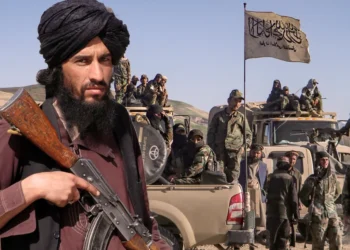
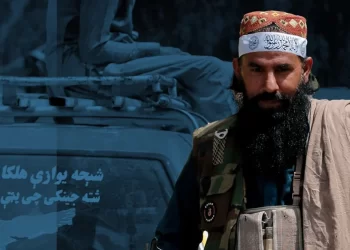
The Taliban, a radical religious group with a long history of terrorist behavior in Afghanistan, has established its political regime through the usurpation of power, creating an extraordinary environment for regional and international terrorist groups. According to reports from UN experts and reputable international media, al-Qaeda has established several training centers in Afghanistan and has direct access to the country’s mineral wealth. Al-Qaeda leader Ayman al-Zawahiri was killed in 2022 by a drone strike in Kabul’s Green Zone, and there are credible reports that a member of al-Qaeda is serving as a key advisor to Sirajuddin Haqqani in the Taliban’s Ministry of Interior. Several individuals previously affiliated with al-Qaeda now hold official positions in the Taliban regime, such as Qari Baryal, who was initially appointed as the Taliban governor of Kabul and is now the governor of the Kapisa province.
Local sources report that the Taliban has sheltered several senior al-Qaeda members, including one of Osama bin Laden’s sons, in the Panjshir province and is providing protection for them. Reputable media outlets have repeatedly reported that al-Qaeda has called on its supporters to come to Afghanistan for training and to plan attacks against the world.
TTP, a regional radical Islamic group with a history of terrorist behavior and long-standing conflicts with the Afghan government and international forces, now operates freely in Afghanistan as a significant ally of the Taliban. It has several schools, which are essentially training and indoctrination centers, in various provinces and enjoys special security and logistical privileges from the Taliban regime, particularly the Haqqani network. Using the safe space in Afghanistan, TTP has strengthened and expanded its terrorist activities within Pakistan, with reports from Pakistani officials and research centers indicating a significant increase in terrorist activities in regions like Khyber Pakhtunkhwa and Balochistan.
ISIS-Khorasan, as a major terrorist group, poses a serious security challenge to Afghanistan, the region, and even the world. Although this group seems to be in complete conflict with the Taliban, an overall analysis of both groups’ narratives regarding global jihad, the establishment of an Islamic-Sunni state, and their definitions of enemies shows that, strategically, both groups are pursuing similar goals. ISIS has intensified its security activities against Shia, and Hazara and Sufi communities in Afghanistan and has also taken various actions against the Taliban. Findings from multiple sources, including the Taliban’s military purification commission, reveal that ISIS-K has infiltrated this group to an unprecedented degree, with dozens of Taliban military members being dismissed and imprisoned for alleged ISIS-K affiliation and cooperation. ISIS-K has managed to access sensitive locations within Taliban administrative offices and carry out attacks, including explosions in a mosque within the Taliban Ministry of Interior’s compound, the killing of the Taliban governor for Balkh, Dawod Muzamil, and the murder of two prominent pro-Taliban clerics, Mullah Mujib Rahman Ansari and Mullah Rahimullah Haqqani, among others.
Furthermore, ISIS-K has utilized the security vacuum in Afghanistan, which can be likened to a security black hole, to design and execute cross-border activities. Complex terrorist attacks have been carried out multiple times within Iran, including the attack on the Qassem Soleimani memorial ceremony in Kerman, attacks on the Shah Cheragh shrine in Shiraz, and the attack on a concert hall near Moscow, as well as several attacks in Pakistan, showcasing the group’s capability to threaten international security. Regional countries have also reported arrests of individuals suspected of being members of ISIS-K, indicating the growing expansion of this terrorist group’s influence in the region and globally.
Other groups such as the East Turkistan Islamic Movement, Tajikistan’s Ansarullah, the Islamic Movement of Uzbekistan, Jish al-Adl, Lashkar-e-Taiba, and others have also found a new lease on life under the Taliban’s protection, turning Afghanistan into a haven for various global terrorist groups.
There are reports from reliable sources indicating that the Taliban, following a directive from their leader, has issued Afghanistan citizenship and passports to a significant number of foreign members of affiliated and protected groups. These individuals are expected to be dispatched on specific regional and international missions under various official, unofficial, and even migratory capacities to Western and regional countries.
One of the most crucial signs that could prompt serious global attention is the Taliban’s officials’ admission of the possibility of attacks similar to September 11. In response to Asef Durrani, Pakistan’s Special Representative for Afghanistan, who claimed that a September 11-like attack could originate from Afghanistan, a Taliban Foreign Ministry official acknowledged the possibility of such an attack but suggested it might come from Pakistan rather than Afghanistan. These accusations, or rather admissions, from both sides, highlight the significant threat posed by the Taliban and Pakistani officials. Even if we assume the Taliban’s claim is accurate, there are active groups in Pakistan whose command and strategic backing are under Taliban control.
These accusations, or more accurately, admissions from both sides, are not without merit. Both parties have substantial awareness of the situation. Pakistan, with its strong intelligence service and historical connections with jihadist groups in Afghanistan, would not raise such a serious issue without clear evidence. It is also a crucial indication of the magnitude of the threat posed by the Taliban and their allies, including the Pakistani intelligence service’s support for jihadist groups.
Conclusion
The security and intelligence gaps created by the Taliban’s control over Afghanistan and the extensive presence of active terrorist and radical Islamic groups under their umbrella represent a significant and growing threat. This environment has created a remarkable opportunity for international terrorist organizations, including ISIS-K, al-Qaeda, and TTP, to strengthen and expand their operations. If the global community does not address this threat with a coherent and unified strategy, it could lead to severe security challenges worldwide shortly.
The current global situation including rapid technological advancements, widespread illegal migration, digital currencies, drug trafficking, radical jihadist narratives, and the rise of the Taliban as a source of inspiration for radical Islamic groups has greatly facilitated and accelerated terrorist activities. Terrorist groups are no longer limited to traditional tactics such as bombings in urban buses or metro stations; they are increasingly adopting more complex and diverse methods to instill widespread fear and impact various aspects of collective human life.
The pervasive fear of Islamic terrorism in European countries has led to persistent anxiety among citizens and intensified the workload of security agencies. This surge in terrorism not only creates security challenges but also has significant implications for democratic values and the continuity of moderate and democratic political parties. The notable rise in the popularity of far-right parties in France, Italy, Germany, Sweden, and the Netherlands is partly a result of radical group activities under the guise of migration. If this trend continues, it could threaten not just security but democracy itself in the West. Some European experts are now questioning whether democratic values should take precedence over security concerns.
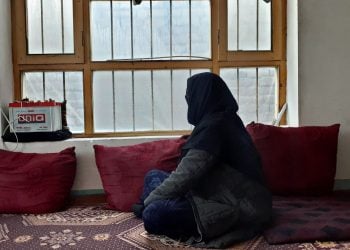
The security concerns posed by radical Islamic groups, predominantly based in Taliban-controlled Afghanistan, are serious. Ignoring these threats only increases the risk that they will eventually impact both regional and Western countries. To prevent such dire consequences, the global community must adopt a cohesive, continuous, and united approach to combating these threats. The cost of neglecting the actions of the Taliban could be extraordinarily high. Essential measures include enhancing economic sanctions against Taliban leaders, imposing strict travel restrictions on group members, and supporting opposition groups such as civil society, media, women, and military factions like the National Resistance Front of Afghanistan and the Afghanistan Freedom Front.