• 8AM.MEDIA
  • ویب‌سایت فارسی
  • پښتو ویب‌پاڼه
  • اۉزبېکچه ویب‌سایت
  • Podcast
Thursday, October 15, 2026
Hasht-e Subh
  • Home
  • News
    • Afghanistan News
    • World News
  • Opinion
    • Editorial
    • Analysis
  • Reports
    • Daily Reports
    • Investigative Reports
  • Society
    • The story of people
  • Women’s Word
  • Columns
    • Three Years After Afghanistan’s Fall: The Taliban’s Resurgence
    • Towards Equality
    • The Resurgence of the Taliban: Two Years Since Afghanistan’s Fall
    • Hebatullah Report Special Edition
    • Resistance for Education Special Edition
    • Special Column on Taliban’s Education Curriculum
    • Nawroz
  • Interviews
  • Contact Us
    • About Us
    • 8AM MEDIA Annual Awards
    • Submit an Article to Hasht-e-Subh
  • 8am.mediaBack
Subscribe
No Result
View All Result
  • Home
  • News
    • Afghanistan News
    • World News
  • Opinion
    • Editorial
    • Analysis
  • Reports
    • Daily Reports
    • Investigative Reports
  • Society
    • The story of people
  • Women’s Word
  • Columns
    • Three Years After Afghanistan’s Fall: The Taliban’s Resurgence
    • Towards Equality
    • The Resurgence of the Taliban: Two Years Since Afghanistan’s Fall
    • Hebatullah Report Special Edition
    • Resistance for Education Special Edition
    • Special Column on Taliban’s Education Curriculum
    • Nawroz
  • Interviews
  • Contact Us
    • About Us
    • 8AM MEDIA Annual Awards
    • Submit an Article to Hasht-e-Subh
  • 8am.mediaBack
No Result
View All Result
Hasht-e Subh
No Result
View All Result

The Burden of Parentification: When Children in Afghanistan Take on Adult Responsibilities

Avizha Khorshid Avizha Khorshid
30 June 2025 - Solar Hijri Date: 1404/04/09 [t_time:1751273315]
A young child in Afghanistan holds a baby in her arms while sitting in front of a wall. (Photo Credit: Reuters)

Reuters

In many families in Afghanistan, older children bear responsibilities far beyond their years. When children are placed in the role of a parent, they face a heavy burden that can lead to significant emotional and psychological harm. Psychologists refer to this phenomenon as “parentification” or “child-as-parent.” They express concern, emphasizing that while seeking help from a child is not inherently wrong, assigning a parental role to a child has negative consequences.

When children carry the weight of household and family responsibilities instead of backpacks, toys, and childhood dreams, they become lost between childhood and adulthood. In such situations, a child assumes the role of a father or mother, caring for siblings or serving as the family’s emotional anchor. They may appear strong outwardly, but inwardly, they endure immense psychological pressure—a burden often overlooked and rarely taken seriously.

Asma, 29, is one of those who took on a motherly role in childhood. She says her mother was both employed and ill, leaving Asma to cook and care for her two-month-old siblings with her small hands. She emphasizes that the overwhelming responsibilities left her in constant stress and anxiety, a feeling that became permanent.

With deep regret, the young woman says she has no memories of enjoying her childhood and wishes she could have played more, laughed, and savored life. She says, “I always had to take care of others and never felt peace, security, or mental calm.”

Asma adds, “I was always on high alert, worried that someone might get upset or something might go wrong. With so many responsibilities—home, school, and the children—I had to manage everything. I was constantly anxious and worried, and even now, with no problems or responsibilities, that feeling has seeped into my entire being, and I can’t escape it.”

Firoza is another child who experienced responsibilities heavier than her age. She says, “Because I was forced to take on responsibilities beyond my capacity at a young age, I often couldn’t perform them properly. This led to feelings of guilt and inadequacy. Sometimes, I was punished for my mistakes, which made me feel guilty and incapable.”

She emphasizes, “Even now, I can’t easily ask for help from others. Every time I try to make a request, I feel intense anxiety, as if something inside me prevents me from speaking.”

Behishta, another young person with a similar experience, believes that when a child grows up in a parental role, it can also have positive outcomes. She says, “The positive aspects of this situation are that a person doesn’t easily accept defeat, as they’re accustomed to facing many challenges from childhood. They behave more rationally and are more active and successful in terms of social intelligence because the more a person uses their brain, the more active it becomes, leading to more precise, successful, and better choices.”

However, some psychologists stress that a child should remain a child and not replace a parent, as this disrupts their healthy emotional and psychological development, with effects lasting into adulthood.

Rezwana Rahimi, a psychologist, says on this matter, “Parentification has both positive and negative consequences. On the positive side, children who experience parentification often grow up to be more responsible, with stronger skills in management, empathy, and decision-making. However, the negative consequences of this phenomenon are deeper and more lasting, potentially causing significant psychological harm throughout a person’s life.”

She adds, “Feelings of ‘not fitting in’ with peers and hidden anger stemming from injustice and excessive responsibility become ingrained in these children, to the point that they always prioritize others’ needs over their own. These individuals often develop a form of chronic responsibility in adulthood.”

Rahimi further explains, “These children also suffer from psychological burnout, chronic anxiety, feelings of being overlooked, depression, hidden anger, and a lack of healthy emotional boundaries. They learn to ignore their desires and sacrifice themselves to please others.”

Parentification, or child-as-parent, is a common phenomenon in Afghanistan that receives little attention. While it sometimes fosters positive traits like a heightened sense of responsibility, it more often causes deep and lasting psychological harm to the individual.

You can read the Persian version of this report here:

رنج والدسازی کودکان؛ زمانی که کودکان بزرگ‌تر از سن خود مسوولیت می‌پذیرند 

ShareTweetSendSendShare

Related Posts

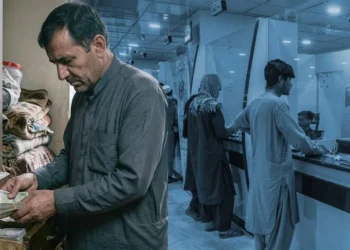
A man counts banknotes at home while customers stand at bank counters, as distrust in the banking system pushes citizens to keep cash at home. (Photo credit: AFP + AI)
Daily Reports

Distrust in Banking System Pushes Many Citizens to Keep Their Money at Home

14 October 2026 [t_time:1791999073]
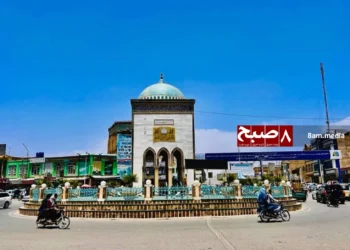
A view of the city
Afghanistan News

Two People Killed in Clashes with Taliban in Kandahar

14 October 2026 [t_time:1791999055]
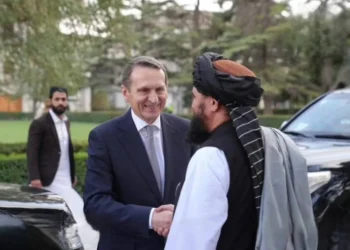
Sergey Naryshkin - Director of Russia’s Foreign Intelligence Service shaking hands with Abdul Haq Wasiq - the Taliban’s intelligence chief, upon his arrival in Kabul (Photo: @bnadari1)
Afghanistan News

Russian Foreign Intelligence Chief Arrives in Kabul

14 October 2026 [t_time:1791997492]

Latest

Loading latest news...

Popular stories

  • An aerial view shows collapsed buildings and widespread damage following an earthquake in Panama (Photo: Reuters)

    More Than 200 Aftershocks Recorded in Panama Since Friday’s Earthquake

    Share
    Share Tweet
  • Axios: Trump Expects Ukraine Not to Attack Russian Oil Refineries

    Share
    Share Tweet
  • UN Report Reveals Shifts in Family Attitudes and Rise in Domestic Violence in Afghanistan

    Share
    Share Tweet
  • The Politics We Inherited: Rethinking Afghanistan’s Political Culture

    Share
    Share Tweet
  • Mujahid: Pakistan Should Address Its Internal Problems Instead of Making Accusations

    Share
    Share Tweet

Podcast

Insights
Insights

Join Lynne O’Donnell for 8AM’s podcast series, Insights.
Lynne talks with generals, diplomats, soldiers, journalists, politicians, activists, people who have front row seats for conflicts around the world, and citizens with a story to tell, happy or sad. For this first series, Afghanistan is the focus. Lynne and her guests talk about the collapse of the republic in August, 2021, and the impact since — for the people of Afghanistan, for the security of the region, for the safety of the world. It’s important, interesting and insightful.

Insights/22: Controlling the Narrative with Mina Sharif
byinsights8am

Controlling the Narrative

Lynne O’Donnell talks with Mina Sharif, author, activist, women’s rights campaigner, educator and mentor. They discuss who controls the narrative and who speaks for Afghanistan’s people when the Taliban appear to have seized control not only of the country but of the message, too.

Have a listen

Insights/22: Controlling the Narrative with Mina Sharif
Episode play icon
Insights/22: Controlling the Narrative with Mina Sharif
Episode Description
Episode play icon
Insights/21: Media Meltdown with Zahra Joya
Episode Description
Episode play icon
Insights/20: Terror Inc with Scott Richards
Episode Description
Episode play icon
Insights/19: Busting Stereotypes with Bushra Gohar
Episode Description
Episode play icon
Insights/18: Media Matters with Waliullah Rahmani
Episode Description
Episode play icon
Insights/17: What Goes Around Comes Around with Sima Samar
Episode Description
Search Results placeholder
Hasht-e Subh

8AM Media, also known as Hasht-e-Subh Daily, stands as Afghanistan's premier independent and non-profit newspaper, resonating as a beacon of journalistic integrity since its establishment in June 2007 by esteemed Afghan journalists and human rights advocates. With a steadfast commitment to citizen journalism and civic education, Hasht-e-Subh Daily has earned its place as the most esteemed publication in the nation.

Publisher: Sanjar Sohail
Email: [email protected]
Executive Director: Parwiz Kawa
Email: [email protected]

Read More

Ala al-Din Jahansuz: A King Fond of Poetry and Music

Saudi Arabia Versus the Houthis: A Test of Reliance on America

International Day of the Girl: Stories of Victims Cut Off from the World

Distrust in Banking System Pushes Many Citizens to Keep Their Money at Home

Two People Killed in Clashes with Taliban in Kandahar

Editor’s Choice

Every Saturday morning, 8AM MEDIA English Services Department will guide you through the week’s biggest stories from Afghanistan and the international community.

Subscribe

© 2026 - ©Hasht-e Subh Daily

No Result
View All Result
8am.Media
پښتو ویب‌پاڼه
ویب‌سایت فارسی
اۉزبېکچه ویب‌سایت
  • Home
  • News
    • Afghanistan News
    • World News
  • Opinion
    • Editorial
    • Analysis
  • Reports
    • Daily Reports
    • Investigative Reports
  • Society
    • The story of people
  • Women’s Word
  • Columns
    • Three Years After Afghanistan’s Fall: The Taliban’s Resurgence
    • Towards Equality
    • The Resurgence of the Taliban: Two Years Since Afghanistan’s Fall
    • Hebatullah Report Special Edition
    • Resistance for Education Special Edition
    • Special Column on Taliban’s Education Curriculum
    • Nawroz
  • Interviews
  • Contact Us
    • About Us
    • 8AM MEDIA Annual Awards
    • Submit an Article to Hasht-e-Subh
  • 8am.media

© 2026 - ©Hasht-e Subh Daily