The concept of a religious political system is a complex issue with many supporters and opponents. Among these, political Islam, as a form of religious governance, has sparked significant debates and conflicts among Muslims. Ideologues who support political Islam have made considerable efforts to portray this type of governance as flawless or with minimal flaws. However, the examples of such governance established worldwide bear little resemblance to the image these ideologues project. Currently, the world witnesses two living examples of political Islam in our region, based in Iran and Afghanistan—one representing the Shia version and the other the Sunni version. Both examples engage in actions contrary to humanitarian principles, yet they justify all their actions under a religious guise. The worst example is the Taliban regime, which presents itself as the true and pure representative of Islam; a belief that all groups and regimes supporting political Islam hold about themselves—each considering itself the purest and most authentic representative of Islam while deeming others as deviated. The catastrophe arises when religion becomes a tool in the hands of totalitarian, despotic, and corrupt rulers, turning it into a hammer over the people’s heads. This catastrophe deepens when religious rulers monopolize the authority to judge the Islamic nature of actions and consider other interpretations of religion as deviations.
In essence, if a religious government or political Islam could hypothetically succeed in a corner of the earth, it would have no effectiveness in pluralistic and diverse societies. Each representative of political Islam considers itself entitled to governance, wealth, and resources, believing that others who do not share their thoughts and beliefs have strayed from true Islam and must either think like them or be suppressed and ultimately eliminated. There is no tolerance or patience in political Islam. The tangible examples in our region testify to this fact. If, out of necessity, a political seat is sometimes given to an outsider, the qualifications of that seat are stripped from the incumbent, effectively turning it into a symbol for advancing the ruling ideology. A representative of a religious government can easily overlook the evident realities of societies, such as a Minister of Higher Education stating in a university speech that all people in Afghanistan follow the Hanafi school of thought, denying the existence of followers of other sects.
The belief in the righteousness of a political ideology justifies the prohibition of teaching certain sects jurisprudence or imposing bizarre and irrational restrictions on religious and ceremonial practices of other interpretations. No branch of political Islam can tolerate another because each believes that the correct path and ideology are exclusively theirs, and they are obligated to guide others to the right path (according to their interpretation). The tools of guidance are often lethal.
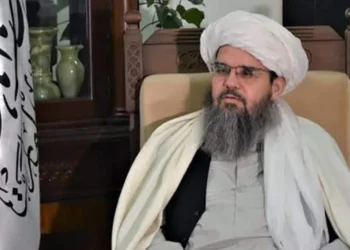
The biggest danger of religious governance is the instrumentalization of religion. When religion becomes a tool, it is employed to suppress the people. A religious ruler cloaks all decisions and desires in religious garb and, to suppress society and non-conformist forces cites weak or even fabricated narratives and reports. The Taliban in Afghanistan behave in this manner. They enforce any ethnic or group policy they favor but adorn it with Islam and the Hanafi school to preemptively eliminate criticism of those decisions. A ridiculous example is the statements of Neda Mohammad Nadim, the Taliban’s Minister of Higher Education, who also carries the title “Sheikh al-Hadith.” Taliban leadership, including Mullah Nadim, links the prohibition of girls’ education beyond sixth grade to religious and Sharia reasons, forbidding people and journalists from even questioning it. None of them are willing to answer public opinion because a religious ruler considers himself God’s representative among the people and does not derive his legitimacy from the people. Therefore, such a ruler does not consider the people capable of questioning even their fate. For this reason, a religious ruler sees himself as the sole decision-maker, with the people being voiceless subjects who must obey. Yesterday, Neda Mohammad Nadim clearly stated in the Taliban’s accountability program that, like the prohibition of girls’ education, questioning this matter is also forbidden. Another example is the mocking response of Mullah Abdul Kabir, the Taliban’s Deputy Prime Minister for Political Affairs, to a journalist’s question about girls’ education. Instead of answering, he uses the rhetorical device of feigned ignorance and mockingly asks, “Book of Girls’ schools!”
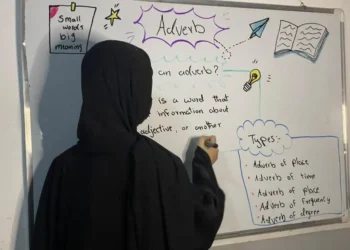
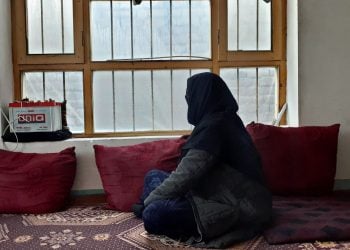
While no Taliban official or supporter can substantiate the prohibition of girls’ and women’s education in the principles and branches of Islam, the Taliban constantly claim that girls’ education is prohibited for religious reasons. Yesterday, Mullah Nadim also stated that three years is too short a time for the “noble scholars” to ponder the prohibition or legitimacy of girls’ education or to examine it from a Sharia perspective. Such foolish positions are not due to the ignorance of the Taliban leaders; rather, they are fully aware of the legitimacy of girls’ education, women’s work, and so forth. However, they have turned religion and Sharia into tools for suppressing the people to further restrict their activities and make them easier to control. What they have named “Propagation of Virtue and Prevention of Vice”
has also been produced and sanctioned to control the people using religious tools. A government that does not derive its legitimacy from the people fears them and seeks to take the initiative in controlling them. Imposing bizarre restrictions is understood within this framework.
You can read the Persian version of this analysis here:
فاجعه حاکمیت دینی؛ حتا پرسیدن از آموزش دختران هم منع شد | روزنامه ۸صبح