• 8AM.MEDIA
  • ویب‌سایت فارسی
  • پښتو ویب‌پاڼه
  • اۉزبېکچه ویب‌سایت
  • Podcast
Monday, September 21, 2026
Hasht-e Subh
  • Home
  • News
    • Afghanistan News
    • World News
  • Opinion
    • Editorial
    • Analysis
  • Reports
    • Daily Reports
    • Investigative Reports
  • Society
    • The story of people
  • Women’s Word
  • Columns
    • Three Years After Afghanistan’s Fall: The Taliban’s Resurgence
    • Towards Equality
    • The Resurgence of the Taliban: Two Years Since Afghanistan’s Fall
    • Hebatullah Report Special Edition
    • Resistance for Education Special Edition
    • Special Column on Taliban’s Education Curriculum
    • Nawroz
  • Interviews
  • Contact Us
    • About Us
    • 8AM MEDIA Annual Awards
    • Submit an Article to Hasht-e-Subh
  • 8am.mediaBack
Subscribe
No Result
View All Result
  • Home
  • News
    • Afghanistan News
    • World News
  • Opinion
    • Editorial
    • Analysis
  • Reports
    • Daily Reports
    • Investigative Reports
  • Society
    • The story of people
  • Women’s Word
  • Columns
    • Three Years After Afghanistan’s Fall: The Taliban’s Resurgence
    • Towards Equality
    • The Resurgence of the Taliban: Two Years Since Afghanistan’s Fall
    • Hebatullah Report Special Edition
    • Resistance for Education Special Edition
    • Special Column on Taliban’s Education Curriculum
    • Nawroz
  • Interviews
  • Contact Us
    • About Us
    • 8AM MEDIA Annual Awards
    • Submit an Article to Hasht-e-Subh
  • 8am.mediaBack
No Result
View All Result
Hasht-e Subh
No Result
View All Result

The Importance of the “I Do Not Vote” Movement

Bahram Aamuneyaye Bahram Aamuneyaye
8 July 2024 - Solar Hijri Date: 1403/04/18 [t_time:1720438450]
The Importance of the “I Do Not Vote” Movement

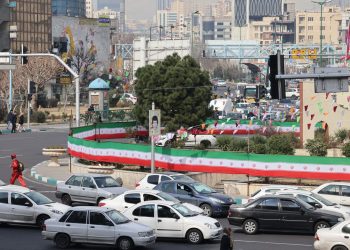
ATTA KENARE / AFP

Elections in Iran are the latest clear example of the crisis of representation; a crisis that exists not only in Iran but also in countries that are supposedly free and have a rich democratic culture, and occasionally manifests itself more explicitly. People have realized that participating in elections does not address any real issues and is merely a show to legitimize the entrenched system. In this spectacle, politicians drag people to the ballot boxes using conventional and well-tested methods to gain an advantage over others. Politicians make bizarre promises to win over the people, promises that are not meant to be fulfilled. Because neither the capability nor the intention exists among politicians to implement everything they promise during election campaigns if indeed it is possible at all.

Therefore, elections are not intended to bring about any serious change, as politicians claim. It’s merely a highly entrenched game where hardliners sometimes rely on power and moderates occasionally replace them. There is no real opening happening as everyone expects. The good news, however, is that people are tired of this repetitive spectacle and are no longer willing to participate in legitimizing the ruling political system. Of course, not everyone shares this belief yet, but this realization is still a positive and hopeful development.

The “I Do Not Vote” Movement

The recent presidential elections in Iran once again underscored how deep the crisis of representation is, and that the governing political system worldwide cannot overcome this crisis because it is itself the main cause and exacerbates it with its actions. The very low participation of people in the recent Iranian elections highlighted the significance of a campaign that mainstream or self-serving media either brushed off or deliberately downplayed. The “I Do Not Vote” campaign has recently become more apparent in Iran and can now be seen as a vibrant political movement; one that aims to lay the groundwork for a new political transformation. This is a positive step that should be welcomed.

The “I Do Not Vote” campaign can be considered a movement because it challenges the official policy-centered representation by invalidating one of the main mechanisms used to legitimize this policy. Consequently, it leaves a lasting impact in the political arena. This movement is deeply rooted and continues to adapt various protest forms in response to political and economic developments in Iran. When elections are held again, it may appear even stronger and more widespread in its political role-playing. This movement had a presence in past Iranian elections, but not to the extent and breadth seen in the recent ones. This indicates an increasing dissatisfaction among citizens with the Islamic Republic of Iran, a matter of concern for the regime leaders.

Concern about the low level of public participation in elections was evident in recent speeches by Ali Khamenei, the Supreme Leader of the Islamic Republic. He made every effort in both the first and second rounds of the elections to encourage greater citizen participation, which yielded little benefit as fewer people responded to his repeated calls. Khamenei’s deep concern lies in the growing dissatisfaction of Iranians with his policies, manifesting sometimes in street protests and sometimes in the “I Do Not Vote” movement itself. Elections serve as a mechanism for Khamenei to gauge his popularity and that of his authoritarian regime among the Iranian people. Here we come to an important point: for Khamenei, elections are merely a legitimizing mechanism, not a democratic process. Dictators harbor disdain for democracy, and the Supreme Leader of the Islamic Republic has demonstrated sufficient opposition to democracy in practice.

Therefore, in Iran, where one of the most non-democratic governments is entrenched, elections are not a democratic process. Having a parliament and media does not signify the institutionalization of democracy. Elections, parliament, and media here become the most serious obstacles to democracy and their main function is to support some of the most despised political regimes. In countries with authoritarian and power-centric systems, elections do not bring about any societal transformation. You either choose “bad” or “worse”. In both cases, the existing system remains stable, and no significant change occurs in the established political system. Defending “bad” against “worse” will, on one hand, pave the way for the worsening of “bad” itself, as “bad” inherently presupposes the existence of “worse”. On the other hand, it also ensures the survival of “worse”, as “bad” serves as the dialectical counterpart to “worse”. Our solution must aim to break free from this dialectic of perpetuation and target both elements of this dualistic relationship—a relationship that perpetuates oppression in a vicious cycle.

The “I Do Not Vote” movement is a response to this tiresome and oppressive condition, aiming to create a conducive environment for the formation of a better alternative to the existing order. Capitalism, with its corrupt and entrenched performance, facilitates this environment for people to endorse it. The incompetence of various capitalist regimes, whether liberal, authoritarian, or socialist, necessitates the urgent search for a better alternative to this entrenched system. This alternative is not merely a horizontal policy or representation, which leaves no room for the revival and perpetuation of the master-slave dialectic. We can only speak of real democracy when we put an end to this perpetuating dialectic of oppression. If the “I Do Not Vote” movement aims for anything less than this and focuses solely on the Islamic Republic rather than the corrupt representative order in all its forms, it will not be capable of creating any liberating perspective and will remain an untraveled path.

You can read the Persian version of this analysis here:
اهمیت جنبش «رای نمی‌دهم» | روزنامه ۸صبح 

ShareTweetSendSendShare

Related Posts

Using The Refugee Card In Iran’s Elections
Analysis

Using The Refugee Card In Iran’s Elections

1 July 2024 [t_time:1719857859]

Latest

Loading latest news...

Popular stories

  • Hamza bin Laden - the son of Osama bin Laden (Photo: Social Media)

    Al-Qaeda Releases Hamza bin Laden Message on 9/11 Anniversary

    Share
    Share Tweet
  • UN Report Reveals Shifts in Family Attitudes and Rise in Domestic Violence in Afghanistan

    Share
    Share Tweet
  • Pakistan Army Spokesperson: Afghanistan Has Become a Base for Dozens of Terrorist Groups

    Share
    Share Tweet
  • German Politician Calls for Faster Deportation of Undocumented Afghan Migrants

    Share
    Share Tweet
  • U.S. Defense Secretary Calls Washington Post Worse Than Iranian State Media

    Share
    Share Tweet

Podcast

Insights
Insights

Join Lynne O’Donnell for 8AM’s podcast series, Insights.
Lynne talks with generals, diplomats, soldiers, journalists, politicians, activists, people who have front row seats for conflicts around the world, and citizens with a story to tell, happy or sad. For this first series, Afghanistan is the focus. Lynne and her guests talk about the collapse of the republic in August, 2021, and the impact since — for the people of Afghanistan, for the security of the region, for the safety of the world. It’s important, interesting and insightful.

Insights/22: Controlling the Narrative with Mina Sharif
byinsights8am

Controlling the Narrative

Lynne O’Donnell talks with Mina Sharif, author, activist, women’s rights campaigner, educator and mentor. They discuss who controls the narrative and who speaks for Afghanistan’s people when the Taliban appear to have seized control not only of the country but of the message, too.

Have a listen

Insights/22: Controlling the Narrative with Mina Sharif
Episode play icon
Insights/22: Controlling the Narrative with Mina Sharif
Episode Description
Episode play icon
Insights/21: Media Meltdown with Zahra Joya
Episode Description
Episode play icon
Insights/20: Terror Inc with Scott Richards
Episode Description
Episode play icon
Insights/19: Busting Stereotypes with Bushra Gohar
Episode Description
Episode play icon
Insights/18: Media Matters with Waliullah Rahmani
Episode Description
Episode play icon
Insights/17: What Goes Around Comes Around with Sima Samar
Episode Description
Search Results placeholder
Hasht-e Subh

8AM Media, also known as Hasht-e-Subh Daily, stands as Afghanistan's premier independent and non-profit newspaper, resonating as a beacon of journalistic integrity since its establishment in June 2007 by esteemed Afghan journalists and human rights advocates. With a steadfast commitment to citizen journalism and civic education, Hasht-e-Subh Daily has earned its place as the most esteemed publication in the nation.

Publisher: Sanjar Sohail
Email: [email protected]
Executive Director: Parwiz Kawa
Email: [email protected]

Read More

Shipping Traffic Declines in the Strait of Hormuz

Russian Officials Claim Ukraine Attacked Russia with More Than 1,000 Drones

Massive Explosions Reported at Ammunition Depot at Syrian Army Base Near Aleppo

Trump and Zelenskyy to Meet on Sidelines of UN General Assembly

FAO: Greenhouses Reduce Water Consumption by 60 Percent

Editor’s Choice

Every Saturday morning, 8AM MEDIA English Services Department will guide you through the week’s biggest stories from Afghanistan and the international community.

Subscribe

© 2026 - ©Hasht-e Subh Daily

No Result
View All Result
8am.Media
پښتو ویب‌پاڼه
ویب‌سایت فارسی
اۉزبېکچه ویب‌سایت
  • Home
  • News
    • Afghanistan News
    • World News
  • Opinion
    • Editorial
    • Analysis
  • Reports
    • Daily Reports
    • Investigative Reports
  • Society
    • The story of people
  • Women’s Word
  • Columns
    • Three Years After Afghanistan’s Fall: The Taliban’s Resurgence
    • Towards Equality
    • The Resurgence of the Taliban: Two Years Since Afghanistan’s Fall
    • Hebatullah Report Special Edition
    • Resistance for Education Special Edition
    • Special Column on Taliban’s Education Curriculum
    • Nawroz
  • Interviews
  • Contact Us
    • About Us
    • 8AM MEDIA Annual Awards
    • Submit an Article to Hasht-e-Subh
  • 8am.media

© 2026 - ©Hasht-e Subh Daily