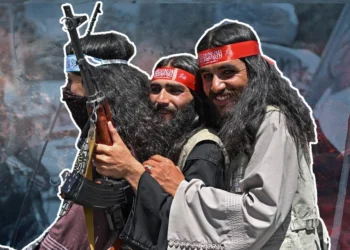
In recent months, global concerns about the strengthening of the ISIS group have intensified. ISIS Khorasan branch has expanded its activities in the region in recent months. It can be said that ISIS Khorasan has never been as powerful as it is now. The expansion of this branch’s operational field and the increase in its attacks indicate the strengthening of this group. Afghanistan and Pakistan, as the main centers of this group’s activity, have been more than ever in the crosshairs of ISIS Khorasan in the past year. This group has also carried out major and complex attacks in Iran and Russia, demonstrating its unprecedented capacity to launch cross-border attacks. Middle Eastern countries are also heavily threatened by this group. In addition to specific ethnic and religious groups such as Hazaras and Shias being targeted by this group inside Afghanistan, the Taliban group and political representatives of Taliban-friendly countries have also been targeted. Russian, Pakistani, and Chinese embassies in Kabul have previously been targeted. Iranian, Chinese, and Indian embassies have recently been threatened with attacks.
The ISIS attack in Kerman, Iran, and Moscow, Russia, had no precedent. These attacks have stirred serious global concerns and brought ISIS back into the scene of events. Since 2015, when ISIS Khorasan began its activities, it has been severely suppressed. Foreign forces, in cooperation with the Afghan government and the National Army, have inflicted heavy blows on ISIS Khorasan, leading to the weakening of this group. In several cases, leaders of this ISIS branch have been arrested or killed by the Afghan government, which also dealt heavy blows to the ISIS group. The defeat of ISIS in Syria and Iraq and the weakening of its Khorasan branch in Afghanistan and Pakistan removed this group from the headlines; however, the recent launch of major and complex attacks has brought it back to the headlines and the scene of events. The weakening of the ISIS Khorasan group had led to the belief that this group could not easily rebuild itself, so the Biden administration handed over the responsibility of fighting this group in Afghanistan to the Taliban and withdrew from the country. In the first year of the Taliban’s renewed rule, it was also assumed that this group had full control over Afghanistan and had the motivation and sufficient power to fight ISIS Khorasan. However, recent events have proven these calculations wrong. Recently, a wave of global concerns has been raised about the increasing activities of this group. US officials, including senators from the country, continuously refer to the chaotic withdrawal of their country from Afghanistan and admit that as a result of this political upheaval, the ISIS Khorasan group has undergone rehabilitation and strengthened itself.
The recent actions of ISIS Khorasan, especially claiming responsibility for an attack on a concert on the outskirts of Moscow, have sent shockwaves through global security circles. Following the attack, ISIS issued a call to its sympathizers worldwide, urging them to target “Crusaders” at various locations globally. This call, attributed to Abu Hudhayfah al-Ansari, ISIS spokesperson, specifically mentioned Israel, the United States, and Europe as targets for the group’s militants. The reactions to ISIS Khorasan’s recent activities are reverberating not only in Afghanistan but also regionally and globally.
Credible media outlets and research sources express concern about the growing terrorist capacity of this group. Even the US administration has reportedly warned its president that if ISIS targets American citizens or interests, action must be taken against them in Afghanistan. Meanwhile, while the Taliban refrains from officially acknowledging ISIS Khorasan’s growth, they have taken precautions to prevent attacks in certain areas of the country. Recent reports indicate that in mosques in Kandahar, Taliban members are attempting to prevent potential ISIS attacks during evening prayers. Security measures in Kandahar have been heightened, especially following the ISIS attack on the New Kabul Bank representative office in the city, demonstrating Taliban concerns about ISIS’s capability to launch complex attacks.
On another front, unmanned aerial vehicles (UAVs) have been continuously flying over Afghan airspace in recent days. These UAVs were reported to be operating over Nimroz province on Thursday 29th of March, over Kandahar airspace on Saturday, and according to some reports, over Farah, Paktika, and Panjshar airspace as well. Since the airspace of Afghanistan is still under the control of US forces, these unmanned aircraft are believed to be affiliated with the United States. Zabihullah Mujahid, Taliban spokesperson, criticized the US for violating Afghan airspace in response to the UAV surveillance over Kandahar, highlighting growing tensions.
The persistent presence of US drones over Afghan airspace, coupled with the increasing activities of ISIS Khorasan, indicates severe concerns within the US government. Given these recent events, it seems that ISIS Khorasan has bolstered itself to the extent of posing global threats. The return of the US to Afghan airspace signals a loss of trust in the Taliban’s ability to contain ISIS, prompting limited direct involvement in assessing the situation. If regional countries and global powers fail to take serious actions to curb ISIS and coordinate anti-terrorism efforts in the region, the world could witness further attacks from this group.
Taliban’s Assistance in Strengthening Terrorism
The ISIS Khorasan group, which had been weakened by international forces and the Afghan National Army, has become powerful again under Taliban rule. The Taliban’s political approach towards terrorist groups has contributed to the strengthening of this group and other terrorist organizations. As recently reported by the Financial Times, it was predictable that both ISIS and Al-Qaeda would return to Afghanistan under Taliban rule, and both of these groups have rebuilt themselves under the Taliban’s governance. According to the Financial Times report, these two groups have returned to their old sanctuaries under Taliban rule.
During the war against the Afghan government, the Taliban had support from several other terrorist groups. Fighters from groups like Al-Qaeda, the Islamic Movement of Uzbekistan, the Pakistani Taliban (TTP), Ansarullah, the Islamic Movement of Tajikistan, and the East Turkistan Islamic Movement lent support to the Taliban in the war against the Afghan government. After the Taliban regained power, acknowledging that their control over Afghanistan was owed to the support of terrorist groups, they provided refuge to these ousted groups. Numerous reports have emerged of the Taliban providing shelter, identification documents, Afghan passports, money, and even wives to members of these terrorist groups. Recently, there have been reports that the Taliban allocated 25% of the proceeds from gold mining in Badakhshan and Takhar provinces to Al-Qaeda. These groups, driven out of various countries and lacking a secure refuge, have found sanctuary and support under Taliban rule. Given that each of these groups has its agenda and has taken up arms against a government, they have reinforced and strengthened themselves. The haven provided by the Taliban has given these groups ample opportunity to regroup and strengthen themselves. Therefore, Taliban rule has effectively bolstered all of these groups.
On one hand, Al-Qaeda as a close and permanent ally of the Taliban is present within the structure of the Taliban emirate. At least two governors and one advisor to the Taliban are members of the Al-Qaeda group, meaning that Al-Qaeda practically benefits from material resources and political power in Afghanistan. Al-Qaeda, which had been greatly weakened under global pressures, has gradually rebuilt and strengthened itself over the past two years. Now, alongside the threat of increasing terrorist attacks from ISIS, Al-Qaeda is once again becoming a slow and steady threat. Al-Qaeda is now bolstering itself with political and financial support from the Taliban and Afghan national resources.
On the other hand, the ISIS Khorasan group, perceived as an enemy by the Taliban, has also been strengthened by the Taliban’s return to Afghanistan, whether intentionally or unintentionally. Upon entering the country, the Taliban opened the doors of all prisons, releasing the prisoners. Some of these prisoners were Taliban and ISIS terrorists. Taliban fighters released from prison returned to the group’s structure, and the same happened for ISIS fighters. The release of ISIS prisoners and their return to the battlefield has helped strengthen their ranks. Here, it seems that the Taliban have inadvertently aided in the strengthening of the ISIS group.
Furthermore, the Taliban have adopted an approach that fosters extremism and radicalism. The establishment of jihadist schools in the country is one of the reasons for the growth of extremism and ultimately terrorism. Students in these schools are indoctrinated by extremist clerics and are deliberately trained to be extremists ready to die for the Taliban in the future. These students also influence their friends and relatives outside of school. Since not all of their friends and relatives are members of the Taliban or see joining the Taliban as beneficial, they may be inclined to join ISIS or other terrorist groups in the end. Taliban propaganda machinery, including various media outlets created or managed by the group, disseminates Taliban songs and messages about jihad, contributing to the mindset of extremism. Taliban leaders, including figures like Mullah Hibatullah, have repeatedly spoken about global jihad and the responsibility of fighters in this regard, which can also contribute to the growth of fundamentalism and terrorism.
Another reason for the strengthening of ISIS Khorasan under Taliban rule is the negligence and denial of Taliban leaders regarding the presence of ISIS in the country. Taliban leadership, intoxicated by the return to power, disregarded concerns about the presence and activities of ISIS Khorasan. Even after ISIS intensified its attacks, Taliban spokespersons and leaders continued to deny the presence of ISIS in Afghanistan. Now that they have gradually moved past the denial stage, we have still not seen any major operations launched against ISIS by the Taliban. Therefore, Taliban denial and negligence regarding the activities of ISIS Khorasan have given this group breathing space, and the return of their fighters from prisons has strengthened their ranks.