• 8AM.MEDIA
  • ویب‌سایت فارسی
  • پښتو ویب‌پاڼه
  • اۉزبېکچه ویب‌سایت
  • Podcast
Wednesday, October 14, 2026
Hasht-e Subh
  • Home
  • News
    • Afghanistan News
    • World News
  • Opinion
    • Editorial
    • Analysis
  • Reports
    • Daily Reports
    • Investigative Reports
  • Society
    • The story of people
  • Women’s Word
  • Columns
    • Three Years After Afghanistan’s Fall: The Taliban’s Resurgence
    • Towards Equality
    • The Resurgence of the Taliban: Two Years Since Afghanistan’s Fall
    • Hebatullah Report Special Edition
    • Resistance for Education Special Edition
    • Special Column on Taliban’s Education Curriculum
    • Nawroz
  • Interviews
  • Contact Us
    • About Us
    • 8AM MEDIA Annual Awards
    • Submit an Article to Hasht-e-Subh
  • 8am.mediaBack
Subscribe
No Result
View All Result
  • Home
  • News
    • Afghanistan News
    • World News
  • Opinion
    • Editorial
    • Analysis
  • Reports
    • Daily Reports
    • Investigative Reports
  • Society
    • The story of people
  • Women’s Word
  • Columns
    • Three Years After Afghanistan’s Fall: The Taliban’s Resurgence
    • Towards Equality
    • The Resurgence of the Taliban: Two Years Since Afghanistan’s Fall
    • Hebatullah Report Special Edition
    • Resistance for Education Special Edition
    • Special Column on Taliban’s Education Curriculum
    • Nawroz
  • Interviews
  • Contact Us
    • About Us
    • 8AM MEDIA Annual Awards
    • Submit an Article to Hasht-e-Subh
  • 8am.mediaBack
No Result
View All Result
Hasht-e Subh
No Result
View All Result

The Surge of Religious Schools in Afghanistan: A Looming Crisis

Mohammad Farhaad Mohammad Farhaad
15 September 2024 - Solar Hijri Date: 1403/06/26 [t_time:1726465237]
Hasht-e Subh Daily (8am Media) Editorial symbol.

Based on the latest reports from the Taliban-controlled Ministry of Education, which were released to the media last week, religious schools have now surpassed 21,000, with over 3.5 million students enrolled. In contrast, regular public and private schools have more than 18,000 students. These figures clearly signal the direction Afghanistan is heading and the dark, perilous future that looms ahead.

A society devastated by poverty and surviving solely on foreign aid needs educational institutions that teach its children how to earn a living. As Maulana once said, humans first think of bread. Education, more than anything else, should contribute to the economic improvement of society, freeing people from dependence, begging, and reliance on foreigners. While it’s true that society’s needs extend beyond just finding bread, and that once basic needs are met, other important needs must be fulfilled, these should be addressed in their proper time. Maslow’s famous theory on basic needs, which is a benchmark for evaluating education systems at UNESCO and other international organizations, suggests that only after fulfilling basic needs can a population lead a dignified life and achieve national stability and prosperity.

To raise children and youth in a way that enables them to live with dignity, they need to learn a variety of skills and knowledge, which conventional education—sometimes referred to as secular education—provides in today’s world. Religious education, particularly as taught in schools in Afghanistan and Pakistan, plays no significant role in improving people’s lives or meeting their needs. Not only does this type of education fail to make students self-sufficient, but it also raises them to be reliant on charity and alms, becoming a burden on society. This is the simplest flaw in the madrasa education system, meaning that Afghanistan is now training 3.5 million individuals who will become passive consumers, dependent on others for sustenance.

However, the problem with this type of education does not end there. Many who graduate from these schools have high expectations and inflated claims about their knowledge, despite knowing little. They view other fields of knowledge with disdain and ridicule and do not consider practitioners of other disciplines as their equals. Many of these graduates believe they are different from others because they represent God and the Prophet and speak on their behalf. This sense of self-righteousness makes them immune to criticism, and any critique is interpreted as an insult to religion and sacred values. In this way, they become agents of social repression, suppressing other educated groups and entrenching authoritarian norms in society.

The situation becomes even more perilous with the infiltration of extremist and jihadist ideologies into religious schools in Afghanistan and Pakistan. This is a new phenomenon that did not exist in older schools. Now that the Taliban, as a political movement reliant on violence, has gained prominence in the region and become a geopolitical player, many religious schools have aligned with this agenda, becoming hubs for the growth and promotion of extremism and terrorism. Of course, not all religious schools are like this, but the prevailing model under current conditions is the Taliban model. These schools are isolated environments where students are cut off from exposure to different ideas and alternative worldviews. This mental and psychological isolation makes students highly vulnerable and prime targets for recruitment into terrorist groups, leading them to participate in war and violence.

If 3.5 million Afghan youth had been trained in skills that could lead to income-generating jobs instead of attending religious schools, Afghanistan would have experienced a significant transformation. Each young person equipped with practical knowledge and skills could potentially support two to three family members, improving the lives of nearly ten million citizens. However, the current situation is reversed. An even greater disaster is that the value and importance of other academic fields have diminished under the Taliban regime, with public schools facing new challenges every day. For the Taliban and their teachers, public schools are seen as competitors, and by offering different knowledge, they reduce the influence of religious leaders. The Taliban view the war against modernity and its associated phenomena as part of their mission and are systematically working to weaken public schools for this reason.

Afghanistan has lost a significant portion of its human resources over the past three years, as most of the country’s intellectual and cultural elites have fled, seeking refuge in exile and migration. Replacing this vast number of skilled and professional individuals will require at least two decades of systematic effort and sufficient investment, a challenge far beyond the capacity of Afghanistan’s domestic budget. The imbalance between religious schools and public schools is the peak of this disaster. Public schools are supposed to train human resources for various professional fields, while religious schools focus on just one field. Yet, according to reports, there are more than 21,000 schools for religious education and only around 18,000 for all other fields. Those familiar with the principles of development and the requirements for escaping poverty and backwardness can grasp the depth of the disaster caused by the Taliban’s regime in Afghanistan.

The Taliban regime, by assigning government positions to religious leaders and sidelining professionals, is forcing society to align with its conditions. Many people send their children to religious schools and Quranic memorization centers in the hope that they will become religious leaders or receivers and eventually secure a government job. People know that, in this system, one cannot succeed through professional education and will instead face pressure and threats. Signs of a destructive tsunami are visible on Afghanistan’s horizon, but no one seems to take it seriously. As Nima Yooshij says:

At the village’s edge, a lone man stands,

With a heavy load on his back,

His hand on the door, he murmurs to himself:

“My worry for these sleeping ones keeps me awake,

Leaving my eyes filled with tears.”

You can read the Persian version of this editorial here:
افغانستان و سونامی مدرسه‌سازی 

ShareTweetSendSendShare

Related Posts

Rana Sanaullah Political Adviser to Pakistan’s Prime Minister
Afghanistan News

Pakistani Official Accuses PTI of Sympathy Toward Taliban

8 October 2026 [t_time:1791435168]
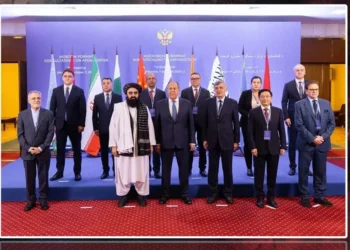
Delegates from participating countries pose for a group photo at the Moscow Format consultations on Afghanistan in Moscow. (Photo credit: Social Media)
Analysis

Moscow Format Becomes the Latest Arena for the Taliban-Pakistan Feud

7 October 2026 [t_time:1791379760]
Murtaza Solangi - spokesperson for the Pakistani president (Photo: AP)
Afghanistan News

Solangi: Continued Taliban Support for Terrorist Groups Will Not Go Unanswered

1 October 2026 [t_time:1790854441]

Latest

Loading latest news...

Popular stories

  • An aerial view shows collapsed buildings and widespread damage following an earthquake in Panama (Photo: Reuters)

    More Than 200 Aftershocks Recorded in Panama Since Friday’s Earthquake

    Share
    Share Tweet
  • Axios: Trump Expects Ukraine Not to Attack Russian Oil Refineries

    Share
    Share Tweet
  • UN Report Reveals Shifts in Family Attitudes and Rise in Domestic Violence in Afghanistan

    Share
    Share Tweet
  • The Politics We Inherited: Rethinking Afghanistan’s Political Culture

    Share
    Share Tweet
  • Mujahid: Pakistan Should Address Its Internal Problems Instead of Making Accusations

    Share
    Share Tweet

Podcast

Insights
Insights

Join Lynne O’Donnell for 8AM’s podcast series, Insights.
Lynne talks with generals, diplomats, soldiers, journalists, politicians, activists, people who have front row seats for conflicts around the world, and citizens with a story to tell, happy or sad. For this first series, Afghanistan is the focus. Lynne and her guests talk about the collapse of the republic in August, 2021, and the impact since — for the people of Afghanistan, for the security of the region, for the safety of the world. It’s important, interesting and insightful.

Insights/22: Controlling the Narrative with Mina Sharif
byinsights8am

Controlling the Narrative

Lynne O’Donnell talks with Mina Sharif, author, activist, women’s rights campaigner, educator and mentor. They discuss who controls the narrative and who speaks for Afghanistan’s people when the Taliban appear to have seized control not only of the country but of the message, too.

Have a listen

Insights/22: Controlling the Narrative with Mina Sharif
Episode play icon
Insights/22: Controlling the Narrative with Mina Sharif
Episode Description
Episode play icon
Insights/21: Media Meltdown with Zahra Joya
Episode Description
Episode play icon
Insights/20: Terror Inc with Scott Richards
Episode Description
Episode play icon
Insights/19: Busting Stereotypes with Bushra Gohar
Episode Description
Episode play icon
Insights/18: Media Matters with Waliullah Rahmani
Episode Description
Episode play icon
Insights/17: What Goes Around Comes Around with Sima Samar
Episode Description
Search Results placeholder
Hasht-e Subh

8AM Media, also known as Hasht-e-Subh Daily, stands as Afghanistan's premier independent and non-profit newspaper, resonating as a beacon of journalistic integrity since its establishment in June 2007 by esteemed Afghan journalists and human rights advocates. With a steadfast commitment to citizen journalism and civic education, Hasht-e-Subh Daily has earned its place as the most esteemed publication in the nation.

Publisher: Sanjar Sohail
Email: [email protected]
Executive Director: Parwiz Kawa
Email: [email protected]

Read More

Taliban Announce Agreement with Uzbekistan to Accelerate Surkhan–Puli Khumri Power Transmission Project

Lavrov Arrives in Azerbaijan for CICA Meeting

Peskov: Europe Is Seeking to Prolong the War in Ukraine

Muttaqi and Indian Chargé d’Affaires Discuss Expanding Ties and Economic Cooperation

UN Supports Job Creation for Returnees in Afghanistan

Editor’s Choice

Every Saturday morning, 8AM MEDIA English Services Department will guide you through the week’s biggest stories from Afghanistan and the international community.

Subscribe

© 2026 - ©Hasht-e Subh Daily

No Result
View All Result
8am.Media
پښتو ویب‌پاڼه
ویب‌سایت فارسی
اۉزبېکچه ویب‌سایت
  • Home
  • News
    • Afghanistan News
    • World News
  • Opinion
    • Editorial
    • Analysis
  • Reports
    • Daily Reports
    • Investigative Reports
  • Society
    • The story of people
  • Women’s Word
  • Columns
    • Three Years After Afghanistan’s Fall: The Taliban’s Resurgence
    • Towards Equality
    • The Resurgence of the Taliban: Two Years Since Afghanistan’s Fall
    • Hebatullah Report Special Edition
    • Resistance for Education Special Edition
    • Special Column on Taliban’s Education Curriculum
    • Nawroz
  • Interviews
  • Contact Us
    • About Us
    • 8AM MEDIA Annual Awards
    • Submit an Article to Hasht-e-Subh
  • 8am.media

© 2026 - ©Hasht-e Subh Daily