• 8AM.MEDIA
  • ویب‌سایت فارسی
  • پښتو ویب‌پاڼه
  • اۉزبېکچه ویب‌سایت
  • Podcast
Friday, October 9, 2026
Hasht-e Subh
  • Home
  • News
    • Afghanistan News
    • World News
  • Opinion
    • Editorial
    • Analysis
  • Reports
    • Daily Reports
    • Investigative Reports
  • Society
    • The story of people
  • Women’s Word
  • Columns
    • Three Years After Afghanistan’s Fall: The Taliban’s Resurgence
    • Towards Equality
    • The Resurgence of the Taliban: Two Years Since Afghanistan’s Fall
    • Hebatullah Report Special Edition
    • Resistance for Education Special Edition
    • Special Column on Taliban’s Education Curriculum
    • Nawroz
  • Interviews
  • Contact Us
    • About Us
    • 8AM MEDIA Annual Awards
    • Submit an Article to Hasht-e-Subh
  • 8am.mediaBack
Subscribe
No Result
View All Result
  • Home
  • News
    • Afghanistan News
    • World News
  • Opinion
    • Editorial
    • Analysis
  • Reports
    • Daily Reports
    • Investigative Reports
  • Society
    • The story of people
  • Women’s Word
  • Columns
    • Three Years After Afghanistan’s Fall: The Taliban’s Resurgence
    • Towards Equality
    • The Resurgence of the Taliban: Two Years Since Afghanistan’s Fall
    • Hebatullah Report Special Edition
    • Resistance for Education Special Edition
    • Special Column on Taliban’s Education Curriculum
    • Nawroz
  • Interviews
  • Contact Us
    • About Us
    • 8AM MEDIA Annual Awards
    • Submit an Article to Hasht-e-Subh
  • 8am.mediaBack
No Result
View All Result
Hasht-e Subh
No Result
View All Result

The Taliban–Pakistan Dispute: A New Test for Iran’s Regional Diplomacy

Kiomars Samadi Kiomars Samadi
19 November 2025 - Solar Hijri Date: 1404/08/28 [t_time:1763567789]
Iran hosts regional diplomatic initiative to mediate the escalating dispute between Pakistan and the Taliban government in Afghanistan. (Photo Credit: MansurQr)

MansurQr

Iran’s Ministry of Foreign Affairs has announced that a regional meeting aimed at resolving the dispute between Pakistan and the Taliban government will be held next month in Tehran. The meeting is expected to include a number of regional states, particularly Afghanistan’s and Pakistan’s neighbors. Over the past several days, Iran’s foreign minister, Seyed Abbas Araghchi, has spoken multiple times by phone with the Taliban’s acting foreign minister, Amir Khan Muttaqi, while also holding separate consultations with the foreign ministers of Russia and Pakistan.

Although Iran seeks to take the lead in resolving the crisis, the initiative for a regional conference appears to be driven less by Tehran alone and more by a collective push from states surrounding Afghanistan and Pakistan. For example, Russia has repeatedly signaled interest in mediating over recent weeks, and China, along with several other regional actors, has also called for an end to the hostilities. It is this convergence of interests that has prompted governments to move toward organizing a joint meeting, not necessarily the persuasive diplomatic power of the Islamic Republic.

Given Iran’s deep tensions with Western governments and its sharp disagreements with several Middle Eastern states, it is difficult for other countries to attribute the credit for such a gathering solely to the Islamic Republic. Experience has shown that states locked in confrontations with the West generally face significant limitations in building regional and international consensus. If Iran truly possessed the leverage to persuade both sides of the conflict, it could, like Qatar or Türkiye, host the Taliban and Pakistan independently. Aware of these constraints, Tehran prefers to operate within a regional format, a framework that can at least secure for Iran a symbolic role in managing the crisis.

Nevertheless, considering recent remarks by senior Taliban officials, including Mullah Abdul Ghani Baradar, the group’s deputy prime minister for economic affairs, who have spoken of the need to reduce or even sever Afghanistan’s trade relations with Pakistan, one might argue that the escalating tension is not unwelcome for Iran, and may even serve its interests. A reduction or complete halt in Afghanistan–Pakistan trade would naturally increase Kabul’s commercial reliance on Tehran and strengthen the function of alternative corridors, particularly the port of Chabahar. The United States recently issued a six-month sanctions waiver for the port, a move that could give both the Islamic Republic and India a somewhat freer hand in regional transit competition.

For many regional actors, particularly China, Russia, and Iran, the dispute between the Taliban and Pakistan must be resolved through regional efforts, without direct or indirect involvement from the West. From the perspective of these states, if the crisis subsides through an American or Western initiative, the claim that Eastern powers are capable of managing security challenges in their own neighborhood would be fundamentally undermined. Washington’s regional rivals believe that the United States uses the resolution of such crises merely as a pretext to expand its influence along the “periphery of the conflict,” a prospect they view as more consequential than the crisis itself. For this reason, if regional countries can prevent the Taliban and Pakistan from sliding into war, the achievement would serve as a symbolic asset for “region-centric initiatives,” enhancing their weight compared to externally driven solutions.

If the proposed regional meeting takes place, its chances of success are relatively high for several reasons.

First: the Central Asian republics, along with China, Russia, and Iran, possess a deeper understanding of the nature of the Taliban–Pakistan dispute and have a clearer grasp than previous mediators, such as Türkiye and Qatar, of where the roots of the conflict lie. It is worth recalling that Rahmatullah Najeeb, head of the Taliban’s negotiating team during the first round of the Istanbul talks, claimed a few days ago that the mediators, due to unfamiliarity with the details of the conflict, had asked the Taliban’s supreme leader, Mullah Hibatullah Akhundzada, to issue a fatwa declaring the war in Pakistan illegitimate a request that was rejected. Whether accurate or not, this claim reflects the Taliban’s perception of Doha and Ankara’s weak understanding of the dispute.

Second: the countries expected to participate in the meeting enjoy the trust of the parties involved. The Taliban and Pakistan, bound by the compulsion of geography, cannot easily ignore or openly reject the requests and insistence of their neighboring states. Third, the countries likely to attend the meeting would suffer significant economic and security losses if the crisis in their vicinity escalates. Trade routes, long borders, and security concerns mean that the interests of these states are directly tied to stability along the Afghanistan–Pakistan frontier, an interdependence that further underscores the importance of resolving the dispute through regional mechanisms.


You can read the Persian version of this analysis here:

نزاع طالبان و پاکستان؛ آزمون تازه برای دیپلماسی منطقه‌ای ایران

ShareTweetSendSendShare

Related Posts

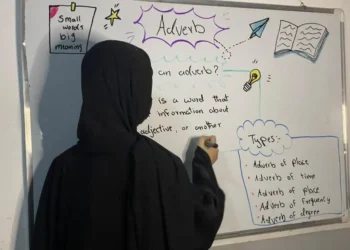
A girl writes an English lesson on adverbs on a whiteboard as students at Behdukht Online Academy teach one another. (Photo credit: Exclusive)
Opinion

Barred from School, Now Teaching: The Story of Behdukht Online Academy on Teacher’s Day

8 October 2026 [t_time:1791485322]
A baby wrapped in cloth as UNICEF expands primary healthcare services for children and mothers in Afghanistan. (Photo credit: UNICEF)
Afghanistan News

UNICEF Announces Expanded Primary Healthcare Services for Children and Mothers in Afghanistan

8 October 2026 [t_time:1791482597]
Naseer Ahmad Faiq speaks during a United Nations session on the situation in Afghanistan. (Photo credit: faiq_naseer)
Afghanistan News

Faiq at UN Calls for End to Arbitrary Detentions, Torture and Killings in Afghanistan

8 October 2026 [t_time:1791477737]

Latest

Loading latest news...

Popular stories

  • An Afghan woman gazes out of her home, reflecting the isolation and challenges faced by women in Afghanistan under Taliban rule. (Photo Credit: 8am.media)

    UN Report Reveals Shifts in Family Attitudes and Rise in Domestic Violence in Afghanistan

    Share
    Share Tweet
  • Taliban Shoot Young Man from Herat After Torturing Him with Hands Tied

    Share
    Share Tweet
  • Taliban Intelligence Deputy in Faizabad Killed with Two Guards

    Share
    Share Tweet
  • Iraq Reports Export of Two Million Barrels of Crude Oil Through Strait of Hormuz

    Share
    Share Tweet
  • Al-Qaeda Releases Hamza bin Laden Message on 9/11 Anniversary

    Share
    Share Tweet

Podcast

Insights
Insights

Join Lynne O’Donnell for 8AM’s podcast series, Insights.
Lynne talks with generals, diplomats, soldiers, journalists, politicians, activists, people who have front row seats for conflicts around the world, and citizens with a story to tell, happy or sad. For this first series, Afghanistan is the focus. Lynne and her guests talk about the collapse of the republic in August, 2021, and the impact since — for the people of Afghanistan, for the security of the region, for the safety of the world. It’s important, interesting and insightful.

Insights/22: Controlling the Narrative with Mina Sharif
byinsights8am

Controlling the Narrative

Lynne O’Donnell talks with Mina Sharif, author, activist, women’s rights campaigner, educator and mentor. They discuss who controls the narrative and who speaks for Afghanistan’s people when the Taliban appear to have seized control not only of the country but of the message, too.

Have a listen

Insights/22: Controlling the Narrative with Mina Sharif
Episode play icon
Insights/22: Controlling the Narrative with Mina Sharif
Episode Description
Episode play icon
Insights/21: Media Meltdown with Zahra Joya
Episode Description
Episode play icon
Insights/20: Terror Inc with Scott Richards
Episode Description
Episode play icon
Insights/19: Busting Stereotypes with Bushra Gohar
Episode Description
Episode play icon
Insights/18: Media Matters with Waliullah Rahmani
Episode Description
Episode play icon
Insights/17: What Goes Around Comes Around with Sima Samar
Episode Description
Search Results placeholder
Hasht-e Subh

8AM Media, also known as Hasht-e-Subh Daily, stands as Afghanistan's premier independent and non-profit newspaper, resonating as a beacon of journalistic integrity since its establishment in June 2007 by esteemed Afghan journalists and human rights advocates. With a steadfast commitment to citizen journalism and civic education, Hasht-e-Subh Daily has earned its place as the most esteemed publication in the nation.

Publisher: Sanjar Sohail
Email: [email protected]
Executive Director: Parwiz Kawa
Email: [email protected]

Read More

Barred from School, Now Teaching: The Story of Behdukht Online Academy on Teacher’s Day

When Colonialism Redesigned Religion

UNICEF Announces Expanded Primary Healthcare Services for Children and Mothers in Afghanistan

Residents Fund Construction of Health Center in Ghazni

Faiq at UN Calls for End to Arbitrary Detentions, Torture and Killings in Afghanistan

Editor’s Choice

Every Saturday morning, 8AM MEDIA English Services Department will guide you through the week’s biggest stories from Afghanistan and the international community.

Subscribe

© 2026 - ©Hasht-e Subh Daily

No Result
View All Result
8am.Media
پښتو ویب‌پاڼه
ویب‌سایت فارسی
اۉزبېکچه ویب‌سایت
  • Home
  • News
    • Afghanistan News
    • World News
  • Opinion
    • Editorial
    • Analysis
  • Reports
    • Daily Reports
    • Investigative Reports
  • Society
    • The story of people
  • Women’s Word
  • Columns
    • Three Years After Afghanistan’s Fall: The Taliban’s Resurgence
    • Towards Equality
    • The Resurgence of the Taliban: Two Years Since Afghanistan’s Fall
    • Hebatullah Report Special Edition
    • Resistance for Education Special Edition
    • Special Column on Taliban’s Education Curriculum
    • Nawroz
  • Interviews
  • Contact Us
    • About Us
    • 8AM MEDIA Annual Awards
    • Submit an Article to Hasht-e-Subh
  • 8am.media

© 2026 - ©Hasht-e Subh Daily