Before coming to power, the Taliban shared common goals and interests with Pakistan, working together to destabilize the republican system in Afghanistan. For decades, Pakistan had sought instability in Afghanistan; its instrumental use of the Mujahideen and later the Taliban, particularly during the 1990s, played a decisive role in advancing Islamabad’s interests. According to Pakistan’s national security doctrine, instability in Afghanistan has long been considered a means of securing its “strategic depth,” particularly to counter Indian influence and perceived regional threats.
Drawing on the experience of the 1990s and the Mujahideen government, Pakistan systematically supported the Taliban against the republic in pursuit of its strategic objectives in Afghanistan, while creating space for its intelligence operations. Although the Taliban’s rise in the 1990s was largely rooted in the disunity and defiance of the Mujahideen leaders, the continuation of civil wars and the absence of cohesion among the jihadist factions convinced Pakistan that the Mujahideen leadership could no longer serve its interests in a unified way. Supporting the Taliban, therefore, appeared to be Islamabad’s only viable and justifiable option.
During their first regime (1996–2001), the Taliban conducted all of their foreign relations through Pakistan and were heavily influenced by it. At that time, only a few countries recognized the Taliban government, with Pakistan playing the leading role. Yet, in 2011, when Qatar offered to host a “political office” for the Taliban, the group managed to expand its contacts with regional and global actors, particularly with the intelligence agencies of major powers. This allowed the Taliban to partially free themselves from the grip of Pakistan’s Inter-Services Intelligence (ISI) and to pursue more independent international engagements. Still, the Taliban’s negotiations with the United States and the signing of the Doha Agreement took place with Pakistan’s indirect collusion. Islamabad, however, was uneasy about being left out of the talks in an official capacity, as the Taliban had entered direct dialogue with Washington. Even so, for Pakistan, the Taliban’s return to power was far preferable to the formation of a coalition government that included Mujahideen leaders or remnants of the former Afghan state.
Although the Taliban, in their first rule, largely served Pakistan’s interests, the final days of their regime left them with a bitter memory: Taliban leaders were handed over by Pakistan to U.S. forces. That episode remains etched in Taliban memory as a wound of betrayal. Despite their current dependency on Pakistan, that trauma has shaped the fluctuating nature of Taliban–Pakistan relations during their second rule.
At the same time, both the Taliban and Pakistan use one another instrumentally to advance their respective agendas. The Taliban have realized that absolute dependence on Pakistan would only repeat their bitter past. For this reason, they are striving to maintain independent ties with regional and international actors. Pakistan’s dissatisfaction with the Taliban, visible since the group’s return to power, has not diminished over the past four years; it has, in fact, deepened and become increasingly public.
Former Pakistani ambassador to Kabul, Mansoor Ahmed Khan, recently stated: “Islamabad’s calculations about the Taliban after the fall of the republic were wrong. The Pakistani government assumed that Afghanistan’s situation would improve with the Taliban’s return, but this proved to be a miscalculation, and we are now paying the price of that mistake.” What he meant was that Pakistan’s recent wave of insecurity, particularly the escalation of Tehrik-e-Taliban Pakistan (TTP) attacks between 2023 and 2025, has been a direct consequence of the Taliban’s rise to power in Afghanistan.
Pakistan has repeatedly accused the Taliban of supporting the TTP, though the Taliban have denied these allegations. Mansoor Ahmed Khan also noted: “Today’s Taliban are significantly different from those of the 1990s.” His point was that, unlike the Taliban of the 1990s, who were entirely dependent on Pakistan, the current Taliban are engaged not only with Pakistan but also with multiple regional and extra-regional actors.
Recent regional developments indicate that Taliban–Pakistan relations have once again entered a period of turbulence. The current deterioration has coincided with intensified TTP attacks in Pakistan’s northwestern border regions. Media reports suggest that Mohammad Sadiq, Pakistan’s special envoy for Afghanistan, is expected to travel to Kabul soon to deliver a stern message from the ISI to the Taliban.
The Taliban may outwardly respond positively to this message and even grant Pakistan permission to bomb TTP positions. Yet overall, their policy toward Islamabad is likely to remain ambivalent. On one hand, the Taliban are reluctant to abandon their support for the TTP, given its deterrent value and security considerations. On the other hand, they do not wish to once again fall completely under Pakistan’s domination.
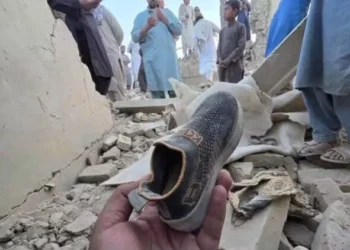
According to figures from Pakistan’s Institute for Security and Conflict Studies, militants carried out around 502 attacks in Pakistan in the current year alone. These attacks killed 284 security personnel, 267 civilians, 180 militants, and six members of a peace commission. In total, nearly 990 civilians and security personnel were injured. The data underscores how Pakistan’s internal security is directly tied to its increasingly tense relationship with the Afghan Taliban.
You can read the Persian version of this analysis here: