In today’s Afghanistan, the sound of an explosion is not merely the sound of death; it is an echo of collapsing trust, of division, and of the normalization of oppression. People who have lived through years of blood and destruction have learned how to endure pain. Yet this long endurance has gradually turned into acceptance of injustice: when those in power, speaking in the language of religion and tribe, say, “This is God’s decree,” protest falls silent, and suffering turns into destiny. This habit of pain, without people even realizing it, becomes the foundation of tyranny’s survival, because governments that feed on people’s patience can steal, seize, and kill with far less cost.
The Taliban rose to power in precisely such an environment. They merged an exclusive interpretation of religion with networks of tribal loyalty, and from this fusion built a structure that, instead of a civic state, became a network of kinship and profit. In this order, legitimacy comes not from law or public consent, but from blood ties and a closed interpretation of faith. As a result, lands are confiscated, taxes turn into extortion, relatives are appointed to posts, and dissenting voices are silenced. International organizations such as Human Rights Watch and UNAMA have documented these realities repeatedly, yet inside the country, fear has cut the people’s tongues.
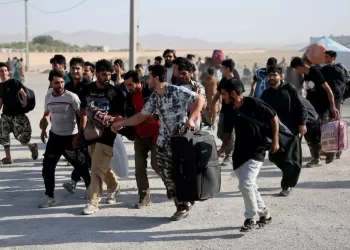
When a government, in the name of religion, hands over public interests to a narrow circle, people feel they no longer own their destiny. This is why many Afghans do not see themselves as partners in the Taliban’s conflict with Pakistan. They ask: Whose war is this? For the nation, or for the preservation of hidden networks? In recent months, border closures, exchanges of fire, and escalating tensions between the Taliban and Pakistan have destroyed the lives of farmers, traders, and border families, people who made no decisions and have no share of power. For them, these battles are not the defense of the homeland; they are the continuation of a factional game that feeds on the people’s blood to create legitimacy.
Meanwhile, the Taliban gain several clear benefits from these border clashes. First, by reviving the issue of the Durand Line and manipulating ethnic emotions, they attract or silence a segment of Pashtuns, reproducing tribal legitimacy and sustaining political dependency. Second, by heightening tensions with Pakistan and facing accusations of hosting groups like TTP, they divert the focus of international media and institutions from their widespread human rights violations and the restriction of freedoms inside Afghanistan. Third, such border crises allow the Taliban to present themselves as defenders of the homeland while deflecting attention from corruption, land grabs, and economic collapse, a calculated distraction of public opinion that also eases domestic and international pressure. In other words, every time the guns roar along the border, the voices of protest in Kabul and Kandahar grow fainter.
The Taliban’s tribal structure has made governance an extension of ethnic loyalty rather than public service. Projects, lands, and contracts are distributed among close circles, sowing the seeds of inequality. Even for Pashtuns, this short-term alliance carries a heavy price: sanctions, international pressure, and accusations of complicity in terrorism eventually strike the same communities that once thought themselves protected. It is a double tragedy, harm to the nation and injury to the very tribe that appears to support it.
Yet the problem is not only political; it is moral and religious as well. Against clerics who call suffering “destiny,” the Qur’an and the Prophet’s tradition say something else. The Qur’an asks: “Why do you not fight in the way of God and for the oppressed?” (Surah al-Nisa, 4:75). And the Prophet said: “Whoever sees evil should change it with his hand; if he cannot, then with his tongue; and if he cannot, then with his heart.” These texts are not calls to submission; they are moral imperatives for resistance, civil resistance, documentation of injustice, and perseverance in the pursuit of justice.
Another problem lies in the Afghan people’s naïve hope for a hero. Many still believe salvation will come from outside, from a leader who will appear and fix everything. But history has shown time and again that no hero can replace awareness. As Dr. Ali Shariati said, “A hero is no substitute for consciousness; the beginning of awareness is the end of slavery.” And centuries earlier, Socrates warned that a society that does not question breeds tyranny. Real change begins when people understand that liberation arises from within, not from the command of a savior.
Collective awareness means finding a shared language for understanding right and wrong, recognizing public interest, and holding safe conversations about real experiences, from land confiscation and arbitrary arrests to killings and the oppression of women. When such stories are recorded—even in small community circles or secure online spaces—they become lights that keep injustice from hiding in darkness.
The path to liberation is simple but difficult. We must institutionalize systematic and secure documentation of violations so that the political cost of oppression increases. We must strengthen local councils, women’s associations, and community radios so that people know where and how to seek justice. We must create small livelihood funds so that economic freedom turns into intellectual independence. And alongside all this, Pashtun and non-Pashtun intellectuals alike must bravely advance internal critique to show that blind loyalty to tyranny is neither an honor nor a strategy.
Change is not easy, for these structures have deep roots. But there is no shortcut. Liberation begins when a society decides to abandon idle patience and replace it with awareness and collective action. Religion tells us to repel evil; reason tells us that silent endurance pours water on the mill of oppression. Now is the time to choose, and that choice begins with us.
You can read the Persian version of this article here: