Introduction
In a world where the flames of war are still raging, and the effectiveness of international institutions is being questioned more than ever, “peace” is no longer seen merely as a moral aspiration. It has increasingly become a tool of political competition and legitimacy-building. From Ukraine to Gaza, the failure of the international community to contain crises has sharpened a fundamental question: do existing structures, such as the United Nations, still possess the capacity to manage peace?
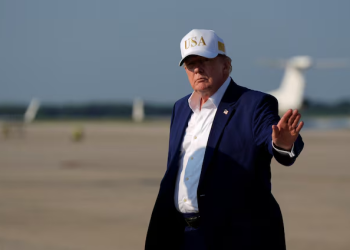
It is against this backdrop that the announcement of the formation of a Peace Council, referred to as the Board of Peace, by Donald Trump, President of the United States, has triggered widespread reactions. Chaired by Trump himself, this council is neither defined within the framework of the United Nations nor aligned with the classic mechanisms of multilateralism. Yet it claims the ability to resolve global conflicts and fill what it describes as gaps in global peace. This very claim has made the Board of Peace a controversial subject in political and media circles worldwide from the outset.
The central question is this: Is Trump’s Peace Council a response to the inefficacy of the United Nations, or an attempt to bypass it? Does the world truly need a new institution for peace, or does the core problem lie in the political will of major powers and the weakening of existing institutions? These questions can only be answered through a clear understanding of the nature of this council, its stated and unstated objectives, and a comparison with existing international structures.
This article first examines how the Peace Council (Board of Peace) was formed and what goals it pursues. It then assesses the position of this initiative in relation to the United Nations and other international mechanisms for peace and security, an initiative that some view as a sign of the collapse of the global order, while others see it as an effort to redefine it.
The Formation of the Board of Peace and Trump’s Objectives
The idea of establishing a Peace Council, or Board of Peace, was first raised by Donald Trump in early January 2026, at a moment when multiple global crises, from regional wars to instability in the Middle East, had cast serious doubt on the legitimacy and effectiveness of international institutions. Emphasizing what he described as the United Nations’ inability to resolve conflicts, Trump presented the Peace Council as a personal and centralized initiative capable of complementing international institutions, or even replacing them in certain areas.
The council is designed to function as an international body, but not in the traditional multilateral sense. Key decisions are made under Trump’s leadership, with the participation of a limited number of international figures and political advisers. Unlike the United Nations, which is built on treaties, conventions, and consensus among states and operates through a complex bureaucratic structure, the Board of Peace is conceived as a flexible and overtly political entity. Power is concentrated at the top, with Donald Trump serving as its chair.
Membership and Structure of Trump’s Peace Council
Chairmanship: Donald Trump personally chairs the council, and major decisions are made within the framework of his objectives.
International Members: The council includes political figures and former diplomats from the United States and other countries who have experience in managing international crises.
Participating Countries: To date, Belarus, Pakistan, Bahrain, the United Arab Emirates, Egypt, Kazakhstan, Hungary, Argentina, Indonesia, Turkey, Qatar, Kosovo, Uzbekistan, and Vietnam have announced their membership.
Countries That Rejected the Invitation: France, Norway, and Sweden have formally declined invitations to join Trump’s Peace Council.
Countries Invited but Yet to Respond: The United Kingdom, Germany, Italy, China, Russia, Ukraine, and the European Union. Their silence reflects a broader sense of global caution and uncertainty.
Objectives of the Peace Council
Declared Objectives:
- Monitoring ceasefires and reducing tensions in conflict-affected regions
- Economic and social reconstruction of crisis-hit areas
- Managing humanitarian crises and refugee flows
Undeclared Objectives:
- Strengthening Trump’s international standing as a peacemaker
- Creating a lever for expanding U.S. political influence outside the framework of the United Nations
- Symbolic competition with institutions such as the United Nations and even the Nobel Peace Prize to gain global legitimacy
Membership Fees
According to the draft charter of Trump’s Peace Council, regular membership for countries is set for a three-year term. However, for permanent membership, countries are required to make a one-time financial contribution of approximately one billion dollars to the council’s fund. It remains unclear which countries, if any, have accepted this condition. Reports suggest that this provision has largely remained at the “draft statute” stage, and no precise information regarding actual payments has been made public.
Reasons for Its Formation
Criticism of the United Nations: Trump argues that the United Nations often responds slowly and ineffectively to crises.
Need for Rapid Decision-Making: The Peace Council enables swift decisions without requiring consensus among 193 member states.
Focus on Symbolic Projects: Initiatives such as reconstruction and emergency assistance, whose results are visible more quickly and help bolster Trump’s leadership profile.
With these characteristics, the Board of Peace represents a hybrid of political initiative, personal diplomacy, and an operational peace mechanism. Nonetheless, questions surrounding its legitimacy and long-term sustainability remain unresolved
The Board of Peace in Comparison with International Institutions
The Board of Peace differs significantly from existing international institutions. The United Nations, with its 193 member states, remains the principal body responsible for maintaining international peace and security, operating based on consensus and international treaties. Decision-making within the UN is often time-consuming, and its extensive bureaucratic structure can limit the speed of responses to crises.
By contrast, the Board of Peace, under Trump’s personal leadership and involving a limited number of countries and international advisers, is designed for rapid, centralized, and flexible decision-making, without the need for global consensus. In terms of objectives, the United Nations addresses not only peace and security but also human rights and international development. Trump’s Peace Council, however, focuses primarily on managing immediate crises, monitoring ceasefires, and pursuing reconstruction projects in conflict zones such as Gaza.
For comparison, NATO and the Shanghai Cooperation Organization pursue different mandates: NATO concentrates on collective security for Western states and their members, while the Shanghai Cooperation Organization emphasizes regional security and economic cooperation. Neither possesses the capacity for the kind of swift, symbolic decision-making envisioned by the Board of Peace. At the same time, Trump’s Peace Council lacks the formal legal framework and broad international legitimacy that underpin the United Nations.
Overall, while the Board of Peace may prove effective in the short term in managing certain crises and advancing rapid, high-profile projects, it cannot replace the United Nations or assume the role of its Security Council. Many analysts argue that the council functions more as a political and symbolic instrument to strengthen Trump’s standing and U.S. influence than as an independent and durable institution for global peace. Its long-term impact will ultimately depend on the degree of international acceptance, cooperation among states, and whether it can endure beyond Trump’s leadership or that of his successors.
You can read the Persian version of this analysis here: