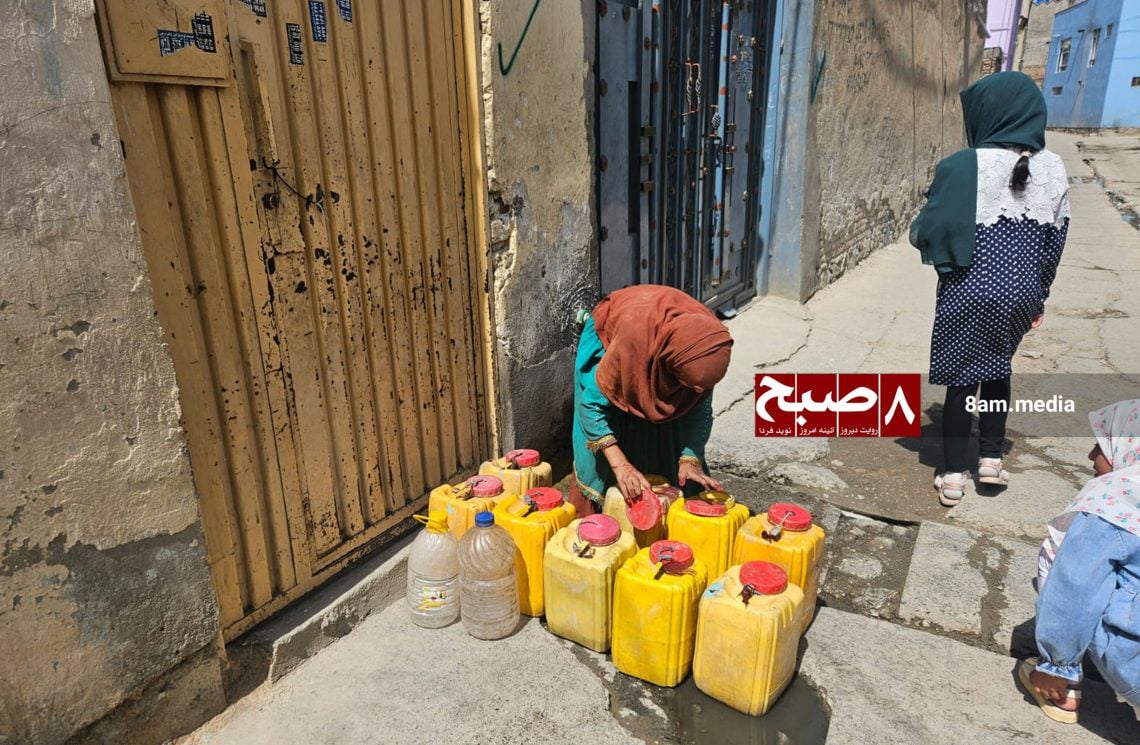
Groundwater levels in Kabul have severely declined due to continued drought, excessive use of water resources, and weak management, bringing the water crisis in this city to a worrying stage. Kabul residents express concern about the escalation of this crisis. They say that access to drinking water has become a major challenge in their lives. According to them, water supply companies also do not provide them with sufficient water, and the water that is supplied is not suitable for drinking. However, experts warn that continuation of this situation could severely threaten food security, the environment, and public health, and even intensify social conflicts. International organizations have also warned about the deterioration of conditions and the need for urgent action to prevent the complete drying of Kabul by 2030.
Some Kabul residents in conversation with the Hasht-e Subh Daily say that despite repeated complaints, no practical action has been taken by the Taliban to solve this problem, and they are forced to pay heavy costs weekly for water procurement.
Zohra, one of the residents of Kabul’s fifth district, says she walks about 15 minutes every day to provide drinking water needed by her family. She adds that their house well has dried up, and the water supply becomes more difficult each day.
She continues, “I bring eight barrels of water daily and walk about 15 minutes for this task. The situation has really become difficult. We are very careful with water consumption, because sometimes water is cut off for up to three days. I hope the Taliban pay serious attention to this crisis.”
Amrullah, another Kabul resident, says that in their area too, access to water has become a serious challenge. He adds that he now provides his family’s water needs from a mosque near his house.
He says, “Our well has not dried up, but it is not usable. When we draw water out, it comes with mud and silt. I use mosque water for washing and for drinking. I buy from water purification companies. Previously, in our area, we reached water at 12 meters depth, but now neither I nor others nor anyone has access to water, and everyone is forced to buy water.”
Zahed, one of the residents of Kabul’s Khair Khana 315 area, says they use the municipal water network, but this system cannot meet their needs. He adds, “In our area, the municipal water system is used, but water comes only once a month. How much water can we possibly store to last an entire month? Usually, two to three days later, we buy drinking water from tankers that come to the streets.”
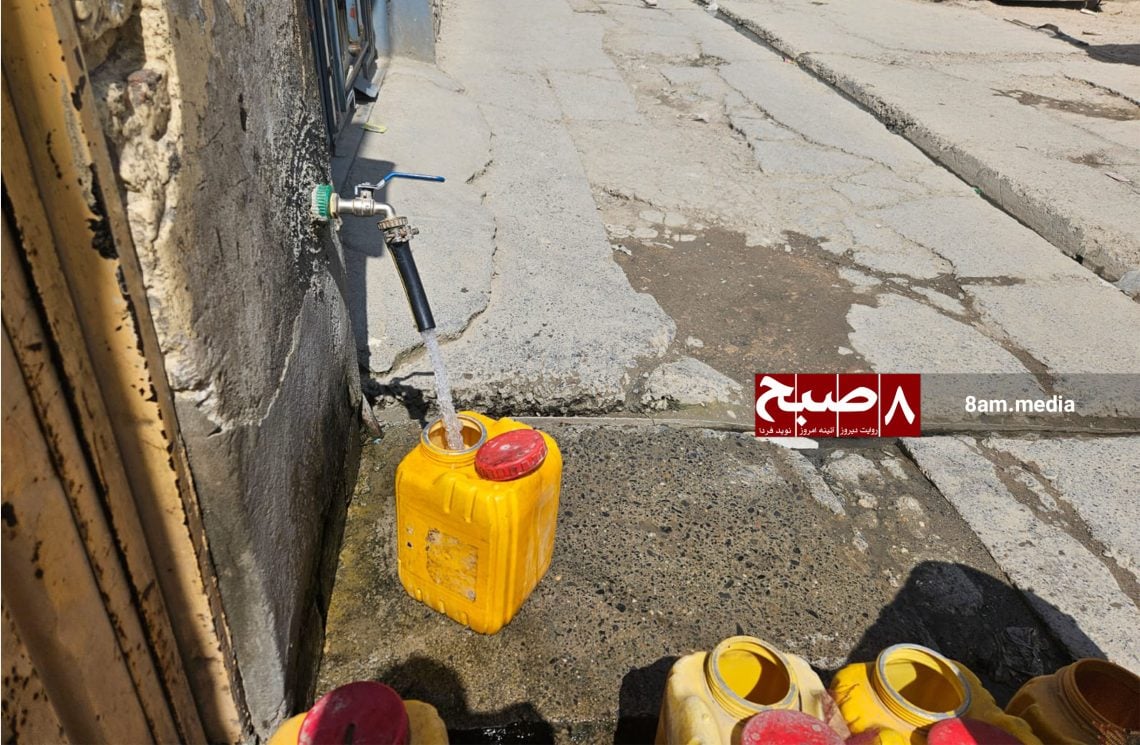
He emphasizes: “Our side still has relatively good conditions, but in areas like around the Intercontinental Hotel, people are forced to travel long distances to provide their needed water. The situation becomes harder day by day.”
Meanwhile, some agricultural experts warn that the decline in groundwater levels threatens the country’s food security and will cause Afghanistan’s greater dependence on importing agricultural products from other countries. According to them, continuation of this situation leads to decreased agricultural production, migration, soil structure destruction, and loss of vegetation cover.
Agricultural experts recommend that, to preserve water resources, irrigation systems in agriculture must be seriously controlled. They emphasize using modern irrigation methods and better utilization of rainwater to prevent further decline of groundwater.
Qutbuddin Yaqoubi, an agricultural expert, says: “Unfortunately, under current conditions, excessive water use—particularly groundwater—has caused water levels to drop significantly, creating serious problems for people. Declining groundwater levels directly affect the production of essential crops such as wheat, rice, barley, fruits, and vegetables. This threatens food security and could lead to shortages and famine, severely disrupting people’s daily lives.”
Some environmental experts say that the water crisis in the capital has provided the ground for the formation of “water mafia.” These experts warn that the decline in groundwater levels, along with water reduction, causes land subsidence, which reduces its resistance against earthquakes.
Sayed Mohammad Sulaiman Khel, an environmental expert, says: “People have suffered water stress, and this has made conditions favorable for the water mafia. These individuals take water from various sources using small purification devices and sell it to people, a process that has created many challenges for people for years. Alongside this, water crisis can lead to environmental, economic, and social problems and even reach the level of social conflicts.”
Najibullah Sadid, an environmental expert, says that based on conducted studies, about 2.4 billion cubic meters of groundwater resources in Afghanistan have decreased over the past 20 years. He emphasizes that the use of groundwater should be limited to drinking consumption and should only be used for agriculture if modern irrigation systems are employed.
Mr. Sadid explains: “We must provide training on recharge or refilling of groundwater for those who dig wells. Using rainwater and building rain absorption systems, like check dams, is an effective solution. If we use water unilaterally and do nothing to recharge underground aquifers, a day will come when the country becomes completely without water. The consequence of this process is very dangerous, including land subsidence, the creation of holes, soil salinization, desertification, and loss of vegetation cover. These are all negative long-term effects that can pose serious threats to the country’s environment.”
Previously, the United Nations Children’s Fund (UNICEF) had warned that without urgent action, Kabul city would face a severe water shortage by 2030. According to UNICEF, after decades of war and conflict, Afghanistan is not prepared to deal with the consequences of climate change.
The international organization “Mercy Corps” had also warned that seven million tons of Kabul residents face a vital crisis of water shortage. This organization, referring to the drying of half of the deep wells in Kabul, said this city will probably dry up by 2030.
The UN-Habitat program had also said that dealing with the water shortage crisis in Afghanistan requires investment on a large scale, strong cooperation, and increased public awareness about water use and management.
You can read the Persian version of this report here: