Pakistan is renowned for its role in producing the Taliban, and has turned Afghanistan into a battleground for its conflicts with India and other neighboring countries. With its significant power and control over Islamic extremist groups, including the Taliban, it has become a major player in the region. Islamabad follows a strange and contradictory foreign policy, being a strategic ally of the West (led by the United States), a helper of China, and a religious and financial supporter of Arab countries. Despite its military ambitions and ongoing conflict with India, Pakistan is a poor, broken and fragmented government, with its agricultural system lacking regular investment for development. Slavery still exists in some parts of the country, and its currency has dropped significantly against the dollar. In addition to water shortages, terrorism and fundamentalism also pose a threat to Pakistan, and the economic situation of ordinary people is dire. It also has extremely vulnerable borders, and its civil government has been subject to internal division and instability. Most of the leaders and influential government officials have been found to be involved in financial corruption and have had serious corruption cases brought against them in court. Furthermore, democracy and freedom of speech are not being fully upheld. There is a deep–rooted ethnic divide in the country, making it rare and exceptional for a Punjabi to marry a Baloch or a Sindhi to marry a Pashtun, and vice versa. Despite Pakistan being a federal country, its federal structure is being disregarded by its military sector. Constitutional laws are not being enforced, and states are not being granted their rights as the military is the primary decision–maker and leader in all areas, including the economy, politics, and management. According to many democratic politicians and advocates of the transformation of Pakistan‘s political system, the actions of the military sector over the past several decades have posed a threat to the unity of Pakistan.
Pakistan is facing significant financial and internal tensions. Nevertheless, the army, which holds actual power and practical politics, has long used Islam and Hinduism as components of unity and integration. For decades, Pakistan has created, supported, and funded religious, fundamentalist, and extremist forces such as the Taliban, earning billions of dollars in the process. Now that Pakistan‘s support of the Taliban has caused the collapse of the Afghan Government, Islamabad is in violation of international laws as a lobbyist and supporter of this group. However, the Taliban have likely provided Islamabad‘s enemies with a safe haven. Despite this, many politicians in Pakistan and Afghanistan still believe that the activation of the Tehreek–e-Taliban Pakistan (TTP) and the border tensions between the military forces of this country and the Taliban are merely media and propaganda games.
Pakistan is confident that its army has the capability to manage the war and reconciliation of the TTP, leading them to believe they will be victorious and gain new economic and political support from the West. According to Pakistani officials, the army is still in control of the situation with its strength and tactics, using fundamentalism as a means to improve the country‘s standing in the international system and gain political and economic support. Despite its internal fragility, Pakistan is still considered a nuclear power and will remain so after this.
Political circles in Pakistan believe that the Tehreek–e-Taliban Pakistan (TTP) is engaged in a cycle of war and peace with the country‘s army, as it has been in the past. They are confident that the military can manage this situation, but there are other factors such as TTP and Baloch separatism which Pakistan is unable to control or manage. The Islamic State of Iraq and Syria (ISIS) in South Asia is practically a branch of the TTP, which has become a major threat to the country. Additionally, the Baloch Liberation Army has become a formidable challenge. In the last year and a few months, other separate forces have become active in Pakistan, and if these forces gain more power, the military‘s efforts may not be enough to prevent chaos.
The Taliban in Afghanistan and Pakistan share the same cultural and religious roots, and thus have never viewed themselves as separate entities. The borders between the two countries were imposed and invented by the British, and this has posed a serious threat to Pakistan. The Tehreek–e-Taliban Pakistan (TTP) group was formed in 2001 and provided a haven for Al–Qaeda fighters for many years. Recently, they have joined forces with the Islamic State (ISIS) group in Afghanistan. Both the Baloch separatists and the TTP have not only attacked the country‘s institutions and security forces, but have also threatened China‘s interests in the region. China has invested heavily in Balochistan, which is essential for Pakistan‘s development. Any security threat to Balochistan would be a major setback for this large project, as it is of crucial importance for Pakistan and without it, there would be no Pakistani nation.
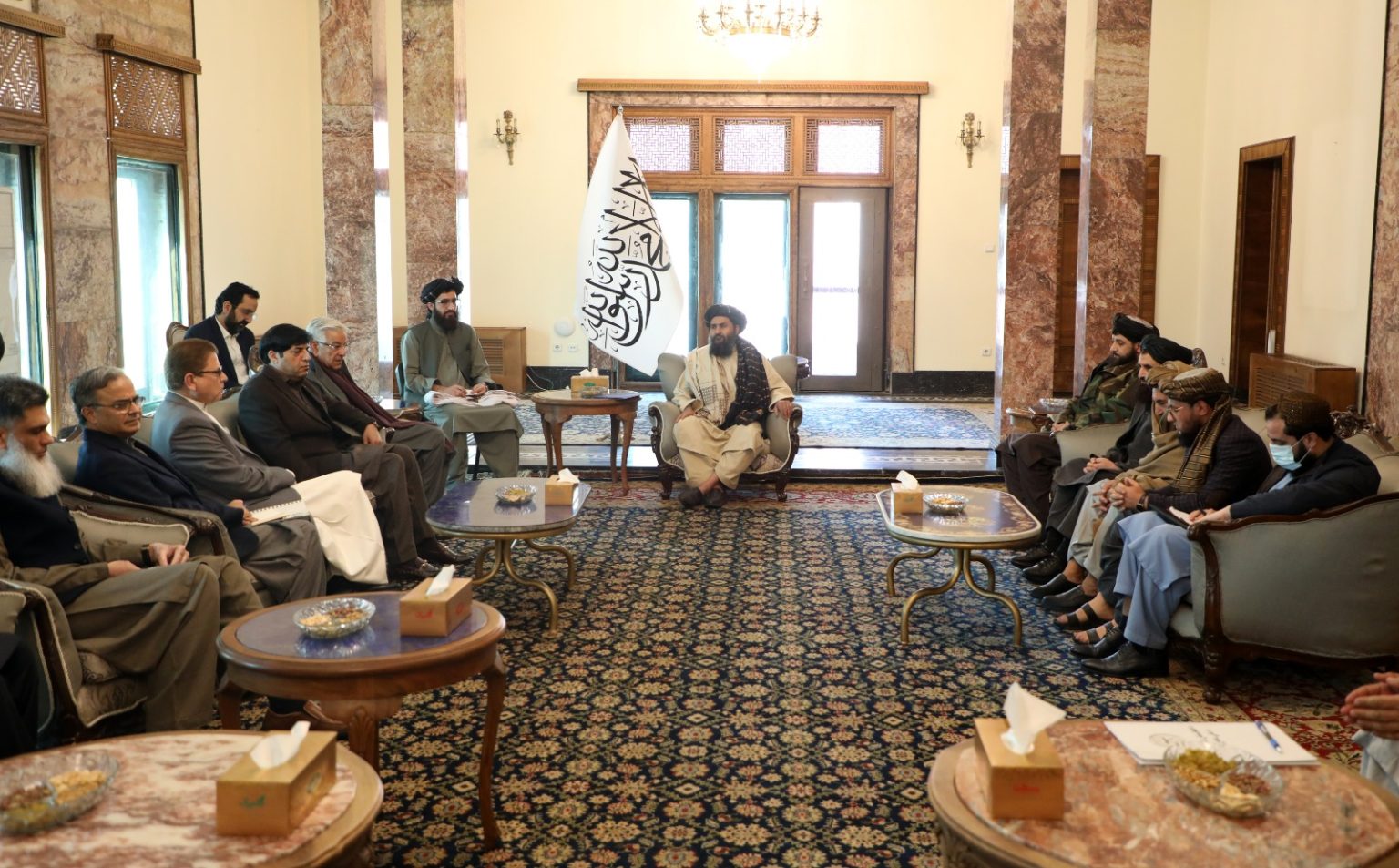
According to the statistics presented in the media, at least 45% of Pakistan‘s income is derived from Balochistan, which has abundant gas and natural resources. Any kind of chaos, instability, or war in the region would make Pakistan‘s already fragile economy even more vulnerable. This has been the case since the country‘s formation, so it is unlikely that the visit of senior Pakistani security officials to Kabul was motivated by security concerns, as the strong relationship between the Taliban and Pakistan still persists. Pakistan continues to view the Taliban as a tool for implementing its foreign policy in Kabul and believes that it can exercise a deep influence among the ranks and leadership of the group whenever it wishes to eliminate potential threats. It has been speculated that Pakistani security officials have conveyed an unreported message to the Taliban, which could potentially lead to a new war in the spring. This war would be based on security and economic issues, as well as the fight against ISIS and Al–Qaeda, with the leader of Al-Qaeda said to be present in Iran. This has caused concern for the West and Pakistan, who have hosted these groups for years. Political circles in Pakistan and Afghanistan believe that the mission of the Pakistani security officials‘ travel to Kabul is to talk with the opposition movement of Hibatullah Akhundzada, the leader of this group. Unconfirmed information suggests that some senior officials of this group have been removed from power by Akhundzada.