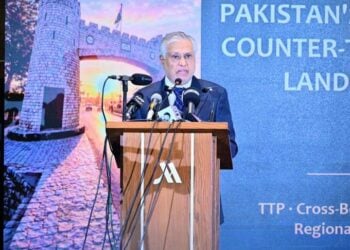
In recent weeks, Afghan media outlets and social networks have been abuzz with speculation about a meeting in Islamabad. Organizers have described it as an “academic, closed-door session,” yet in the online sphere it was quickly branded as a “gathering of anti-Taliban groups.” Excitable narratives about a “near-future alliance” between Taliban opponents and Pakistan are spreading rapidly despite repeated clarifications from the outset that no political or military groups were expected to attend. This gap between the stated reality and the public perception is itself a warning sign: when the opening frame is built on misunderstanding and exaggeration, the path forward usually leads toward false expectations, dangerous misinterpretations, and unintended costs. Even if we accept the organizers’ explanation that it is purely “academic,” it still raises a critical question: why is drawing closer to Pakistan a poor idea for Taliban opponents at this moment, and why could trusting this process trap them in a game of double standards?
This does not mean that such gatherings should be categorically rejected. The key principle is caution, not denial. The approach should be rational, not emotional.
The first step is to recognize today’s context. For Pakistan’s security establishment, Afghanistan has never been merely a foreign-policy file. In the doctrine of the Pakistani military and the Inter-Services Intelligence (ISI), Afghanistan has long been defined as a “manageable buffer zone.” In practice, this has meant systematic reliance on proxy networks, maintaining open channels of political and security influence in Kabul, and turning every dialogue process into leverage for bargaining on issues Islamabad deems a priority. That same logic is now reappearing in a new form.
Facing mounting pressure from Tehrik-e-Taliban Pakistan (TTP) and escalating cross-border attacks, Islamabad seeks to force the Afghan Taliban to bear the cost of this threat. Any new initiative that showcases “dialogue with Afghan figures” is therefore quickly transformed into a bargaining chip, an instrument to pressure and trade with the Taliban. Suppose Taliban opponents participate in such a frame, even with the best of intentions. In that case, they risk becoming part of a larger staging designed not to strengthen a legitimate Afghan alternative, but to adjust the Taliban’s position on the TTP crisis.
If opposition groups do choose to attend, the first rule must be clarity of purpose. Every commitment should be measurable, time-bound, and conditional on reciprocal action from written guarantees of non-interference in Afghanistan’s future, to explicit respect for Afghan post-Taliban interests, and assurances that the opposition will not serve merely as a tool of pressure against the Taliban but as a genuine partner in confronting Talibanism as an ideology inside Afghanistan. At present, however, there is no indication that Pakistan is inclined toward such a course. On the contrary, Islamabad appears more focused on lobbying the international community for the recognition of the Taliban regime than on building an inclusive, credible alternative for Afghanistan’s future.
Another overarching goal for Pakistan is to seize ownership of Afghanistan’s destiny from the international community. Amid the vacuum created by foreign actors retreating from Afghan affairs, Islamabad is trying to send a simple message to the world: “We hold the key to Afghanistan’s problems.” The orchestration of so-called “academic” meetings, curated “dialogue circles,” and selective invitations to Afghan figures, even those not explicitly branded as anti-Taliban, is essentially a performance of influence. It signals to both regional and Western capitals that Pakistan has access to levers of power on both sides of the equation: it can talk to the Taliban’s opponents while simultaneously bargaining with the Taliban themselves. If this narrative takes root, Islamabad will be able to claim at broader negotiating tables: “Beyond Kabul, nothing in Afghanistan can endure without us.” The function of this theater is not only external; it also has a domestic audience. By showcasing their role in Afghanistan, Pakistan’s military and intelligence agencies can justify budgets and expand security prerogatives at home, while deflecting criticism of costly foreign adventures with the argument that such policies prevent security threats. Abroad, the same narrative becomes a bargaining chip for security cooperation, border control, and economic or political concessions. The implicit message is clear: if Pakistan is excluded, instability will return; if included, management is possible.
This strategy rests on several layers:
First, projecting “dual management” by offering platforms to selected anti-Taliban figures as a façade of inclusivity, while maintaining ties with the Taliban.
Second, cultivating new faces. The earlier and more fragmented these figures appear under Islamabad’s umbrella, the deeper the fissures within anti-Taliban groups become, delaying the emergence of a common charter or shared political vision.
Third, if such initiatives fail, Pakistan can simply say: “We gave space, but Afghans failed to agree.” If they succeed, Islamabad will claim: “It would not have worked without us.” In both scenarios, Pakistan secures the credit of mediation without necessarily altering its own security behavior.
For Taliban opponents, the danger lies precisely here: even well-intentioned participation allows Islamabad to wield the card of “necessity” and “exclusive influence,” without paying any real cost. Practically, Pakistan uses this image to pressure the Taliban on issues such as the TTP, yet offers the opposition no guaranteed mechanisms for political power, social security, or sustainable support. Put simply, Islamabad wants the world to believe “nothing is possible without us,” and given the current international vacuum, that message is finding buyers.
Hence, the second rule for Taliban opponents must be to define Afghanistan’s red lines in advance clearly. Any arrangement that leads to monopolized influence, the fracturing of anti-Taliban unity, or proxy representation instead of equal partnership should be treated as crossing that red line, and the process suspended immediately. There is another reality the opposition must keep in mind: Pakistan today is not the Pakistan of the 1980s. It no longer enjoys generous U.S. and Arab sponsorship, nor does it have the economic or political capacity to shoulder costly, long-term projects abroad. Pakistan itself is being strained by TTP attacks; border areas are no longer reliable sanctuaries, and domestic public opinion has become more sensitive to the costs of external adventurism. In this environment, Pakistan’s promises of generous support to Taliban opponents are less a path to victory than an attempt to manage and contain the scene. When the host of such initiatives neither can nor intends to stand by hard commitments, what will opponents gain other than a few headlines and fragile networks that collapse with the next political shift?
Equally important, clashes of interest with Kabul cannot be disguised under the label of “academic.” For the Taliban, conceding to Pakistan’s security demands is seen as weakening their internal leverage and alienating fighters. This is why they consistently insist that the TTP is Pakistan’s “internal problem” and avoid paying a direct cost. Within such a structure, any dialogue process managed by Islamabad becomes less about building a legitimate Afghan order and more about applying pressure on the Taliban. At best, Afghan opposition groups risk being spectators in security deals between Islamabad and the Taliban; at worst, they become expendable pawns.
A less-discussed but critical dimension is Pakistan’s triangular play with India. While keeping the Taliban close, Islamabad also selectively engages some anti-Taliban figures to send a calculated signal to New Delhi: even circles critical of the Taliban are present at Pakistan’s tables. The practical effect is to sow systematic doubt in India’s calculations. Figures who once had closer working relations with New Delhi during the Taliban’s first regime are now seen under Islamabad’s frame. The desired outcome is that India questions these actors, perceives the political cost of engagement as too high, and suspends cooperation. If New Delhi’s assessment turns negative, Pakistan will have simultaneously narrowed India’s role in Afghanistan and deprived Taliban opponents of one of their few potential sources of future support.
This is not to suggest that engagement should be closed altogether. Afghanistan and Pakistan are neighbors; we cannot ignore each other. A better relationship is necessary, but it must be built on mutual interests, not solely Pakistan’s interests, which, unfortunately, has been the historical norm. Pakistan has typically treated Afghanistan as a tool of leverage, not an equal partner. This reality must be acknowledged, yet from within that reality it is still possible to shape a pragmatic framework for coexistence.
The lesson, then, is not to close the door on dialogue, but to enter with maximum vigilance. Afghans are not a people who should beg others to secure their interests; national interests must be tied to respectful neighborly relations. Opportunities when real should be seized, not missed. But participants in such meetings must carry Afghanistan’s red lines with them and never set them aside, even momentarily. Otherwise, the bitter history of partnership with Pakistan will repeat itself. Every time Afghanistan has asserted independence and sought to reduce foreign, especially Pakistani, influence, Islamabad has activated its proxies. After the Soviet withdrawal, Ahmad Shah Massoud pursued national state-building free of interference, yet Pakistan responded by unleashing its proxy machine: first Gulbuddin Hekmatyar, then the Taliban. The result was devastating: proxy war, the erosion of social capital, and the rise of a political order that held Kabul hostage to Islamabad’s security needs. Today, entering without hard, verifiable commitments will simply revive the same cycle under new names and new posters. The right path is conditional engagement, backed by enforceable guarantees and pulling the brakes the moment shared interests are replaced with monopolized influence.
This brings us back to the original misunderstanding: when social media markets a simple “academic” session as an “anti-Taliban conference,” it reflects both the impatience and the hunger for big news in our exhausted society. But wise politics begins precisely here: by separating excitement from analysis. Even if the rumor is false, there is more than enough reason to caution that rapprochement with Pakistan without a genuine change in its behavior toward supporting terrorism in Afghanistan and beyond, and without due vigilance, is not a good idea. If Taliban opponents seek to act responsibly, they must avoid unconditional trust, anchor dialogue to benchmarks and reciprocity, diversify their relationships, and above all, focus on building resistance and forging alliances inside Afghanistan. Otherwise, any new program, whatever its name or poster, will remain nothing more than a polished version of the same old game, whose costs Afghans have been paying for decades. Engagement, yes, but only as far as measurable shared interests are secured, and not one step further.
You can read the Persian version of this analysis here: