• 8AM.MEDIA
  • ویب‌سایت فارسی
  • پښتو ویب‌پاڼه
  • اۉزبېکچه ویب‌سایت
  • Podcast
Monday, October 12, 2026
Hasht-e Subh
  • Home
  • News
    • Afghanistan News
    • World News
  • Opinion
    • Editorial
    • Analysis
  • Reports
    • Daily Reports
    • Investigative Reports
  • Society
    • The story of people
  • Women’s Word
  • Columns
    • Three Years After Afghanistan’s Fall: The Taliban’s Resurgence
    • Towards Equality
    • The Resurgence of the Taliban: Two Years Since Afghanistan’s Fall
    • Hebatullah Report Special Edition
    • Resistance for Education Special Edition
    • Special Column on Taliban’s Education Curriculum
    • Nawroz
  • Interviews
  • Contact Us
    • About Us
    • 8AM MEDIA Annual Awards
    • Submit an Article to Hasht-e-Subh
  • 8am.mediaBack
Subscribe
No Result
View All Result
  • Home
  • News
    • Afghanistan News
    • World News
  • Opinion
    • Editorial
    • Analysis
  • Reports
    • Daily Reports
    • Investigative Reports
  • Society
    • The story of people
  • Women’s Word
  • Columns
    • Three Years After Afghanistan’s Fall: The Taliban’s Resurgence
    • Towards Equality
    • The Resurgence of the Taliban: Two Years Since Afghanistan’s Fall
    • Hebatullah Report Special Edition
    • Resistance for Education Special Edition
    • Special Column on Taliban’s Education Curriculum
    • Nawroz
  • Interviews
  • Contact Us
    • About Us
    • 8AM MEDIA Annual Awards
    • Submit an Article to Hasht-e-Subh
  • 8am.mediaBack
No Result
View All Result
Hasht-e Subh
No Result
View All Result

Power Shortages Shut Down More Than Two Thirds of Factories in Kandahar, Industrialists Say

Translated by Farhad Farhaad | Originally reported in Persian by the Hasht-e Subh Daily, Kandahar

Mohammad Farhaad Mohammad Farhaad
12 October 2026 - Solar Hijri Date: 1405/07/20 [t_time:1791805810]
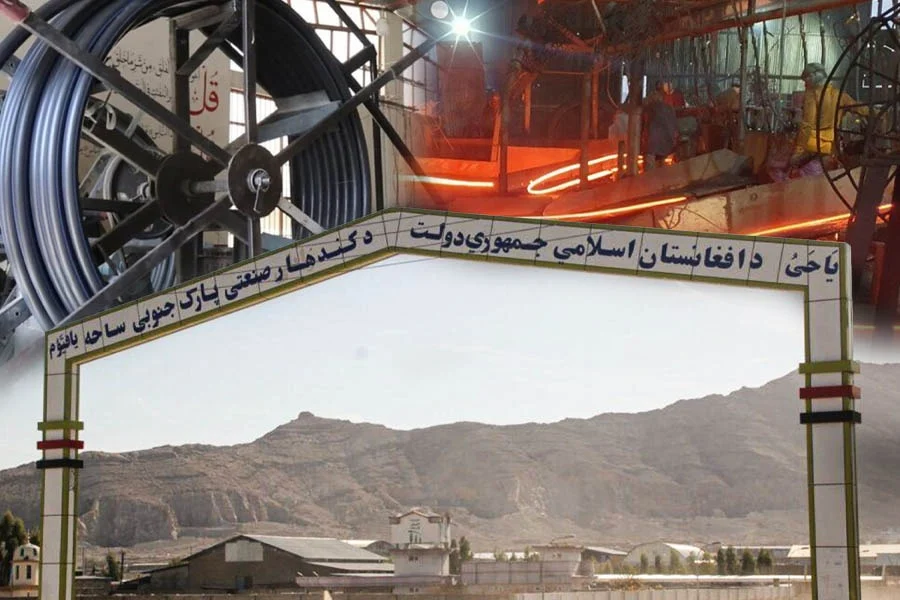
The entrance gate of an industrial park in Kandahar, with steel wire coils and workers at a furnace shown above, as power shortages shut down factories. (Photo credit: Exclusive)

Exclusive

Industrialists in Kandahar say the electricity shortage in the province has badly affected industrial activity and businesses. They add that nearly 400 factories once operated in Kandahar’s industrial park, but more than two-thirds have now closed, and the remaining factories also face the threat of closure.

Haji Abdul Wali (pseudonym), who manages five factories, says that over the past five years the Taliban have created more problems for industrialists instead of helping them set up new factories.

Abdul Wali adds that about 400 factories previously operated in the industrial park, but about 280 have closed in the past two years. According to him, 10 factories are operating temporarily, and the remaining active factories have reduced their activities by up to 50 percent.

He says the lack of electricity, difficulty in accessing raw materials, and the absence of a suitable market for selling manufactured goods are the main reasons for the closure of factories in the industrial park. He stresses that instead of supporting investors, the Taliban create more problems for them and take money from them under various pretexts.

The industrialist says: “In recent years, the number of our factories reached 400 units, but there is no electricity, and we also have no market for selling our products. High taxes are collected, and for this reason, only a limited number of factories remain now, and the rest have closed. If the situation continues like this, you will see for yourself that only a handful of factories will remain here and the rest will close as well. There is nobody to hear our voice.”

Mohammad Sadiq, an investor, says the lack of stable electricity and the limited hours of its availability have slowed down production, increased costs, and forced a number of factories to reduce their activities or stop completely.

The investor adds that Kandahar is considered one of the important commercial and industrial centers of Afghanistan, but the electricity shortage has made it harder day by day for manufacturing plants and small and large businesses to continue operating. According to him, electricity from the Kajaki Dam has currently been cut off completely, and the province’s electricity needs are met for only a few hours through diesel generators, a supply that does not meet the needs of industrialists.

Sadiq says: “Kajaki electricity has been completely cut off. The diesel electricity available here reaches us for a limited time, and then they connect it to people’s homes. After that, they give us electricity again in turns. Sometimes even that electricity is cut off repeatedly. Every time the power goes out, our entire system shuts down, and then we have to start it up again.”

Aminullah, who manages a baby food factory in Kandahar’s industrial park, says the electricity shortage has caused serious problems for the factory’s production activities. According to him, the factory has only three to four hours of electricity every 48 hours.

The factory manager adds that to keep the factory running during the remaining hours, it has to use diesel generators. According to him, rising fuel prices have also pushed up production costs, making it more expensive for them to produce goods. He says about 80 percent of Kandahar’s industrialists are trying to move their businesses to Kabul or neighboring countries, because continuing to operate factories under current conditions has become difficult for them.

Aminullah adds: “What we industrialists need more than anything right now is electricity. We waited for 20 years, and it can’t go on. We have invested, and we have begged many times for electricity to be provided. We were promised 20 times, but there was no result. They spoke to us about Helmand’s electricity and said it would be built, but that was never built either.”

A member of the Kandahar Industrial Factories Union, who did not want his name mentioned in the report, says: “Nearly 5,500 people worked here, but with the closure of the factories, the majority have become unemployed, and their fate is unknown. According to the information we have gathered, about 3,000 people have lost their jobs, and behind each of these people there is a family.”

Mohammad Sharif, one of the young men who worked in Kandahar’s industrial park, says he was working in one of the factories in the park, but that factory closed five months ago, and he also became unemployed. He adds that he is responsible for covering the living expenses of 11 members of his family and is now facing severe economic problems.

The young man says: “We have a great many problems. It has been five months since I was dismissed from work, and I do not know how I can find work elsewhere. Many factories like ours have also closed.”

Meanwhile, Sayed Sarwar Amani, the head of trade and industry in Kandahar, describes the prolonged power outage as one of the major problems facing the province’s industry and says a well-considered solution must be found to resolve this problem fundamentally. He says about 300 factories in Kandahar need 100 megawatts of electricity, but currently only 40 megawatts are supplied through solar systems and generators, and the shortfall still stands at 50 megawatts. According to him, the cost of producing each kilowatt-hour of electricity through a generator is between 30 and 40 Afghanis, while the price of electricity in other provinces is about seven Afghanis.

The Kandahar Chamber of Industrialists says 90 percent of the work on the imported electricity connection project has been completed, but if the electricity problem is not resolved, the development of industry in the province will face serious challenges.

This comes as Abdul Ghani Baradar, the Taliban’s economic deputy, criticized the province’s investors at a meeting in Kandahar last September and said they were not investing in Kandahar.

The Kajaki Dam in Helmand province is considered one of the most important sources of electricity for Kandahar. In 2008, about 5,000 troops from the United States Army and former Afghanistan forces, after a five-day journey and clashes with the Taliban, managed to deliver a power-generating turbine to the Kajaki Dam.


You can read the Persian version of this report here:

صنعت‌کاران قندهار: کمبود برق فعالیت بیش از دو سوم کارخانه‌ها را متوقف کرده است

ShareTweetSendSendShare

Related Posts

Taliban officials in white robes stand around a mounted rifle during a gathering. (Photo credit: social media)
Daily Reports

Policing Faces, Restricting Minds: How the Taliban Are Pulling Universities Away From Their Academic Mission

12 October 2026 [t_time:1791801338]
Afghan refugees returned to Afghanistan with their belongings (Photo: Abdul Basil / AFP via Getty Images)
Afghanistan News

More Than 600 Afghan Migrants Return to the Country

12 October 2026 [t_time:1791799317]
Zabihullah Mujahid - the Taliban Spokesperson (Photo: @GMICafghanistan)
Afghanistan News

Mujahid: Pakistan Should Address Its Internal Problems Instead of Making Accusations

12 October 2026 [t_time:1791796661]

Latest

Loading latest news...

Popular stories

  • An Afghan woman gazes out of her home, reflecting the isolation and challenges faced by women in Afghanistan under Taliban rule. (Photo Credit: 8am.media)

    UN Report Reveals Shifts in Family Attitudes and Rise in Domestic Violence in Afghanistan

    Share
    Share Tweet
  • More Than 200 Aftershocks Recorded in Panama Since Friday’s Earthquake

    Share
    Share Tweet
  • The Politics We Inherited: Rethinking Afghanistan’s Political Culture

    Share
    Share Tweet
  • Pakistan and the Yemen War: Balancing Between Riyadh and Tehran

    Share
    Share Tweet
  • Al-Qaeda Releases Hamza bin Laden Message on 9/11 Anniversary

    Share
    Share Tweet

Podcast

Insights
Insights

Join Lynne O’Donnell for 8AM’s podcast series, Insights.
Lynne talks with generals, diplomats, soldiers, journalists, politicians, activists, people who have front row seats for conflicts around the world, and citizens with a story to tell, happy or sad. For this first series, Afghanistan is the focus. Lynne and her guests talk about the collapse of the republic in August, 2021, and the impact since — for the people of Afghanistan, for the security of the region, for the safety of the world. It’s important, interesting and insightful.

Insights/22: Controlling the Narrative with Mina Sharif
byinsights8am

Controlling the Narrative

Lynne O’Donnell talks with Mina Sharif, author, activist, women’s rights campaigner, educator and mentor. They discuss who controls the narrative and who speaks for Afghanistan’s people when the Taliban appear to have seized control not only of the country but of the message, too.

Have a listen

Insights/22: Controlling the Narrative with Mina Sharif
Episode play icon
Insights/22: Controlling the Narrative with Mina Sharif
Episode Description
Episode play icon
Insights/21: Media Meltdown with Zahra Joya
Episode Description
Episode play icon
Insights/20: Terror Inc with Scott Richards
Episode Description
Episode play icon
Insights/19: Busting Stereotypes with Bushra Gohar
Episode Description
Episode play icon
Insights/18: Media Matters with Waliullah Rahmani
Episode Description
Episode play icon
Insights/17: What Goes Around Comes Around with Sima Samar
Episode Description
Search Results placeholder
Hasht-e Subh

8AM Media, also known as Hasht-e-Subh Daily, stands as Afghanistan's premier independent and non-profit newspaper, resonating as a beacon of journalistic integrity since its establishment in June 2007 by esteemed Afghan journalists and human rights advocates. With a steadfast commitment to citizen journalism and civic education, Hasht-e-Subh Daily has earned its place as the most esteemed publication in the nation.

Publisher: Sanjar Sohail
Email: [email protected]
Executive Director: Parwiz Kawa
Email: [email protected]

Read More

Power Shortages Shut Down More Than Two Thirds of Factories in Kandahar, Industrialists Say

Baqaei: Reports of Land Transfer to Afghanistan at Chabahar Port Are Untrue

Arif Alvi: Emergency Rule in Khyber Pakhtunkhwa Is the “Final Nail in the Coffin of Democracy”

Policing Faces, Restricting Minds: How the Taliban Are Pulling Universities Away From Their Academic Mission

Death of Injured Indian National Raises Khalid International Airport Attack Death Toll to 13

Editor’s Choice

Every Saturday morning, 8AM MEDIA English Services Department will guide you through the week’s biggest stories from Afghanistan and the international community.

Subscribe

© 2026 - ©Hasht-e Subh Daily

No Result
View All Result
8am.Media
پښتو ویب‌پاڼه
ویب‌سایت فارسی
اۉزبېکچه ویب‌سایت
  • Home
  • News
    • Afghanistan News
    • World News
  • Opinion
    • Editorial
    • Analysis
  • Reports
    • Daily Reports
    • Investigative Reports
  • Society
    • The story of people
  • Women’s Word
  • Columns
    • Three Years After Afghanistan’s Fall: The Taliban’s Resurgence
    • Towards Equality
    • The Resurgence of the Taliban: Two Years Since Afghanistan’s Fall
    • Hebatullah Report Special Edition
    • Resistance for Education Special Edition
    • Special Column on Taliban’s Education Curriculum
    • Nawroz
  • Interviews
  • Contact Us
    • About Us
    • 8AM MEDIA Annual Awards
    • Submit an Article to Hasht-e-Subh
  • 8am.media

© 2026 - ©Hasht-e Subh Daily