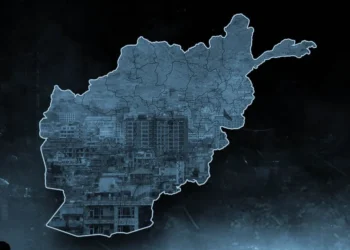
In recent months, it takes only a few days of following Afghan diaspora discussions on social media to encounter a familiar pattern: waves of recurring questions, long debates, and conclusions that often circle back to the starting point. What political system does Afghanistan need? Are Afghans ready for democracy? What could unite us against the Taliban? These questions are not asked out of irresponsibility. On the contrary, they show that the diaspora still cares, has not disengaged, and still wants to have a stake in the country’s future. Yet at the same time, these questions reveal a deeper reality: confusion.
This is the confusion of a generation that is dissatisfied with the current situation, disillusioned with old formulas, and perhaps still quietly hopeful, yet unable to see a clear path toward collective action. More importantly, this confusion is not unique to the present moment; its roots run much deeper. In previous periods as well, despite formal institutions and substantial external support, Afghanistan rarely managed to generate the intellectual depth needed to frame the problem correctly and to build a viable path for change. Either the capacity was missing, or the conditions were not in place. We have often debated answers, but far less frequently paused to consider whether we were asking the right question.
Over the past four decades, large segments of Afghanistan’s political and intellectual elite, instead of engaging in a gradual and realistic understanding of their own society, turned to importing ideologies and ready-made models of state-building and nation-building from East and West. Each ideology carried its own vision of “transformation”, an idealized, pre-defined image, as if society could be moved overnight from its existing condition to a desired one using an external template. These efforts, however, repeatedly failed because they ignored Afghanistan’s actual social, cultural, and historical structures. Rather than smoothing the path of transition, they left society bearing heavy human, social, and financial costs.
The clearest example of this disconnect can be seen in the experience of the past two decades, a period marked by enormous financial investment, extensive programs, and high expectations. Yet its collapse was so rapid that many felt what had been built never truly took root within society. The lesson was stark: if the relationship between people and concepts such as rights, law, institutions, and accountability is not internalized, no project, no matter how long or expensive, will endure in a moment of crisis.
At this juncture, the Afghan diaspora holds an important asset: the capacity for critical thinking and the courage to question itself. In many earlier periods, this capacity either did not exist or was fragmented. But if it is not used wisely, it risks turning into another version of the same historical deadlock, eloquent debates, sophisticated analyses, and an ever-widening gap between ideas and reality.
One question, in particular, recurs frequently in diaspora discussions: Are Afghans ready for democracy? On the surface, this appears to be a pragmatic concern. In practice, it often becomes an escape from a more difficult question. Perhaps the real issue is not whether people are “ready,” but whether we truly understand the society we claim to design political futures for. When discussions focus on political models but neglect everyday life, it is unsurprising that proposed solutions fail to translate on the ground.
This is why a brief but crucial social reality must be acknowledged, one that, if ignored, leaves diaspora debates suspended in abstraction. Across much of Afghanistan, social life is still shaped by kinship, tradition, tribal loyalties, customary norms, and localized authority. This is not a moral judgment; it is a sociological description. In such a context, concepts like law, institutions, individual citizenship, and accountability have not yet become everyday lived realities. Consequently, any project imposed from outside, or even from urban centers, either adapts itself to these structures or breaks against them.
More importantly, this structure does not only impose costs on “others.” Its primary victims are often the very people in whose name it claims legitimacy. Afghan history repeatedly shows how invoking “the majority” or a charismatic leader becomes a tool of justification, while in the lived reality of that so-called majority, poverty and exclusion persist. Today, many Pashtuns in Afghanistan bear the burden of this dynamic: their name is frequently used politically, yet in education, welfare, opportunity, security, and justice, little has fundamentally changed. A ruling elite benefits from symbolic representation, while ordinary people pay the price.
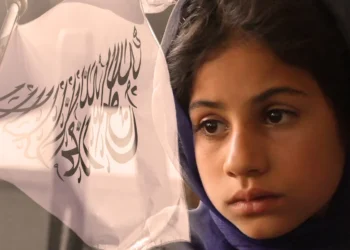
In this sense, the Taliban represent a clear expression of part of this structure, a fusion of tribal authority and a rigid, exclusionary religious interpretation that has long existed in certain areas. Yet a large portion of society, including many Pashtuns, does not see itself reflected in this vision. This disconnect deepens the crisis of legitimacy. Moreover, this worldview lacks the capacity to govern a diverse and evolving society; as a result, the current regime relies less on governance and service delivery and more on control through fear, coercion, and force.
Still, to remain focused on the core issue, we must return to the diaspora’s original dilemma: What do we want in this situation, and where should we begin? Perhaps the most important step is to change the starting point. We are accustomed to beginning with the question, What political system do we want? a top-down approach that has repeatedly failed. Instead, we might start with a simpler, more grounded question, one that examines reality from the bottom up, and one we have surprisingly rarely asked:
What do the majority of Afghans actually want?
That majority is not found in conference halls or lengthy social media debates. It lives in villages and rural plains, where people who often see the city from a distance, sometimes with aspiration, sometimes with fear, sometimes through distorted or extreme perceptions. For many, meaning, security, dignity, moral boundaries, and honor are defined within their immediate social world. Yet few translate this worldview into contemporary political language, or translate our worldview back to them. If this mental landscape is not understood, any blueprint imported from outside or imposed from urban centers will eventually collide with reality.
Perhaps this is precisely the forgotten question. Instead of understanding the majority’s needs and building a shared language from them, we repeatedly reached for grand designs. As a result, the divide between city and countryside, elites and people, ideas and lived reality has repeatedly exhausted projects of change.
It may therefore be worth paying attention to emerging figures who work constructively within traditional Pashtun society, with a thoughtful and grounded approach. One such figure is Jamal Taraki, someone who questions social relations, values, modes of thinking, and prevailing logic, and reflects on them seriously. I have found him to be principled and genuinely thoughtful, and I hope individuals like him are recognized and supported across Afghan society.
If the diaspora is to move beyond this impasse, it must agree on a small number of clear, non-negotiable principles, principles that are understandable in urban contexts and defensible in rural ones: equal citizenship, human dignity, fundamental rights, non-discrimination, the right to education and work for all, and equality before the law. These principles do not replace a political system, but they provide direction and define red lines. Without such orientation, debates, no matter how passionate or lengthy, will continue to return to the same starting point.
The Afghan diaspora today has more capacity for reflection than ever before. But if this capacity is spent solely on critique, system comparisons, and recycling abstract questions, the same historical cycle will repeat itself. Continued deadlock and inconclusive debates risk further damaging Afghanistan’s social fabric and deepening fragmentation. Perhaps the most courageous act at this moment is not to rush toward answers, but to ask the first question correctly, a question that forces us to reexamine ourselves, our distance from society, and our ways of thinking.
And that question remains as simple as it is decisive:
What do the people of Afghanistan truly want?