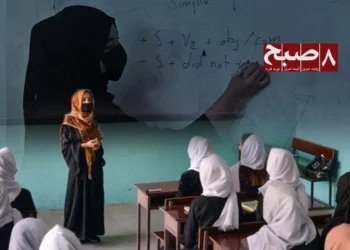
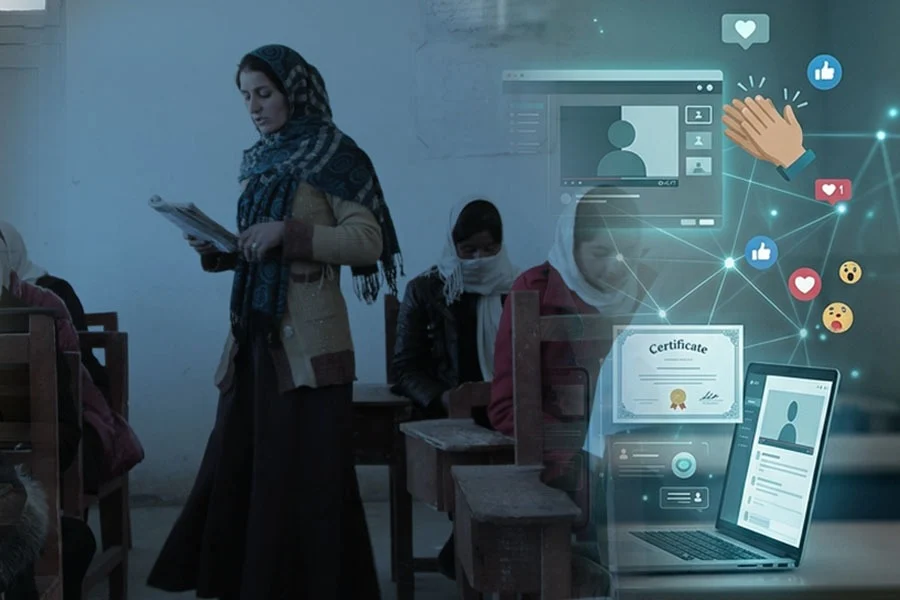
Despite the official removal of Teachers’ Day from the Afghanistan education calendar and the issuance of decrees banning any gathering on the occasion, field assessments show that the way the day is marked has changed form. It is now observed in secret inside school buildings or in online schools using digital platforms. Education observers believe that students’ insistence on continuing this tradition reflects a social reaction against efforts to change the traditional structure of education.
According to letters sent by the Taliban’s Ministry of Education (MoE) and the Ministry for the Propagation of Virtue and Prevention of Vice (MPVPV) to public and private schools, celebrating Teachers’ Day has been declared an unofficial act and is prohibited, and administrative penalties have been set for school principals who violate the ban. As a result, physical schools, particularly in the private sector, have moved their programs to a few days before or after October 5 and hold them as short breaks between lessons, out of sight of monitoring officers.
Ahmad, a 12th-grade student at a private school in Kabul, says: “Because of warnings from the school administration about classroom inspections, we kept the classroom decorations limited and handed our gifts to our teachers a day earlier, away from public halls and during recess.”
Meanwhile, with the doors of middle and high schools remaining closed to girls, a large share of these greetings has moved to online platforms such as Zoom and Google Meet, where less control is exercised over them. In this virtual space, students have replaced traditional methods with new ways of showing appreciation, sending digital greeting cards, compilation videos, and electronic gifts such as PDF copies of books or internet data top-up cards.
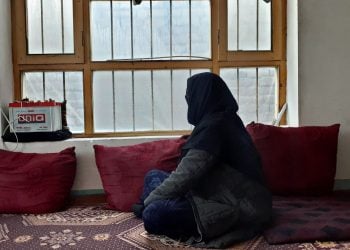
One teacher, who teaches girls in different parts of Afghanistan online from inside her home in Herat, says: “This Teachers’ Day, my students sent me digital paintings on the Zoom screen, turned on their microphones together, and wished me a happy Teachers’ Day. Although our class was not physical and I could not receive their flowers, this was one of the most heartfelt celebrations I have seen in my life. The fact that my students still remember their teacher and Teachers’ Day means a great deal to me.”
However, objective realities show that these limited secret or virtual programs have not been able to conceal the deep structural and economic challenges facing teachers in Afghanistan. Following the recent political developments, a sharp drop in salaries combined with economic inflation has severely reduced teachers’ purchasing power, to the point that the monthly salary of a public school teacher now does not even cover basic living expenses such as rent and transportation. This financial crisis has driven a large portion of the professional and experienced education workforce into unskilled and grueling jobs. Beyond economic poverty, female teachers face isolation resulting from forced confinement at home, while male teachers work under psychological pressure caused by constant changes to the curriculum and a lack of job security.
Ultimately, the shift in how Teachers’ Day is marked, from past official ceremonies to secret and virtual arrangements, reflects the education community’s effort to preserve the values of education during one of the most complex periods of economic crisis and educational blockade in the contemporary history of the country.
You can read the Persian version of this analysis article here:
تغییر جغرافیای تجلیل؛ وضعیت معلمان افغانستان بین محدودیتهای ساختاری و ابزارهای دیجیتال